BlackVue vs VIOFO: Which Dash Cam Brand Is Better?
BlackVue vs VIOFO compared model for model on our rubric: VIOFO wins on screens, 3-channel options and parking modes; BlackVue on cloud, LTE and 1TB cards.
Disclosure: Dashlore earns a commission on purchases made through some links on this page, at no added cost to you. Scores come from the spec rubric, never from commission rates. Details
On this page
Key takeaways
- Model for model, VIOFO edges BlackVue: the A229 Ultra 2CH scores 8.0 to the Elite 10-2CH's 7.7, and the A229 Pro 2CH scores 7.6 to the Elite 9-2CH's 7.3. VIOFO's low-bitrate parking mode is the difference in both pairs.
- VIOFO's lineup scores higher on average (7.8 against BlackVue's 6.5) partly because it sells 3-channel cams scoring up to 9.2; BlackVue has no front-rear-cabin model.
- BlackVue's edge is cloud and LTE: the DR970X-2CH LTE Plus II has a built-in LTE modem, and Elite models accept the optional CM100G module. No VIOFO model we track has LTE.
- Testers found the Elite 10's rear camera lacks HDR, blowing out plates in high-contrast scenes despite its 4K sensor. The A229 Pro's rear is weaker at night but has HDR on both cameras.
- Buy VIOFO for screens, voice control and more parking modes; buy BlackVue for remote access, a discreet cylinder and up to 1TB cards.
VIOFO wins model for model, but narrowly. The A229 Ultra 2CH scores 8.0 on our rubric to the BlackVue Elite 10-2CH’s 7.7, and the A229 Pro 2CH scores 7.6 to the Elite 9-2CH’s 7.3. In both pairs, VIOFO’s low-bitrate parking mode tips the scale. Buy VIOFO for screens, 3-channel coverage and more parking options. Buy BlackVue for cloud access, built-in LTE and 1TB storage.
| Spec | 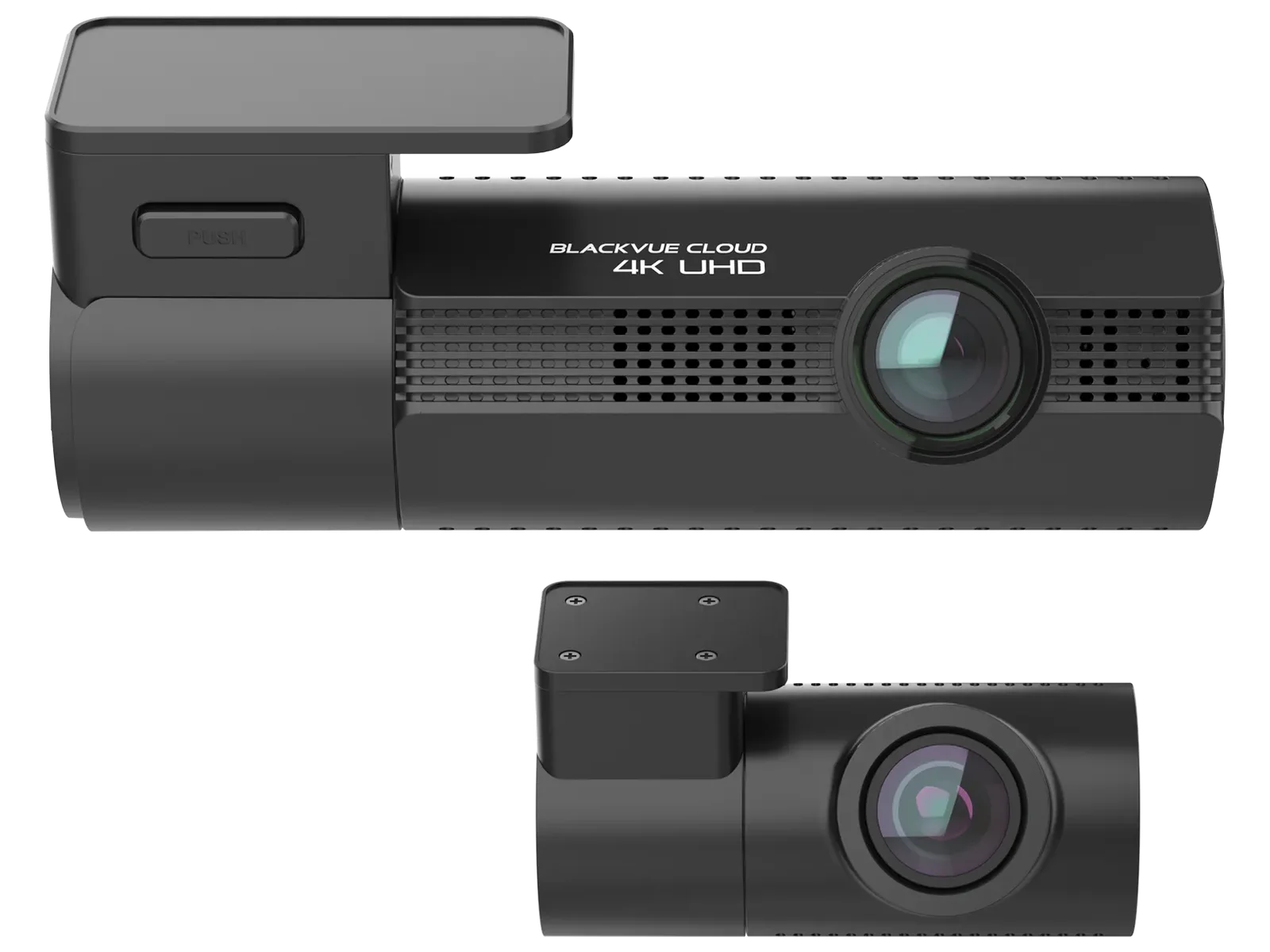 | 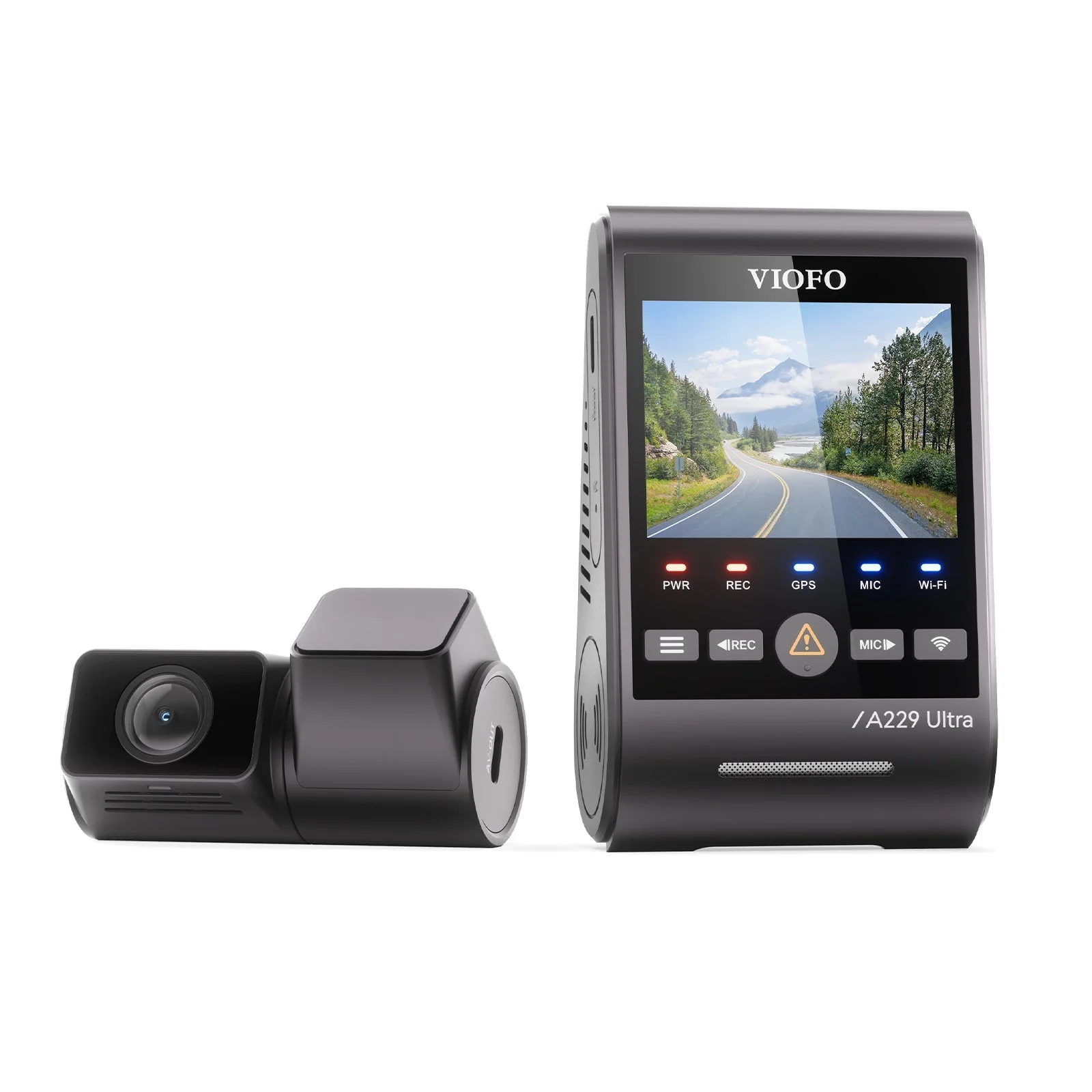 | 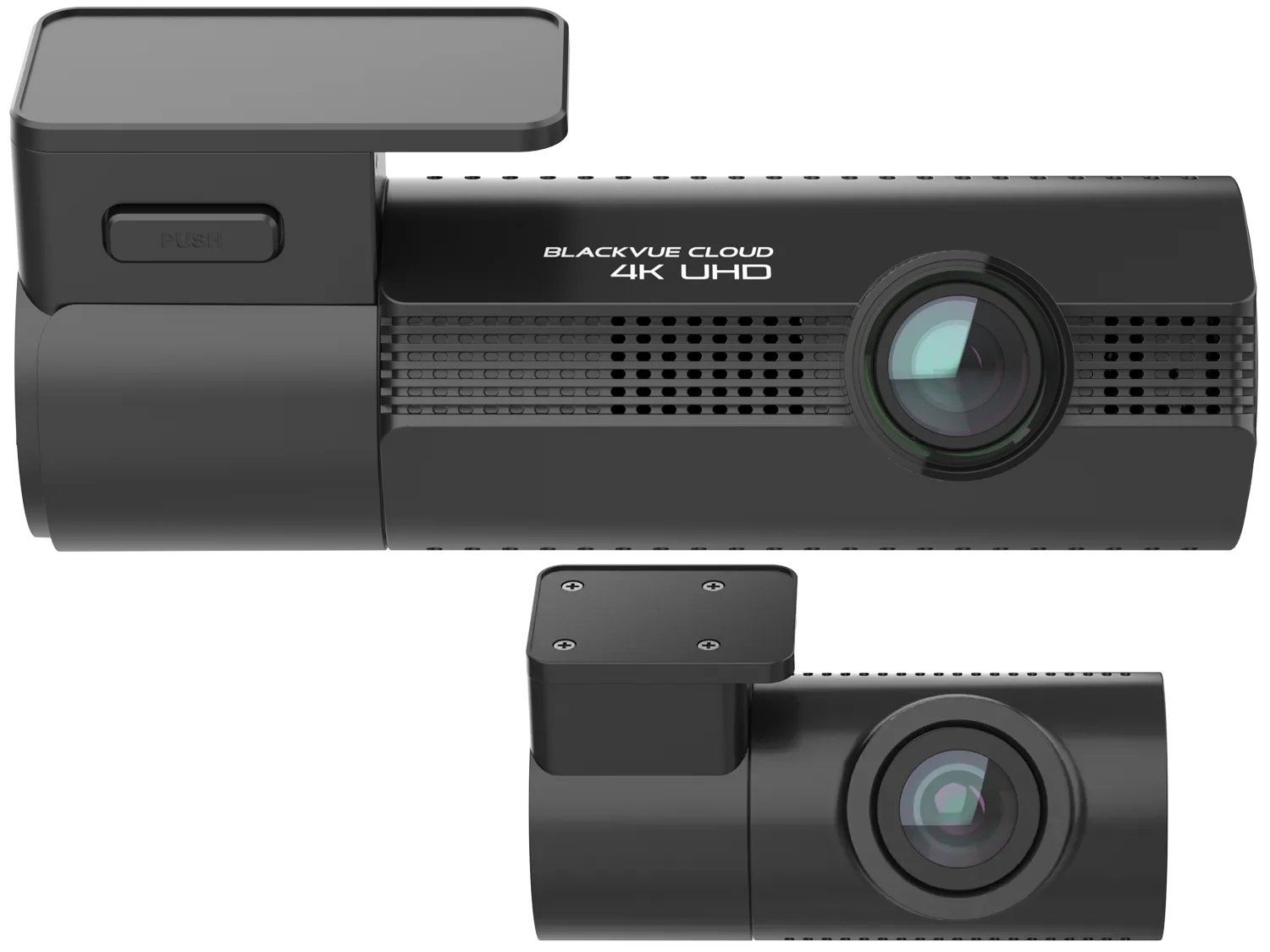 | 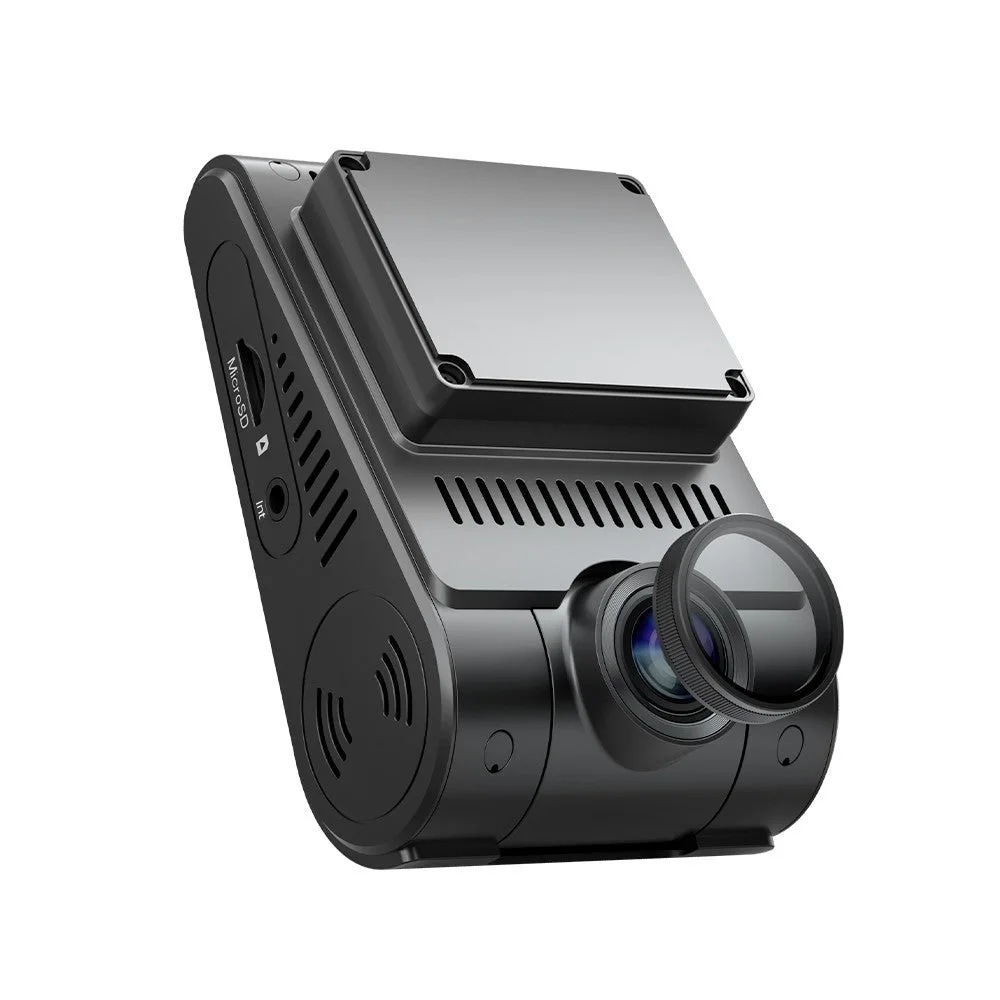 | 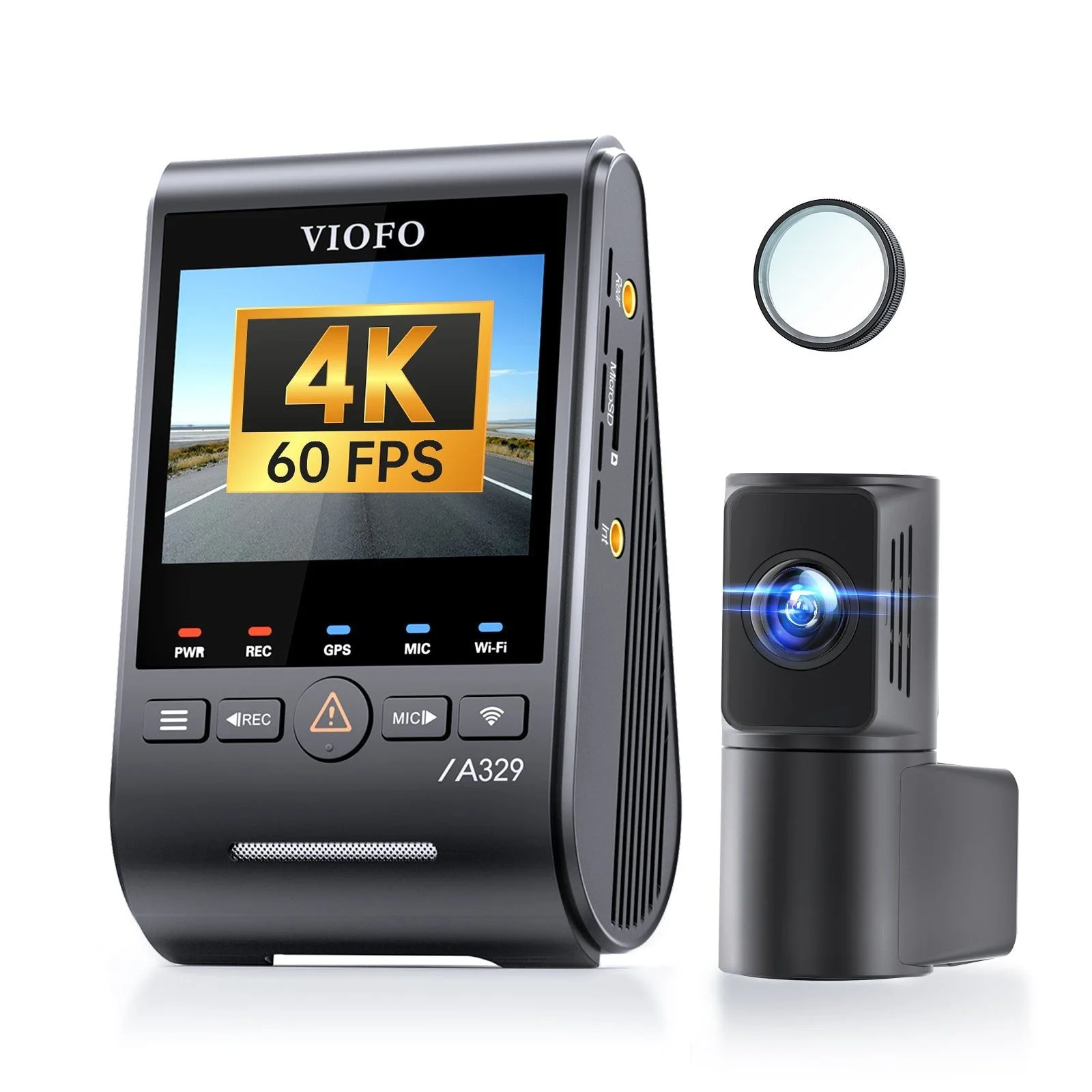 |
|---|---|---|---|---|---|
| Score | 7.7 | 8.0 | 7.3 | 7.6 | 7.9 |
| Front resolution | 2,160 px | 2,160 px | 2,160 px | 2,160 px | 2,160 px |
| Front frame rate | 30 fps | 30 fps | 30 fps | 30 fps | 60 fps |
| STARVIS 2 sensor | Yes | Yes | Yes | Yes | Yes |
| HDR | Yes | Yes | Yes | Yes | Yes |
| Coverage (channels) | 2 | 2 | 2 | 2 | 2 |
| Rear resolution | 2,160 px | 2,160 px | 1,440 px | 1,440 px | 1,440 px |
| Buffered parking mode | Yes | Yes | Yes | Yes | Yes |
| Low-bitrate parking | No | Yes | No | Yes | Yes |
| Heat tolerance (power cell) | supercapacitor | supercapacitor | supercapacitor | supercapacitor | supercapacitor |
| GPS | built-in | built-in | built-in | built-in | built-in |
| Wi-Fi transfer | 5GHz | 5GHz | 5GHz | 5GHz | 5GHz |
| Max storage | 1,024 GB | 512 GB | 1,024 GB | 512 GB | 512 GB |
| LTE / cloud | No | No | No | No | No |
| Front pixels per degree | 26.3 px/° | 27.43 px/° | 26.3 px/° | 27.43 px/° | 27.43 px/° |
| Rear STARVIS 2 sensor | Yes | Yes | Yes | Yes | Yes |
| Time-lapse parking | Yes | Yes | Yes | Yes | Yes |
| Max operating temperature | 65°C | 65°C | 65°C | 65°C | 65°C |
| Price | $603.99 at BlackVue, Nov 20 | $409.99 at VIOFO, Nov 20 | $518.99 at BlackVue, Nov 20 | $349.99 at VIOFO, Nov 20 | $459.99 at VIOFO, Nov 20 |
| Where to buy | Check price on Amazon | Check price on Amazon | Check price on Amazon | Check price on Amazon | Check price on Amazon |
We score dash cams on the specs that decide whether footage holds up after an incident: resolution, sensor, HDR, parking modes, heat tolerance, GPS, Wi-Fi, storage and LTE. Details are in our scoring method. Brand reputation doesn’t enter the rubric. Both brands appear throughout our dash cam rankings, and if you’re already set on one brand, see our best BlackVue or best VIOFO rankings.
Is BlackVue better than VIOFO?
Not by the numbers. Across every model we track, VIOFO scores higher:
| BlackVue | VIOFO | |
|---|---|---|
| Models we track | 7 | 15 |
| Average score | 6.5 | 7.8 |
| Highest score | 7.8 (Elite 10 Cabin) | 9.2 (A229 Ultra 3CH) |
| 3-channel (front, rear, cabin) | None | 6 models |
| Screenless models | 7 of 7 | 3 of 15 |
| Max microSD | 1TB | 512GB |
| Built-in LTE | 1 model | None |
| Low-bitrate parking mode | None listed | 15 of 15 |
| Supercapacitor | 7 of 7 | 15 of 15 |
The average gap comes from two places. VIOFO sells 3-channel cams scoring 7.7 to 9.2; BlackVue has none with front, rear and cabin cameras. BlackVue’s lineup also includes the DR590X-2CH Plus, a 1080p camera without STARVIS 2 or HDR that scores 3.4. Take those outliers out and the brands are close.
The best-scoring BlackVue is the Elite 10 Cabin at 7.8, which pairs a 4K front with a 4K infrared cabin camera instead of a rear one. The Elite 10-2CH follows at 7.7. The DR970X-2CH LTE Plus II scores 7.4: its built-in LTE modem, per BlackVue’s product page, makes up for part of what its 1080p rear camera on an original STARVIS sensor costs it. Our BlackVue lineup ranking covers every model in order.
How do flagship models compare on our rubric?
Pair the models by what they record and the differences sharpen.
4K front, 2K rear: Elite 9-2CH vs A229 Pro 2CH
Both use a Sony STARVIS 2 IMX678 up front at 4K 30fps and an IMX675 at the rear at 2K, with HDR on both cameras, built-in GPS and 5 GHz Wi-Fi. The A229 Pro 2CH scores 7.6 to the Elite 9-2CH’s 7.3, and its low-bitrate parking mode is the whole gap.
The spec differences that matter:
- Screen and voice. The A229 Pro has a 2.4-inch screen and voice control. The Elite 9 is screenless, controlled entirely through the BlackVue app.
- Storage. The Elite 9 takes 1TB microSD cards against the A229 Pro’s 512GB limit.
- Field of view. The Elite 9’s front lens is 146° against the A229 Pro’s 140°.
- Image processing. Daily Automotive’s Elite 9 review found the upgraded 12-bit capture pipeline delivers noticeably better clarity and color than the older DR970X despite sharing the same IMX678 sensor. Daily Automotive’s A229 Pro review praised the front 4K daytime footage as very good, and confirmed 5 GHz Wi-Fi transfers a 300 MB file in under a minute.
- Rear at night. DashCamTalk rated the Elite 9’s rear only average after dark. Dashboard Camera Reviews scored the A229 Pro’s rear night video 2 out of 5, noting it’s adequate on lit streets but drops off on darker roads. Neither brand’s 2K rear camera is a strength after sunset.
For a deeper look at this matchup, see Is the VIOFO A229 Pro Worth It? and our BlackVue Elite 10 vs Elite 9 comparison.
4K front, 4K rear: Elite 10-2CH vs A229 Ultra 2CH
Both record 4K 30fps front and rear on IMX678 sensors. The A229 Ultra 2CH has HDR on both cameras; BlackVue lists HDR on the Elite 10’s front camera only. That single spec difference matters more than it sounds.
DashCamTalk forum tester rcg530 found the Elite 10’s rear camera produced an unreadable white blob where license plates should be in high-contrast scenes, while competing 4K rear cameras with HDR captured them clearly. Daily Automotive also called the rear footage “a little stale” compared to the front’s vibrant 12-bit color. Multiple reviewers, including Daily Automotive and DashCamTalk’s review, concluded the cheaper Elite 9 with its 2K HDR rear is the better buy for most drivers. DashCamTalk gave the Elite 10 a value score of only 4 out of 10.
The Elite 10 counters with a documented 10-second pre-event parking buffer and 1TB card support against 512GB. The A229 Ultra 2CH scores 8.0 to the Elite 10-2CH’s 7.7. Our Elite 10 vs Elite 9 comparison covers what BlackVue’s 4K rear costs in rear HDR.
4K 60fps: A329S 2CH (VIOFO only)
BlackVue has no answer to the A329S 2CH, which records 4K at 60fps up front and scores 7.9. Doubling the frame rate halves how far a passing car moves between frames, which matters for reading plates on fast-moving vehicles.
Tom’s Guide called the daytime footage “superlative.” DashCamTalk tester PP measured the front bitrate at 54 Mbps in 2CH mode, and Safe Drive Solutions measured recording power at 5 W (400 mA at 12.5 V). The trade-off is a 20-second boot time measured by PP, nearly double the older A329’s 11 seconds. Tom’s Guide also noted that enabling HDR locks the camera to 30fps, so you lose the frame-rate advantage at night. The A329S adds Wi-Fi 6 and support for external SSD storage up to 4 TB.
Our dash cam rankings show which 4K cams read plates best across brands.
3-channel: VIOFO only
Rideshare drivers who need front, rear and cabin footage have no BlackVue option. The closest is the Elite 10 Cabin at 7.8, which pairs a 4K front with a 4K infrared cabin camera but has no rear-window camera. VIOFO’s A229 Ultra 3CH scores 9.2 with all three channels, and the A229 Pro 3CH scores 8.7. See our best dash cam for rideshare guide and the VIOFO A229 Pro 3CH vs Vantrue N5S comparison for more 3-channel picks.
Which has the better app and cloud service?
BlackVue’s whole design leans on its app and cloud. Its cameras have no screen, so you set up, aim and review everything over 5 GHz Wi-Fi on your phone. BlackboxMyCar praised the clean app interface and easy file access, and HonestlyOCD, upgrading from an Elite 8, found the swap essentially plug-and-play. For remote access, BlackVue Cloud lets you view live video and receive impact alerts when the camera is online. Multiple reviewers call it the most feature-rich dash cam cloud platform available, with push notifications, remote live view, GPS tracking and automatic event upload.
Getting online is the catch. Only the DR970X-2CH LTE Plus II has a built-in LTE modem, and it needs a nano-SIM and data plan you supply. The Elite 8, 9 and 10 need the optional CM100G LTE module or a Wi-Fi hotspot in the car. Budget for the module and a data plan if cloud is the reason you’re buying BlackVue.
VIOFO’s app connects over 5 GHz Wi-Fi for live view, settings and downloading clips. Daily Automotive confirmed that settings changes, live view switching and remote snapshots all work responsively. None of the VIOFO models we track has built-in LTE or an LTE module option, so footage stays in the car until you’re within Wi-Fi range.
Why it matters: a clip uploaded over LTE survives if the camera is stolen, smashed or burned. For fleets, parents of teen drivers and anyone who parks somewhere risky, that’s worth paying for. For most commuters, local Wi-Fi transfer is enough.
Screenless or screen: which design suits you?
This is the clearest split between the brands.
BlackVue’s screenless cylinder is small and discreet, easy to tuck behind the mirror where it draws little attention. HonestlyOCD called the Elite 10 “an absolute unit” but noted it looks factory-installed and premium once behind the mirror. The trade-off is that every interaction goes through your phone: aiming, checking it’s recording, reviewing an incident at the roadside.
VIOFO’s screen lets you aim the camera and replay a clip without a phone. On the A229 and A329S series it’s 2.4 inches. VIOFO also adds voice control, so you can lock a clip or take a photo hands-free, though Safe Drive Solutions reports the A329S’s voice control can false-trigger from road noise. If you want VIOFO’s specs in a screenless package, the T330 and T340 are barrel-style cameras that tuck behind the mirror like a BlackVue; see our VIOFO T330 vs T340 comparison.
Neither is wrong. If you’ll check footage often or share the car with someone who won’t install an app, pick a screen. If you want the camera to disappear, pick screenless. Our best dash cam with a screen ranking covers the 3-inch-plus models from other brands.
How do parking modes compare?
Both brands offer buffered parking mode on every current model, and both need a hardwire kit for it. Both use supercapacitors rather than lithium batteries. The differences are in the low-power modes and what testers actually measured.
BlackVue’s power-saving sleep mode draws under 1 mA, confirmed by multiple reviewers of both the Elite 9 and Elite 10. The camera sleeps until an impact, then boots in roughly 0.8 seconds and records a 60-second clip. Daily Automotive found it generates zero heat while sleeping, a real advantage in hot climates. The catch: it records only after an impact, not during approach or motion events. BlackVue documents a 10-second pre-event buffer on the Elite models.
VIOFO’s low-bitrate mode records continuously at reduced quality to save card space, so you get unbroken footage rather than waiting for a trigger. VIOFO also offers buffered, time-lapse and hybrid modes. However, maker claims and tester measurements diverge here. VIOFO claims about 1 mA in low-power impact detection mode, but Safe Drive Solutions measured 39 mA on the A329S 2CH and DashCamTalk tester rcg530 measured 24 to 26 mA on the T330. Those draws are still low enough for weeks of standby on most car batteries, but they’re 25 to 39 times VIOFO’s claim.
The lowest-draw modes buy standby time by recording less. For a full breakdown of what each mode captures and misses, see our dash cam parking mode explained and how to set up parking mode guides. Our will a dash cam drain your car battery post covers the math on standby draw.
What about SD cards and long-term heat?
BlackVue supports up to 1TB microSD cards on the Elite 9, Elite 10 and DR970X LTE, double VIOFO’s 512GB maximum. At 4K, more storage means more hours before the oldest clips loop-overwrite. The A329S 2CH offsets this with optional external SSD storage up to 4 TB, but parking-mode files must still go to the microSD.
Both brands demand high-endurance cards. Multiple reviewers of the A229 Pro stress that ordinary cards fail early under constant 4K recording. Shop Humor, who used the A229 Pro as his primary cam for nearly two years, warns that non-endurance cards lead to premature failure. On the BlackVue side, upgraders from older models must replace their coaxial rear-camera cable with the new 6 Gbps version; Daily Automotive and DashCamTalk tester rcg530 both found that reusing a legacy cable causes signal drops and corrupted rear files within weeks.
Both brands use supercapacitors across every model we track, so neither faces the heat-related degradation that lithium cells suffer on a hot dashboard. BlackVue rates the Elite line to 65 °C and the DR970X LTE to 70 °C. VIOFO rates the A229 and A329S lines to 65 °C. DashCamTalk tester rcg530’s thermal imaging of the T330 showed it running significantly cooler than a competing cam that hit 149 °F near the card slot after a 30-minute drive.
Which brand should you buy?
Buy VIOFO if:
- You need a cabin camera for rideshare or delivery work. BlackVue has no 3-channel model.
- You want a screen, voice control or 4K at 60fps.
- You want the highest score per dollar; VIOFO tops our best dash cams ranking.
Buy BlackVue if:
- Remote viewing, impact alerts and cloud backup matter, and you’ll pay for LTE.
- You want the most discreet camera on the glass.
- You need 1TB of loop history on a single microSD card.
Best VIOFO 2-channel (4K front and rear with HDR on both)
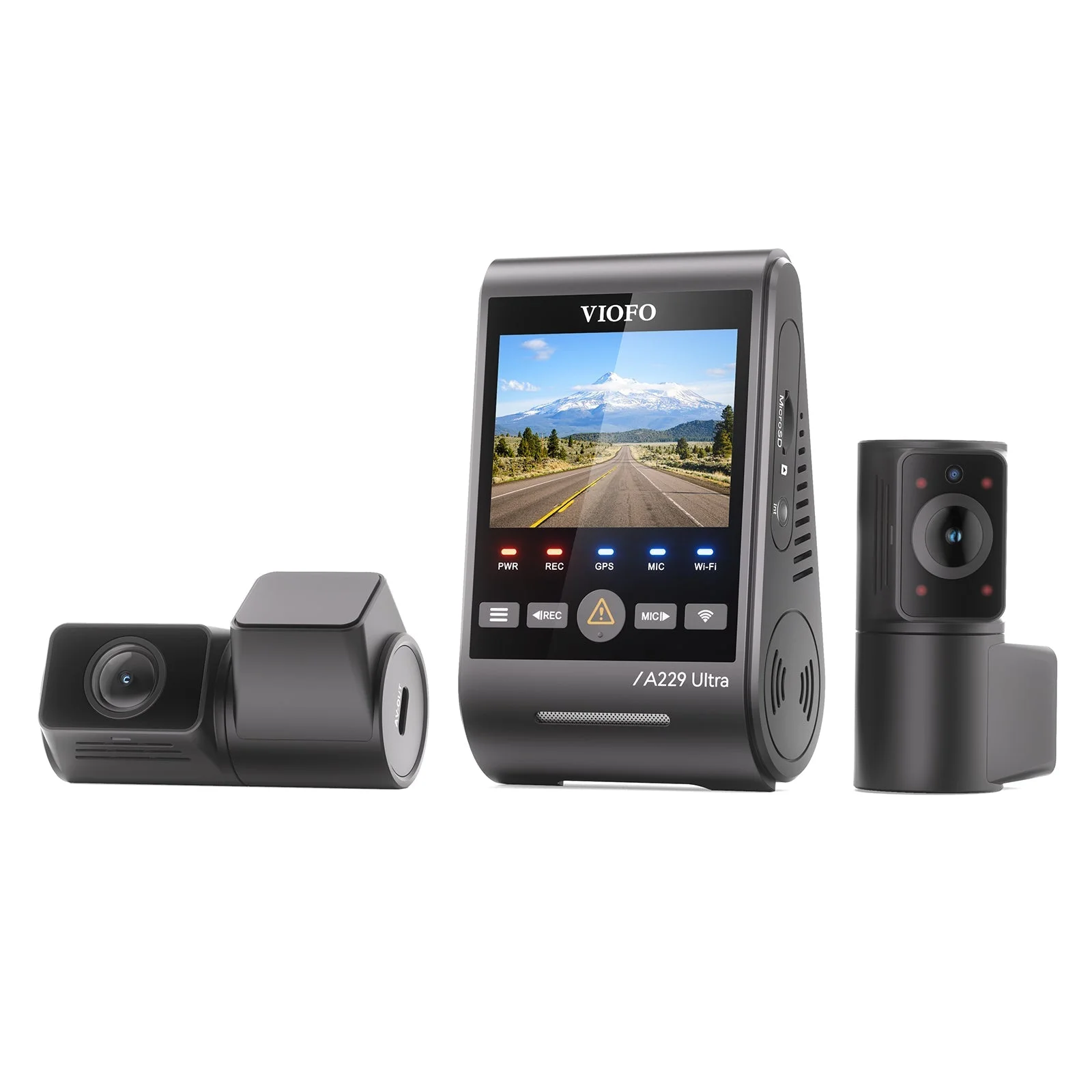
VIOFO A229 Ultra 2CH
- Front resolution
- 2,160 px
- Coverage (channels)
- 2
- STARVIS 2 sensor
- Yes
- Buffered parking mode
- Yes
A dual-channel dash cam that records 4K on both the front and rear cameras, each with a STARVIS 2 IMX678 sensor and HDR. It suits drivers who want the same resolution behind them as ahead.
Strengths
- 4K 30fps on both front and rear cameras
- Sony STARVIS 2 IMX678 8MP sensor in each camera, with front and rear HDR
- Dual-band Wi-Fi, built-in GPS logger and voice control
Watch out for
- VIOFO states a hardwire kit (HK4 or HK6, not included) is required for parking mode
- Rear field of view is 140°, narrower than the 160° rear lens on the A229 Pro
Best BlackVue front-and-rear (4K front and rear, cloud-ready)
BlackVue Elite 10-2CH
- Front resolution
- 2,160 px
- Coverage (channels)
- 2
- STARVIS 2 sensor
- Yes
- Buffered parking mode
- Yes
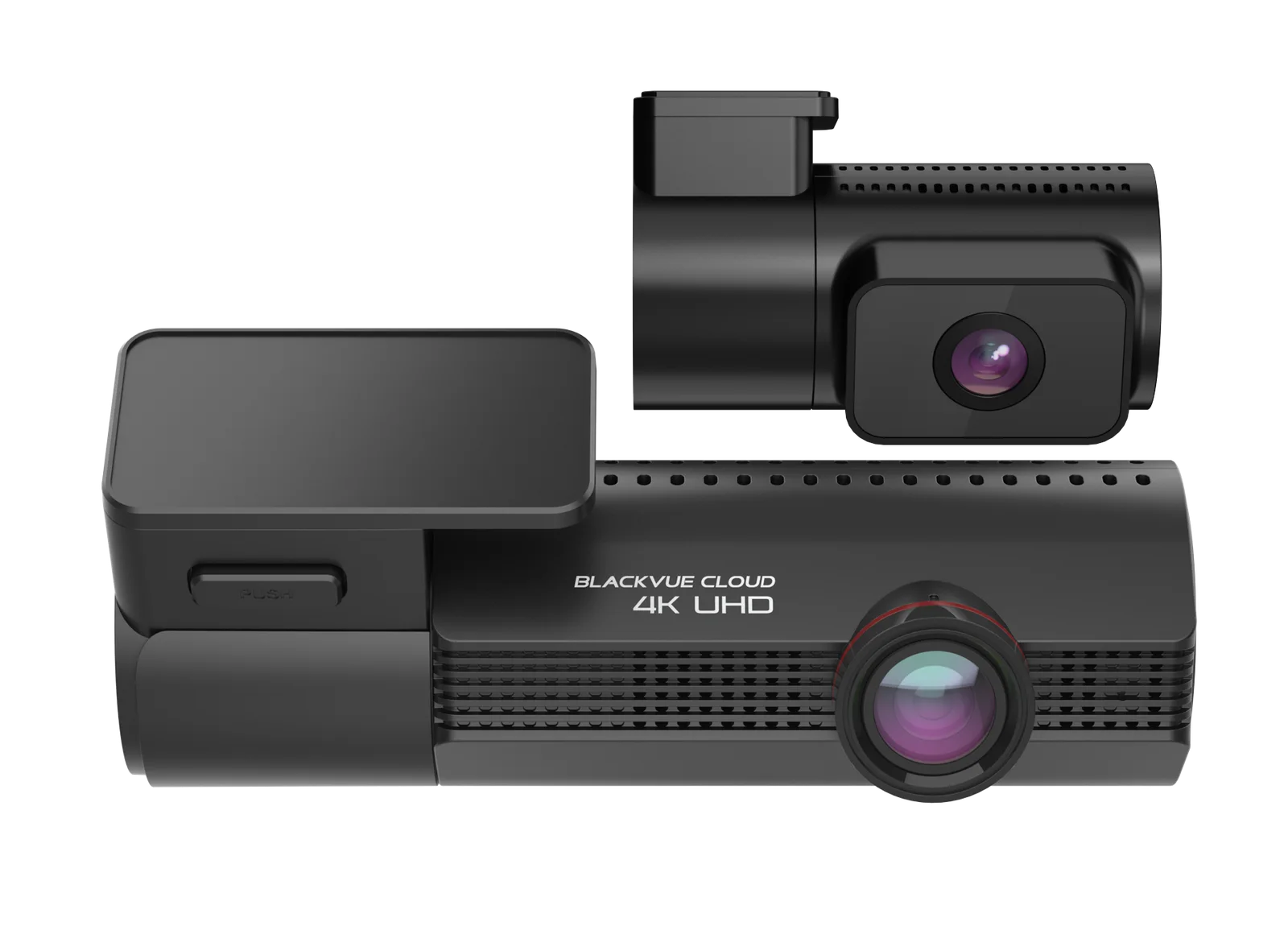
A screenless front-and-rear cloud-capable dash cam that records 4K on both cameras with STARVIS 2 IMX678 sensors. It suits owners who want 4K rear footage and BlackVue's app and cloud ecosystem.
Strengths
- 4K 30fps front and rear, each on a Sony STARVIS 2 IMX678 sensor
- Buffered parking modes record 10 seconds before an event
- Dual-band Wi-Fi, built-in GPS and microSD support up to 1TB
Watch out for
- HDR on the front camera only
- Cloud access needs the optional CM100G LTE module or a Wi-Fi hotspot
- No screen; parking mode needs the hardwiring cable or a battery pack
Still undecided? Filter both brands side by side in the dash cam finder, or see our best front and rear dash cams ranking. For choosing within each brand, our best VIOFO dash cam and best BlackVue dash cam guides rank every model.
What reviewers found on video
A YouTube video about the BlackVue Elite 10-2CH that our research draws on. Each video is the creator's own work, and it loads from YouTube only when you press play.

Frequently asked questions
Is BlackVue better than VIOFO?
Not on our scoring. VIOFO's A229 Ultra 2CH scores 8.0 to BlackVue's Elite 10-2CH at 7.7, and VIOFO's 3-channel A229 Ultra 3CH reaches 9.2, which no BlackVue matches. BlackVue is better if cloud access and LTE matter to you.
Does VIOFO have a cloud service like BlackVue?
No. None of the VIOFO models we track has built-in LTE or an LTE module option. BlackVue's DR970X-2CH LTE Plus II has LTE built in, and its Elite models can add the CM100G module or use a Wi-Fi hotspot for cloud features.
Which is more reliable, BlackVue or VIOFO?
Specs can't measure long-term reliability. Every BlackVue and VIOFO model we track uses a supercapacitor rather than a lithium battery, the most important spec for surviving dashboard heat. Both brands had early firmware bugs on recent launches.
Why don't BlackVue dash cams have a screen?
BlackVue designs its cameras as small cylinders controlled by phone over Wi-Fi. It keeps the camera less visible from outside, but you need the app to aim it or review footage.
Which BlackVue is closest to the VIOFO A229 Pro?
The Elite 9-2CH: 4K front on a STARVIS 2 IMX678, 2K rear on an IMX675, HDR on both, built-in GPS and 5 GHz Wi-Fi. It scores 7.3 to the A229 Pro 2CH's 7.6; the A229 Pro adds a 2.4-inch screen, voice control and low-bitrate parking, while the Elite 9 takes 1TB cards.
Do I need to hardwire both brands for parking mode?
Yes. Every BlackVue and VIOFO model we track needs a hardwire kit or battery pack for parking recording. Neither brand's supercapacitor holds enough charge to record after the car turns off.
Related reading
Best ofDash Cams
Best Dash Cams: Every Major Model Ranked by Spec
Every dash cam we track, ranked on a published rubric, with picks for front and rear, 4K plate detail, night driving, parking mode and under $200.
GuideDash Cams
How to Choose a Dash Cam: 9 Specs That Actually Matter
How to choose a dash cam from the real spread of specs across every model we track: channels, 4K vs 1440p, STARVIS 2, supercapacitors, parking and GPS.
Best ofDash Cams
Best BlackVue Dash Cam: Elite and DR Series Ranked
The best BlackVue dash cam on our scores is the Elite 10 Cabin, with 4K front and 4K infrared cabin cameras. Every Elite model and the DR970X, ranked.
Best ofDash Cams
Best VIOFO Dash Cam: Every Model Ranked
The best VIOFO dash cam is the A229 Ultra 3CH. We rank every VIOFO model we track on one rubric and decode the A229, A329S, T-series and Mini lines.