BlackVue Elite 10 vs Elite 9: Is the Upgrade Worth It?
BlackVue Elite 10 vs Elite 9: the one spec change is a 4K rear camera, which costs rear HDR. It scores 7.7 to 7.3. Who should upgrade and who should not.
Disclosure: Dashlore earns a commission on purchases made through some links on this page, at no added cost to you. Scores come from the spec rubric, never from commission rates. Details
On this page
Key takeaways
- The Elite 10-2CH's one hardware change is the rear camera: 4K on a STARVIS 2 IMX678 instead of the Elite 9's 2K IMX675.
- The trade-off is HDR. The Elite 9 runs HDR on both cameras; BlackVue lists HDR on the Elite 10's front camera only.
- The Elite 10 scores 7.7 to the Elite 9's 7.3 on our rubric. The sharper rear camera is the whole gap; the front cameras are identical 4K STARVIS 2 IMX678s.
- Both Vortex Radar and Daily Automotive concluded that rear HDR matters more than rear 4K for most drivers, making the Elite 9 the better default pick.
The BlackVue Elite 10-2CH upgrades one spec from the Elite 9-2CH: a 4K rear camera instead of 2K. The trade-off is rear HDR, which only the Elite 9 keeps on both channels. The Elite 10 scores 7.7 to the Elite 9’s 7.3, entirely from rear resolution. For most drivers, the Elite 9 is the better buy.
| Spec | 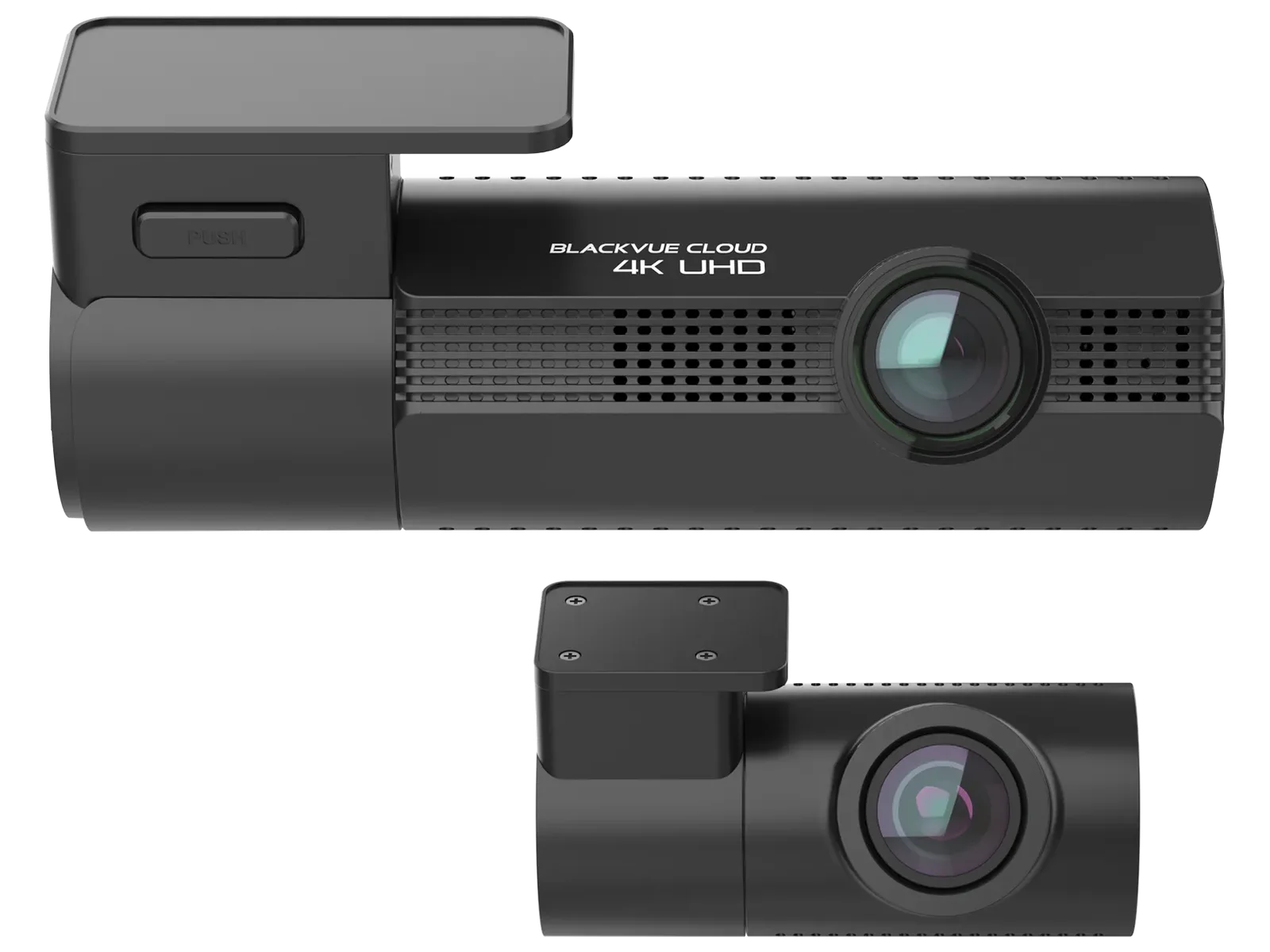 | 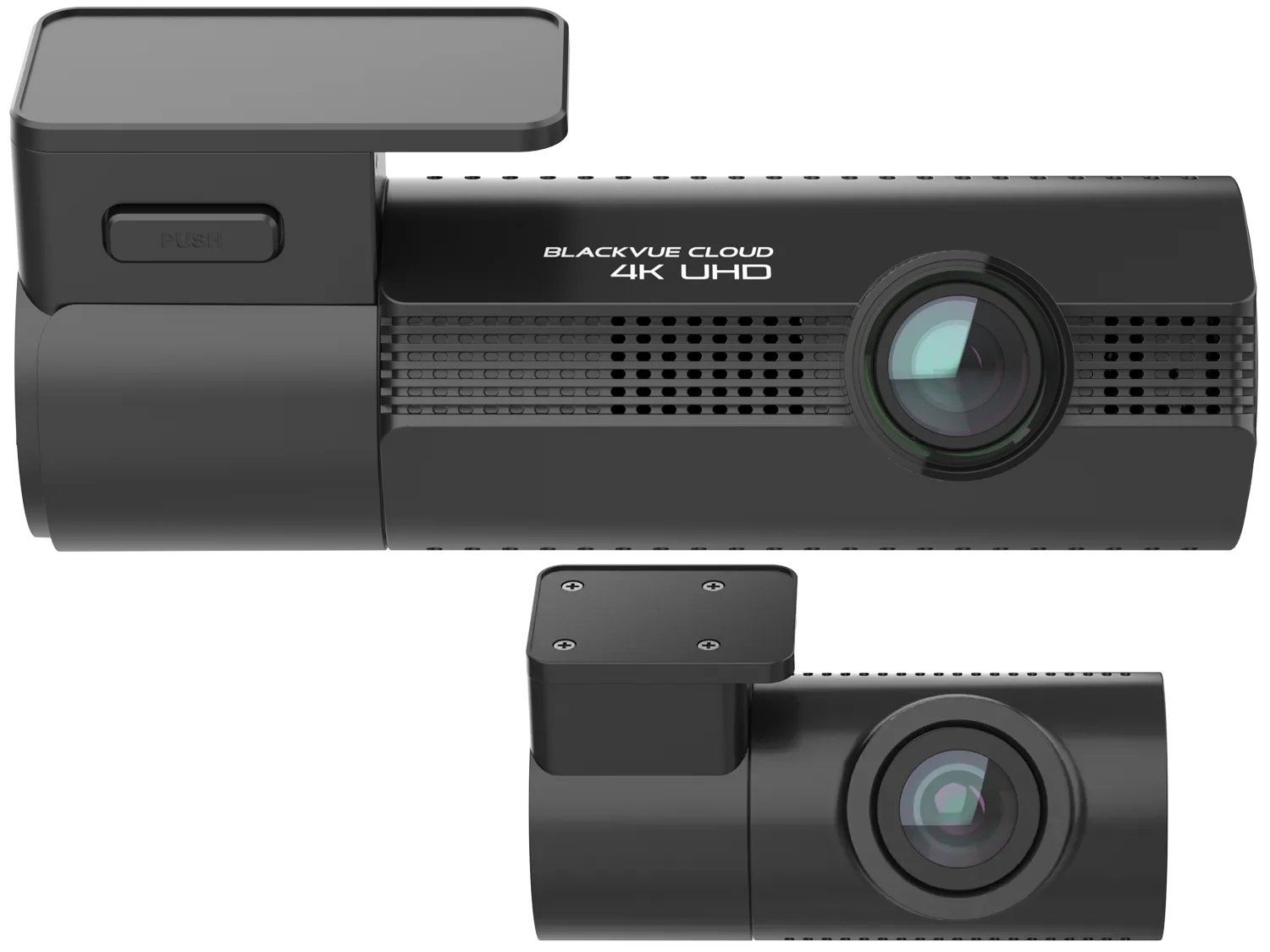 |
|---|---|---|
| Score | 7.7 | 7.3 |
| Front resolution | 2,160 px | 2,160 px |
| Front frame rate | 30 fps | 30 fps |
| STARVIS 2 sensor | Yes | Yes |
| HDR | Yes | Yes |
| Coverage (channels) | 2 | 2 |
| Rear resolution | 2,160 px | 1,440 px |
| Buffered parking mode | Yes | Yes |
| Low-bitrate parking | No | No |
| Heat tolerance (power cell) | supercapacitor | supercapacitor |
| GPS | built-in | built-in |
| Wi-Fi transfer | 5GHz | 5GHz |
| Max storage | 1,024 GB | 1,024 GB |
| LTE / cloud | No | No |
| Front pixels per degree | 26.3 px/° | 26.3 px/° |
| Rear STARVIS 2 sensor | Yes | Yes |
| Time-lapse parking | Yes | Yes |
| Max operating temperature | 65°C | 65°C |
| Price | $603.99 at BlackVue, Nov 20 | $518.99 at BlackVue, Nov 20 |
| Where to buy | Check price on Amazon | Check price on Amazon |
The gap is small for a reason. Our dash cam rubric weights front resolution most heavily, and these two share the same front camera. Rear resolution counts for less, so the 4K rear moves the score by 0.4 points. See how both rank against every brand in our dash cam rankings.
What is the difference between the Elite 10 and Elite 9?
Every spec we track is identical except two rows:
| Elite 10-2CH | Elite 9-2CH | |
|---|---|---|
| Front camera | 4K 30fps, STARVIS 2 IMX678 | 4K 30fps, STARVIS 2 IMX678 |
| Rear camera | 4K 30fps, STARVIS 2 IMX678 | 2K 30fps, STARVIS 2 IMX675 |
| HDR | Front only | Front and rear |
| Front field of view | 146° | 146° |
| Buffered parking | Yes | Yes |
| Power cell | Supercapacitor | Supercapacitor |
| Max operating temp | 65°C | 65°C |
| GPS / Wi-Fi | Built-in / 5GHz | Built-in / 5GHz |
| LTE | Optional CM100G module | Optional CM100G module |
| Max microSD | 1TB | 1TB |
| Our score | 7.7 | 7.3 |
The Elite 10 isn’t a new platform. It’s an Elite 9 with the front camera’s sensor fitted to the rear as well. BlackVue’s Elite 10 technical specifications list Sony STARVIS 2 sensors front and rear, and its SEMA 2025 press release gives the Elite 9 a 5MP STARVIS 2 IMX675 rear. BlackVue’s naming follows a pattern: Elite 8 is 2K front and rear, Elite 9 is 4K front and 2K rear, Elite 10 is 4K front and rear. Our BlackVue lineup ranking covers the whole ladder. For more on what STARVIS 2 means for low-light performance, see our explainer.
How much better is the 4K rear camera?
The Elite 10’s rear records 3840x2160 (about 8.3 megapixels). The Elite 9’s records 2560x1440 (about 3.7 megapixels). That’s 2.25 times the pixels and 50% more vertical lines.
Vertical lines determine plate legibility. If both lenses cover the same field of view, 50% more lines means a plate behind you stays readable roughly 50% farther away. That’s the difference between reading the plate of the car that tapped you at a light and reading the plate of the car two lengths back that caused it. BlackVue doesn’t publish a rear field of view for either model, so treat that as the best case.
The rear camera also shoots through your rear glass, which may be tinted, dirty or crossed by defroster lines. Extra resolution helps because there’s more detail to survive the glass. For a broader look at what the resolution jump buys you, see our 4K vs 1440p dash cam comparison.
What does the Elite 10 give up?
Rear HDR. The Elite 9 runs HDR on both cameras. BlackVue lists HDR on the Elite 10’s front camera only.
HDR matters most at night, which is exactly when the rear camera has its hardest job. The car behind you points its headlights straight into the lens. Without HDR, those headlights can bloom across the frame and wash out the plate between them. With HDR, the camera blends exposures to hold both the bright lights and the darker plate. Our HDR vs WDR guide explains how the two standards differ.
Both Vortex Radar’s buyer’s guide and Daily Automotive’s head-to-head concluded that HDR matters more than extra pixels on a rear camera, particularly after dark. DashCamTalk’s Elite 9 review rated the rear’s night performance as average, scoring overall night video 7 out of 10, so the Elite 10’s loss of rear HDR is a real downgrade in the hardest conditions.
The upgrade is a genuine trade, not a free win:
- Daylight and well-lit roads: the Elite 10’s 4K rear resolves more detail.
- Night, with headlights behind you: the Elite 9’s rear HDR is the better spec.
Both rear cameras use STARVIS 2 sensors, so neither falls apart in low light. The question is how each handles bright points of light in a dark scene.
Do parking and cloud features differ?
No. Both have buffered parking that records 10 seconds before an event, plus time-lapse. Both need the hardwiring cable or a battery pack; USB-C power doesn’t support parking mode on either model. For a full breakdown of what those modes do, see dash cam parking mode explained.
In the ultra-low-power parking mode, Daily Automotive and DashCams Australia both measured the Elite 9 drawing under 1 mA, waking in roughly 0.8 seconds on impact. That’s weeks of protection on a car battery alone, or up to 12 months with BlackVue’s B-130A battery pack. The trigger is impact only; always-on motion detection requires the 3-wire hardwire kit and draws over 300 mA. The Elite 10 uses the same parking hardware. For more on whether parking mode drains your car battery, see our guide.
Cloud is identical. Neither has LTE built in. BlackVue Cloud on either one needs the optional CM100G module or a Wi-Fi hotspot. Multiple reviewers, including Vortex Radar, call it the most feature-rich dash cam cloud platform available, with push notifications on impact, remote live view and GPS tracking. If built-in LTE matters, the DR970X-2CH LTE Plus II is the BlackVue that has it, at the cost of a 1080p rear.
Storage is where the Elite 10 asks more of you. BlackboxMyCar’s Elite 10 listing puts the default High setting at 30 Mbps per channel. That’s roughly 27 GB an hour for two 4K streams, or about two hours on the included 64 GB card. Both cameras support up to 1 TB. For help choosing the right card, see what SD card for a dash cam.
What about firmware stability?
The Elite 9 has been shipping longer, and early owners have reported growing pains. Forum threads on DashCamTalk document random reboots, SD card detection failures, GPS lock delays and occasional out-of-focus footage. Rcg530’s testing also found intermittent impact-detection failures with the LTE module attached. BlackVue has been actively pushing firmware updates, but some issues remain open.
The Elite 10 launched later and has fewer long-term owner reports. Daily Automotive noted both cameras share the same Novatek chipset and app platform, so firmware fixes for one model tend to carry over. If you’re buying either today, plan on updating firmware out of the box.
Can I reuse my DR970X mount or cables?
If you’re upgrading from an older BlackVue, Vortex Radar and forum owners confirm the Elite series body is wider than the DR970X, so the old mount won’t fit. You’ll need BlackVue’s new mount. The existing hardwire power cable is compatible, so you won’t need to rewire the car.
Both Daily Automotive reviews stress that you must use the included 6 Gbps coaxial cable for the rear camera. Reusing a legacy BlackVue coaxial cable may appear to work at first but will cause signal drops and corrupted rear files within weeks, because the Elite’s higher data rate exceeds the old cable’s bandwidth. For installation tips, see how to install a rear dash cam.
Should Elite 9 owners upgrade?
For most, no. You already have the same 4K STARVIS 2 front camera, the same parking modes, the same Wi-Fi and GPS, and HDR on both cameras. The upgrade replaces a working camera to gain rear detail and lose rear HDR.
Upgrade only if one of these is true:
- You’ve had rear-end incidents where the plate behind you was too small to read.
- You tow, reverse into tight spaces or park nose-out on busy streets, where rear detail is the footage you’ll actually need.
- You drive mostly in daylight, so rear HDR rarely matters.
If your Elite 9 has failed, the Elite 10 is the natural replacement. If it still works, keep it.
Which should you buy?
Buy the Elite 10-2CH if rear-plate detail is the priority and most of your driving is in daylight or on well-lit roads. It’s BlackVue’s only dual-4K model and the higher scorer at 7.7.
Buy the Elite 9-2CH if you drive at night often. HDR on both channels handles headlights behind you better, and you give up nothing on the front camera. Both Vortex Radar and Daily Automotive called it the better pick for most drivers.
Higher score, best for rear-plate detail
BlackVue Elite 10-2CH
- Front resolution
- 2,160 px
- Coverage (channels)
- 2
- STARVIS 2 sensor
- Yes
- Buffered parking mode
- Yes
A screenless front-and-rear cloud-capable dash cam that records 4K on both cameras with STARVIS 2 IMX678 sensors. It suits owners who want 4K rear footage and BlackVue's app and cloud ecosystem.
Strengths
- 4K 30fps front and rear, each on a Sony STARVIS 2 IMX678 sensor
- Buffered parking modes record 10 seconds before an event
- Dual-band Wi-Fi, built-in GPS and microSD support up to 1TB
Watch out for
- HDR on the front camera only
- Cloud access needs the optional CM100G LTE module or a Wi-Fi hotspot
- No screen; parking mode needs the hardwiring cable or a battery pack
Best for night driving (HDR front and rear)
BlackVue Elite 9-2CH
- Front resolution
- 2,160 px
- Coverage (channels)
- 2
- STARVIS 2 sensor
- Yes
- Buffered parking mode
- Yes
A screenless front-and-rear dash cam recording 4K front and 2K rear video with HDR on both STARVIS 2 sensors. It suits drivers who want BlackVue's app and optional cloud features at a lower price than the Elite 10.
Strengths
- Front STARVIS 2 IMX678 at 4K 30fps and rear IMX675 at 2K 30fps, both with HDR
- Power Saving, Motion Detection and Time Lapse parking modes
- Dual-band Wi-Fi and built-in GPS
Watch out for
- USB-C power does not support parking mode; it needs the hardwiring cable or a battery
- LTE needs the optional CM100G module
- No built-in screen
Want 4K rear from another brand, or a third camera for the cabin? Our best dash cam with a 4K rear camera ranking lines the Elite 10-2CH up against VIOFO’s and 70mai’s 4K-rear models, and our BlackVue vs VIOFO comparison covers the two brands model for model. You can also filter by spec in our dash cam finder, or compare the full spec sheets for the Elite 10-2CH and Elite 9-2CH.
What reviewers found on video
A YouTube video about the BlackVue Elite 10-2CH that our research draws on. Each video is the creator's own work, and it loads from YouTube only when you press play.

Frequently asked questions
What is the difference between the BlackVue Elite 10 and Elite 9?
The rear camera. The Elite 10-2CH records 4K rear on a STARVIS 2 IMX678, while the Elite 9-2CH records 2K rear on a STARVIS 2 IMX675. The Elite 9 has HDR on both cameras; the Elite 10 lists HDR on the front only.
Is the BlackVue Elite 10 better than the Elite 9?
Only behind the car, and only in detail. It records 2.25 times as many rear pixels, but loses rear HDR. It scores 7.7 to the Elite 9's 7.3 on our rubric, all from rear resolution, and the two share the same front camera, parking modes, Wi-Fi, GPS and 1TB card support.
Should I upgrade from the Elite 9 to the Elite 10?
Probably not. The front camera, parking features and cloud options are the same. Upgrade only if rear-plate detail is a specific problem for you, such as frequent rear-end incidents or towing.
Do the Elite 10 and Elite 9 have LTE?
Neither has LTE built in. Both need BlackVue's optional CM100G LTE module, or a Wi-Fi hotspot, for BlackVue Cloud features.
Are there firmware issues with the BlackVue Elite series?
Forum owners have reported random reboots, SD card detection failures and GPS lock delays on early Elite 9 firmware. BlackVue is actively patching these. No long-term owner reports exist yet for the Elite 10.
Related reading
Best ofDash Cams
Best BlackVue Dash Cam: Elite and DR Series Ranked
The best BlackVue dash cam on our scores is the Elite 10 Cabin, with 4K front and 4K infrared cabin cameras. Every Elite model and the DR970X, ranked.
Best ofDash Cams
Best Dash Cam for Tesla: Model 3 and Model Y Picks
The VIOFO T330 3CH is the best dash cam for a Tesla Model 3 or Model Y. We rank screenless cams with 1440p-plus rear cameras vs Sentry Mode.
VersusDash Cams
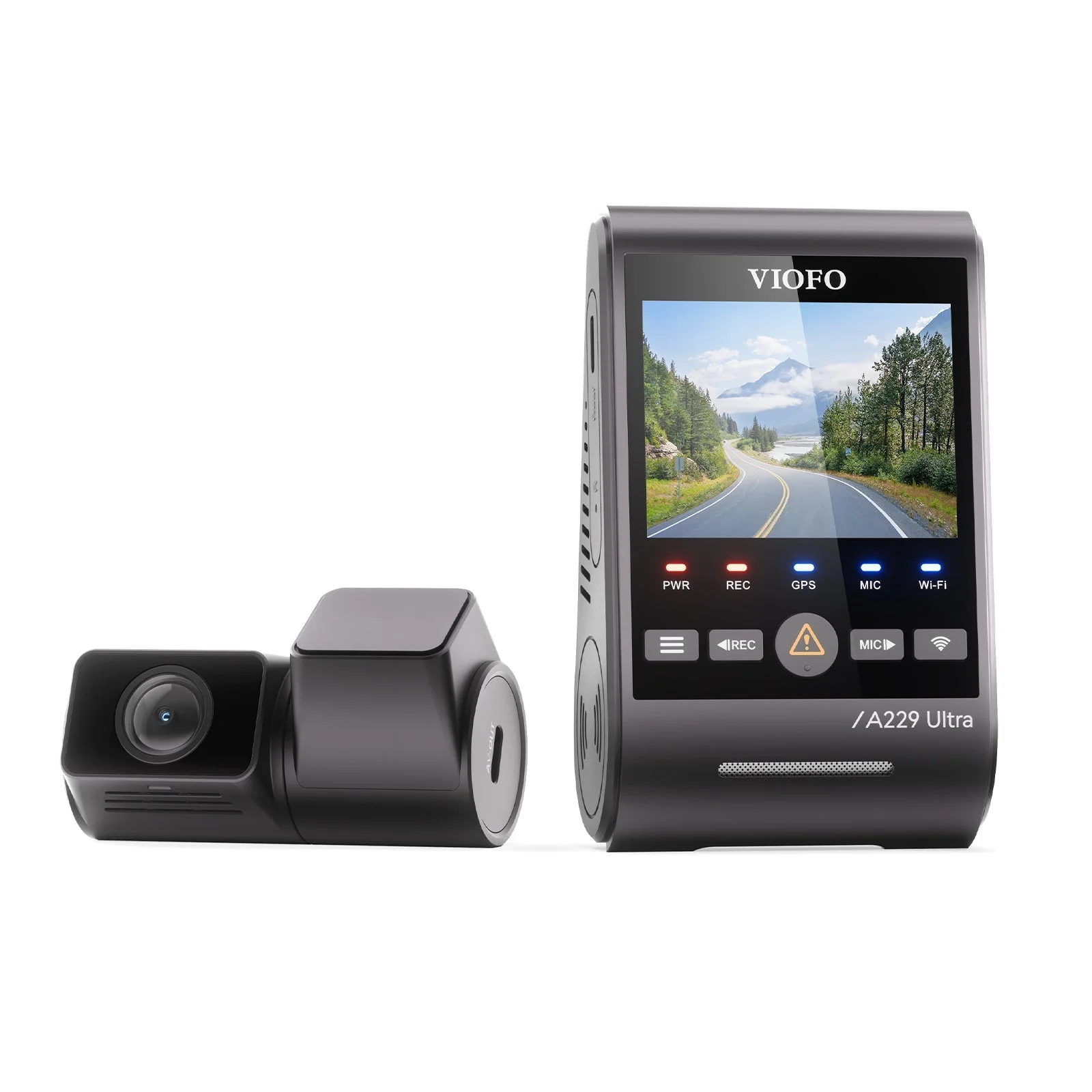
BlackVue vs VIOFO: Which Dash Cam Brand Is Better?
BlackVue vs VIOFO compared model for model on our rubric: VIOFO wins on screens, 3-channel options and parking modes; BlackVue on cloud, LTE and 1TB cards.
How-toDash Cams
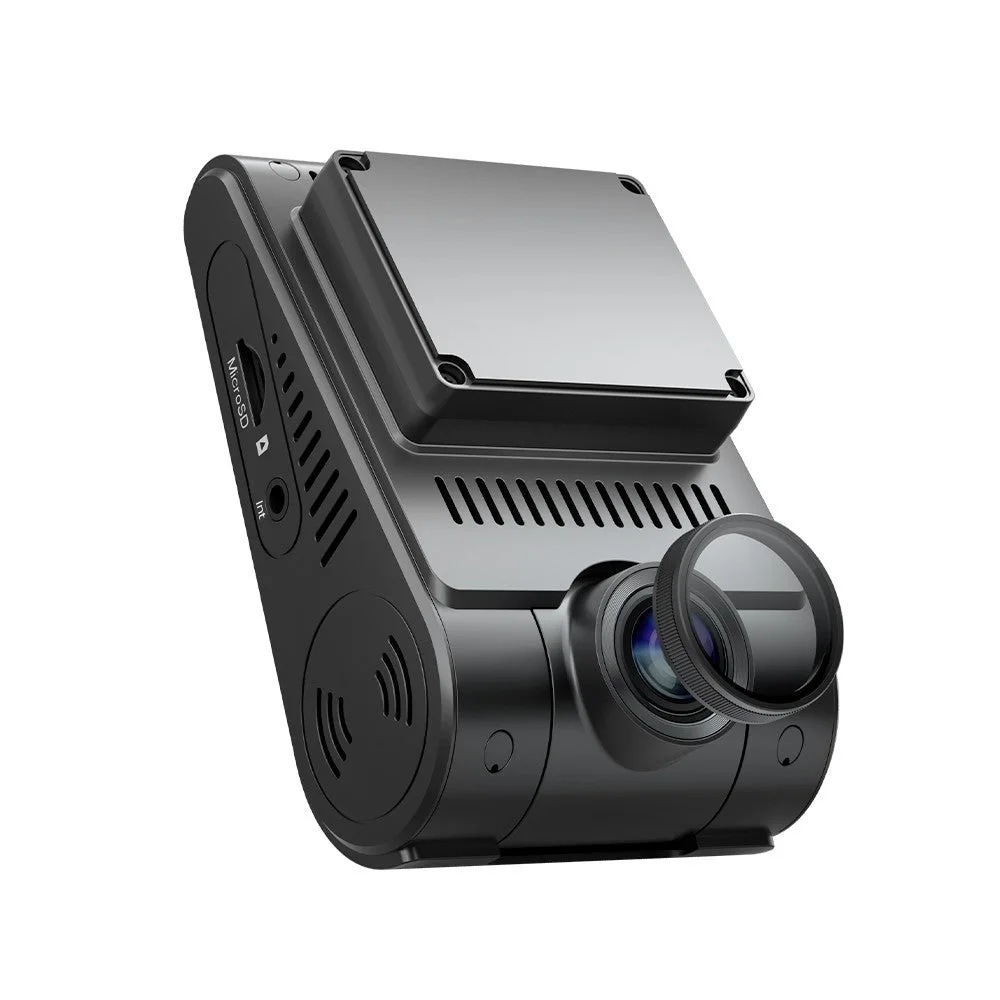
How to Set Up Dash Cam Parking Mode the Right Way
How to set up dash cam parking mode on VIOFO, Thinkware and BlackVue: pick buffered or time-lapse, set sensitivity, choose a voltage cutoff, then test it.