Supercapacitor vs Battery Dash Cam: Which Should You Buy?
Supercapacitor vs battery dash cam: why heat favors capacitors, what each means for parking mode, and the heat rating of every dash cam we track.
Disclosure: Dashlore earns a commission on purchases made through some links on this page, at no added cost to you. Scores come from the spec rubric, never from commission rates. Details
On this page
Key takeaways
- Buy a supercapacitor dash cam unless you have a specific reason not to: most cams we track use one, and our rubric gives a battery less than a third of the heat-tolerance credit a capacitor earns.
- Lithium batteries degrade and can swell when a parked car bakes in the sun; supercapacitors store far less energy and tolerate heat better.
- Neither type runs full parking coverage on its own power: every cam in our database needs a hardwire kit or battery pack for it.
- Published maximum operating temperatures run from 55°C to 70°C. The battery cams with a published rating, Garmin's X110, X210 and X310 and the 70mai A810, are all rated 60°C.
Buy a supercapacitor dash cam. It survives a sun-baked windshield far better than a lithium battery, and once a cam is hardwired the battery’s only advantage disappears. That’s why 40 of the 45 dash cams we track use a supercapacitor, and why our rubric gives a battery less than a third of a capacitor’s heat-tolerance credit.
The exception is narrow: a battery lets a cam record for a short time with nothing plugged in. If you need that, and your car rarely sits in the sun, a battery cam can make sense. For everyone else, here’s the reasoning in numbers.
What’s the difference between a supercapacitor and battery dash cam?
Both components do the same basic job: keep the camera alive for a moment when power drops, so it can finish writing the current file and shut down without corrupting the card.
- A supercapacitor stores a small charge electrostatically. It charges in seconds, tolerates many more charge cycles than a battery and handles heat well. It holds only enough energy for a clean shutdown, a few seconds’ worth.
- A lithium battery stores energy chemically. It holds much more, enough to run the camera for a while unplugged, but heat speeds up its chemical aging, and it can swell.
The trade-off is energy versus durability. A dash cam on a windshield needs durability far more than stored energy, because it’s almost always connected to the car.
How we score heat tolerance
Heat tolerance is about 9% of the overall score in our dash cam rubric, the same weight as STARVIS 2 and buffered parking. A supercapacitor earns full credit for it; a battery earns 30%.
Here’s what that means for real cameras. The Garmin Dash Cam X310 is a 4K front-only cam with HDR and a touchscreen, and it scores 5.4. Compare the VIOFO A229 Pro 2CH: 4K front, supercapacitor, buffered parking, 7.6. Much of that gap is the rear camera the Garmin lacks, but the battery costs it most of a factor worth about a tenth of the score, too. Shop Humor’s long-term review backs this up: after nearly two years of daily use with the A229 Pro, he reported no overheating issues even in summer sun.
Why do batteries swell in hot cars?
A parked car in summer sun acts like a greenhouse, and a dash cam sits at the hottest spot: behind the windshield glass, often in direct sunlight. Lithium-ion and lithium-polymer cells age faster as they get hotter. Repeated heat breaks down the electrolyte inside the cell, which produces gas. In a pouch cell, that gas has nowhere to go, so the battery puffs up.
A swollen battery holds less charge, can crack the camera’s housing, and in the worst case poses a fire risk. It’s a slow failure, built up over many hot days rather than on day one.
Supercapacitors age with heat too, but much more slowly, and they store so little energy that the failure mode is benign: the cam simply stops shutting down gracefully. DashCamTalk forum users note that supercapacitor capacity can still degrade over several years, especially in compact 4K cams with limited space for larger capacitors, but even a degraded capacitor can’t swell or catch fire.
What temperature are dash cams rated for?
Manufacturers publish a maximum operating temperature, and it’s the most useful heat spec available. Here’s every cam we track, grouped by its published rating:
| Max operating temp | Cams (power source) |
|---|---|
| 70°C (158°F) | BlackVue DR590X-2CH Plus, BlackVue DR970X-2CH LTE Plus II, Miofive S1 Pro (all supercapacitor) |
| 65°C (149°F) | BlackVue Elite 8-1CH, Elite 8-2CH, Elite 9-2CH, Elite 10-2CH, Elite 10 Cabin; VIOFO A119 Mini 2, A119M Pro, A149 Pro Duo, A229 Plus 2CH/3CH, A229 Pro 2CH/3CH, A229 Pro Tele 2CH, A229 Ultra 2CH/3CH, A329S 2CH/3CH, T330 3CH, T340 3CH, VS1 Mini (all supercapacitor) |
| 60°C (140°F) | 70mai T800; Garmin Dash Cam Mini 3; Thinkware ARC900, F70 Pro, Q200, U3000, U3000 Pro; Vantrue E1 Pro, N4 Pro, N4 Pro S, N5S (all supercapacitor); 70mai A810, Garmin Dash Cam X110, X210 and X310 (battery) |
| 55°C (131°F) | ROVE R2-4K DUAL PRO (supercapacitor) |
| Not published | Cobra SC 400D, REDTIGER F7NP, WOLFBOX G900TriPro (supercapacitor); Nextbase 622GW (battery) |
Two things stand out. First, BlackVue’s DR-series cams carry the highest ratings in our data, at 70°C, and the DR970X LTE Plus II pairs that with built-in LTE. Second, the battery cams’ 60°C ratings match plenty of supercapacitor cams. An operating rating describes when the electronics keep working, not how fast a battery ages at that temperature, which is why we score the power cell separately rather than trusting the rating alone.
A dashboard in direct summer sun can run hotter than any of these ratings. Many cams protect themselves by shutting down until they cool, so a sunshade and a mount behind the rearview mirror help either type.
What about cold weather?
Cold is the other half of the story, and it also favors capacitors. Lithium cells lose usable capacity in the cold and shouldn’t be charged below freezing, which is exactly what happens when a cam powers up in a frozen car. A supercapacitor charges in seconds and isn’t harmed by charging in the cold, so it’s ready to protect the first file of the drive.
The camera’s electronics still have their own limits. VIOFO, for example, publishes a range of -20°C to 65°C for the T340. Check the low end of the published range if you park outside through a northern winter; our cold-weather dash cam picks cover the details.
Can a supercapacitor cam record in parking mode?
Yes, with external power. The capacitor can’t run the camera with the engine off; it’s there for safe shutdowns. Parking mode needs a constant supply from a hardwire kit to the fuse box or a dedicated dash cam battery pack.
Here’s the part that surprises people: a battery cam doesn’t remove that requirement either. Every cam in our database needs a hardwire kit or battery pack for full parking coverage. Garmin’s X110 owner’s manual, for example, says Parking Guard can run on the internal battery, but the 15-second pre-incident buffer needs external power, and the X310 works the same way. Parking Guard alerts to your phone also need constant power, Wi-Fi and a Garmin Vault subscription.
So the battery doesn’t buy you parking mode. It buys a short burst of unplugged recording. Our walkthrough on setting up dash cam parking mode covers both power options, will a dash cam drain your car battery covers the risk, and the parking mode roundup ranks the cams with buffered recording.
Which dash cams still use batteries?
In our database, a handful: Garmin’s Dash Cam X110, X210 and X310, the 70mai A810 and the Nextbase 622GW. The Garmins pair the battery with driver alerts, voice control and a Clarity polarizer to cut glare; the X310 adds 4K with HDR and a 2.4-inch touchscreen. Nextbase’s 622GW support page lists about 15 to 20 minutes of emergency recording from its battery. In each case the battery is a design trade-off, not a feature in itself.
Every VIOFO, BlackVue, Thinkware, Vantrue, REDTIGER, Miofive, WOLFBOX, ROVE and Cobra model we track uses a supercapacitor, as do 70mai’s T800 and Garmin’s Mini 3. You can confirm any of them with the supercapacitor filter in our dash cam finder. For a broader breakdown of what to look for, see our guide on how to choose a dash cam.
| Spec | 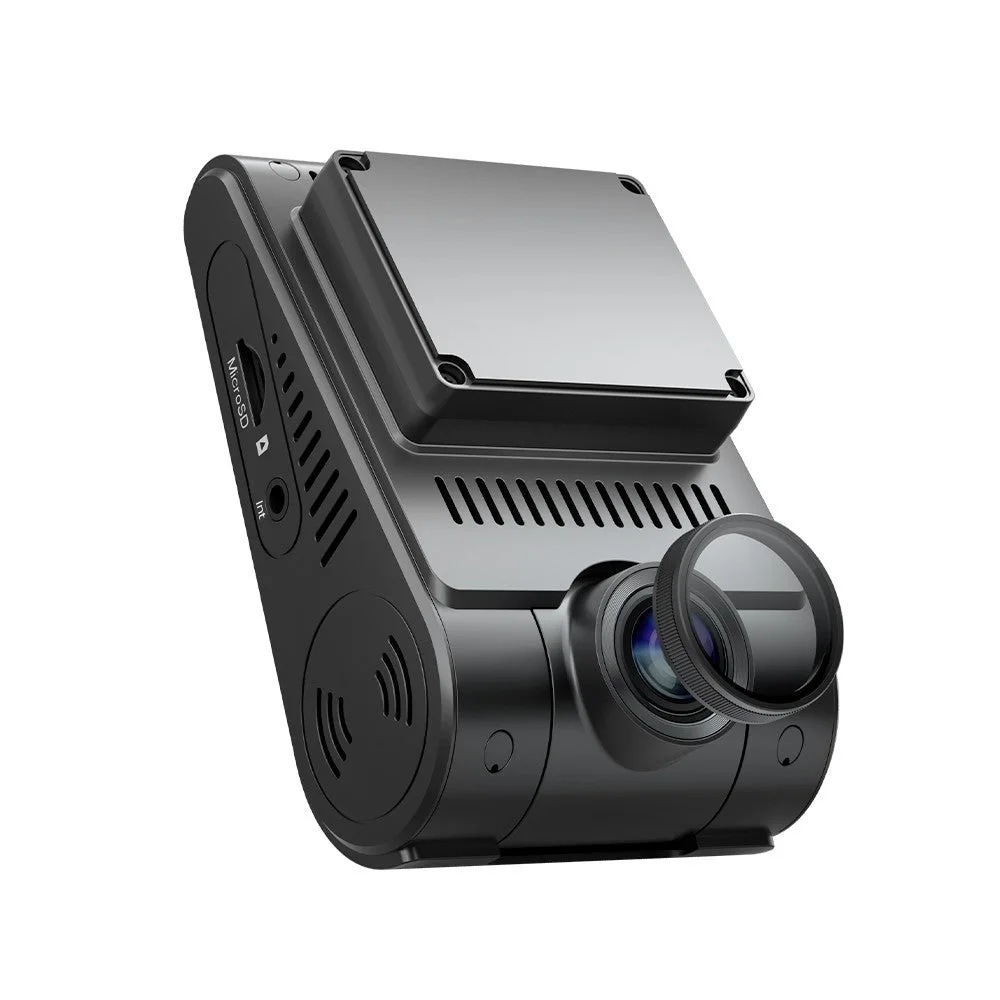 | 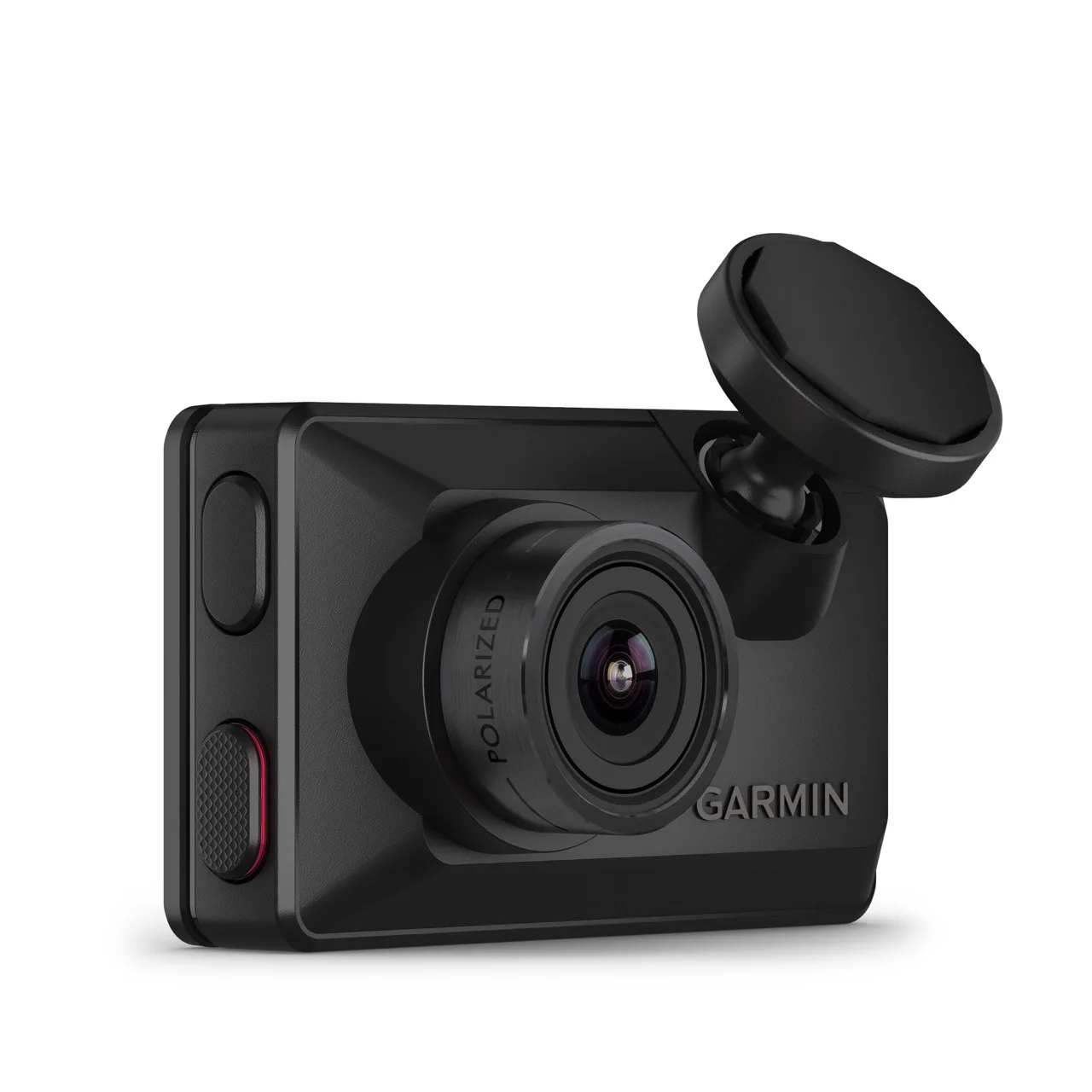 | 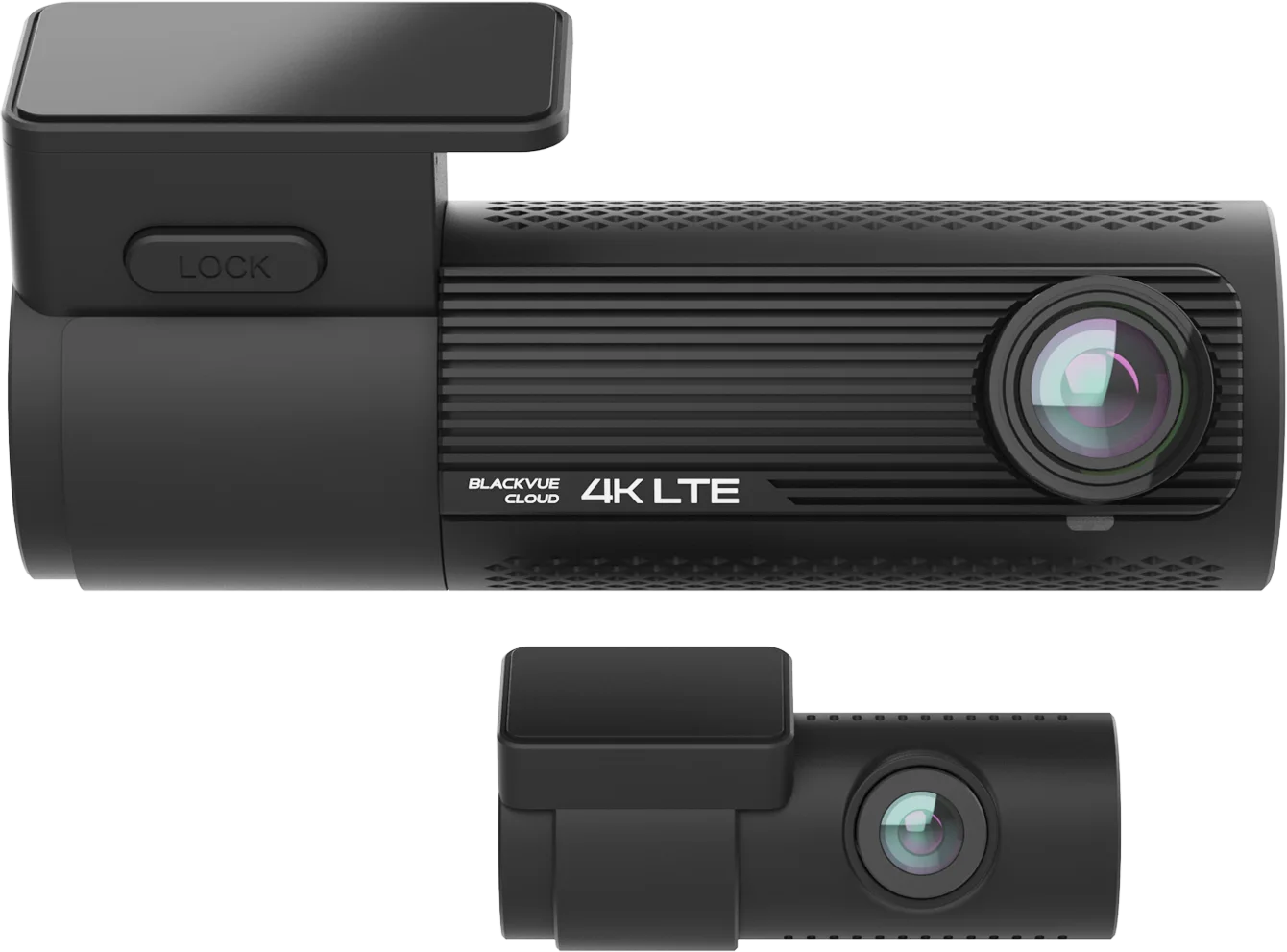 |
|---|---|---|---|
| Score | 7.6 | 5.4 | 7.4 |
| Front resolution | 2,160 px | 2,160 px | 2,160 px |
| Front frame rate | 30 fps | 30 fps | 30 fps |
| STARVIS 2 sensor | Yes | — | Yes |
| HDR | Yes | Yes | Yes |
| Coverage (channels) | 2 | 1 | 2 |
| Rear resolution | 1,440 px | — | 1,080 px |
| Buffered parking mode | Yes | Yes | Yes |
| Low-bitrate parking | Yes | No | No |
| Heat tolerance (power cell) | supercapacitor | battery | supercapacitor |
| GPS | built-in | built-in | built-in |
| Wi-Fi transfer | 5GHz | 5GHz | 5GHz |
| Max storage | 512 GB | 512 GB | 1,024 GB |
| LTE / cloud | No | No | Yes |
| Front pixels per degree | 27.43 px/° | — | 26.3 px/° |
| Rear STARVIS 2 sensor | Yes | — | No |
| Time-lapse parking | Yes | No | Yes |
| Max operating temperature | 65°C | 60°C | 70°C |
| Price | $349.99 at VIOFO, Nov 20 | $399.99 at Garmin, Nov 20 | $514.99 at BlackVue, Nov 20 |
| Where to buy | Check price on Amazon | Check price on Amazon | Check price on Amazon |
Which should you buy?
Choose a supercapacitor cam if your car ever sits in the sun, you plan to hardwire for parking mode, or you want the camera to last years on the windshield. That describes almost everyone.
Best supercapacitor front-and-rear cam (2 channels)
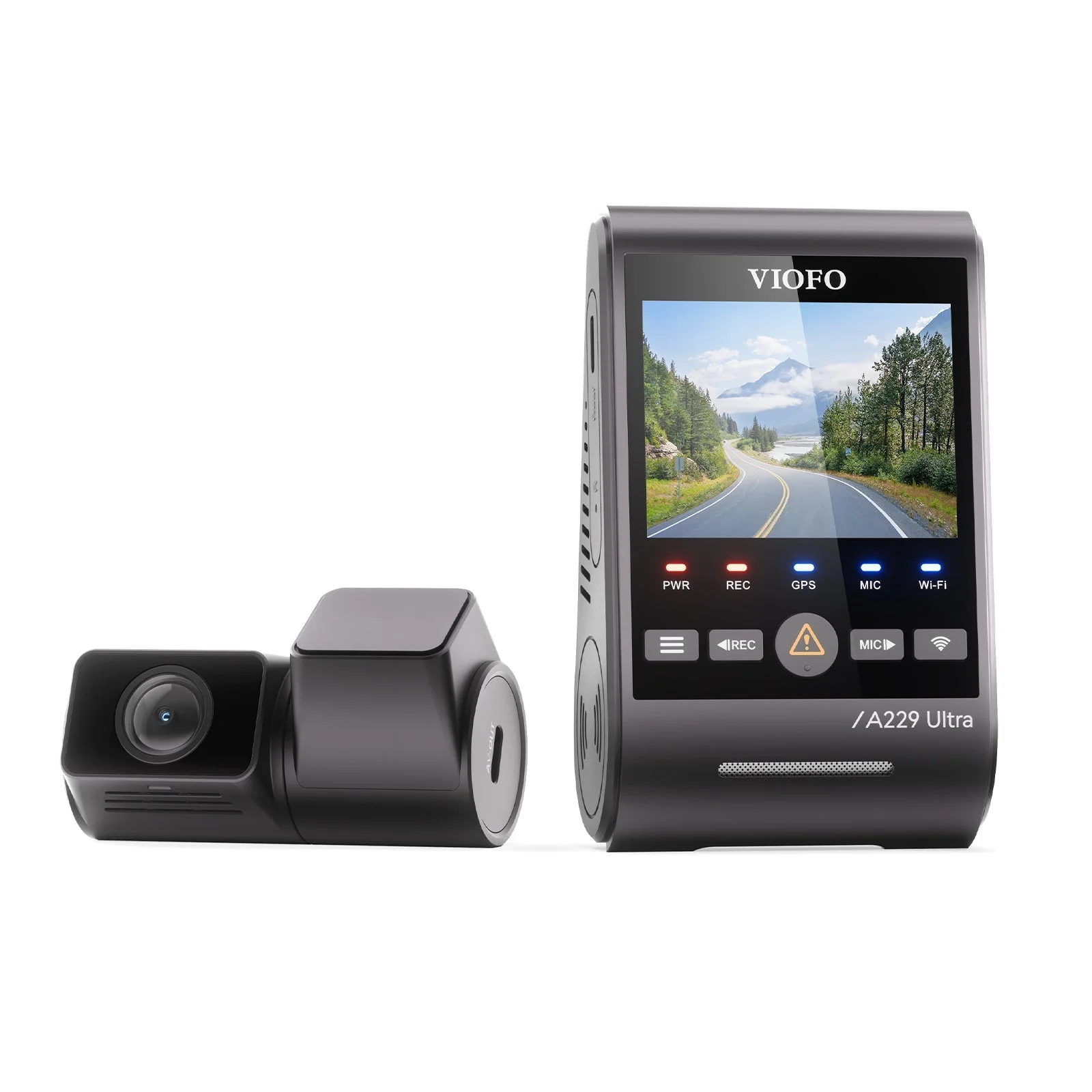
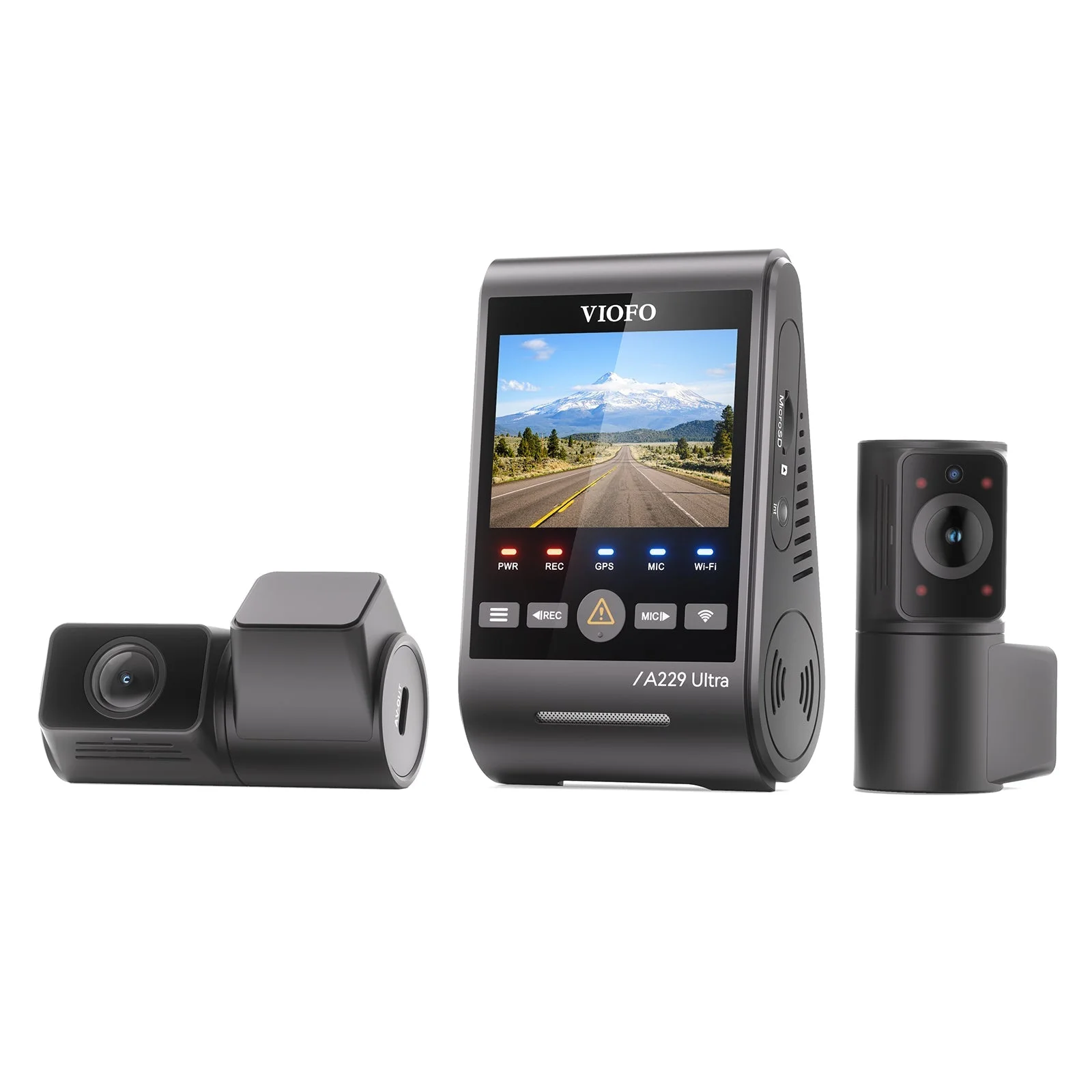
VIOFO A229 Ultra 2CH
- Front resolution
- 2,160 px
- Coverage (channels)
- 2
- STARVIS 2 sensor
- Yes
- Buffered parking mode
- Yes
The A229 Ultra 2CH is our pick here because it combines full heat-tolerance credit with buffered parking, a 4K STARVIS 2 rear camera and a 65°C rating. It’s the top-ranked cam on our front-and-rear profile, at 9.3, ahead of the BlackVue Elite 10-2CH at 9.0, and its overall Dashlore Score is 8.0. The A229 Pro 2CH (7.6) is the same platform with a 2K rear camera; reviewers like LifeHackster and Android Police praise its 4K front clarity and HDR for night plate legibility, and BlackboxMyCar notes 5 GHz Wi-Fi transfers run about four times faster than older 2.4 GHz cams. Use a high-endurance SD card, as multiple reviewers flag card quality as the biggest reliability variable. Our front and rear dash cam ranking covers the rest.
Choose a battery cam only if you specifically want Garmin’s driver alerts and polarizer, park mostly in a garage or shade, and are happy to hardwire anyway for parking coverage.
Battery pick for Garmin's driver alerts (4K, touchscreen)
Garmin Dash Cam X310
- Front resolution
- 2,160 px
- Coverage (channels)
- 1
- Buffered parking mode
- Yes
- Heat tolerance (power cell)
- battery
If you live somewhere brutally hot, look at the 70°C-rated BlackVue DR970X LTE Plus II, the highest-rated cam in our data with a STARVIS 2 sensor. See every model ranked in our dash cam rankings or our overall best dash cams list.
Frequently asked questions
Is a supercapacitor or battery better in a dash cam?
A supercapacitor, for most drivers. It handles dashboard heat better, lasts longer and is all you need if the cam is hardwired. A battery only helps if you want to record briefly with no power connected.
Can a supercapacitor dash cam record in parking mode?
Yes, with constant power from a hardwire kit or a dash cam battery pack. The capacitor itself holds only enough charge to save the last file safely when power is cut.
Do dash cam batteries swell?
Lithium batteries can swell when they're repeatedly exposed to high heat, which is why most manufacturers moved to supercapacitors for cams that live on the windshield.
Which dash cams still use batteries?
In our database, a handful: Garmin's Dash Cam X110, X210 and X310, the 70mai A810 and the Nextbase 622GW. Every VIOFO, BlackVue, Thinkware and Vantrue we track uses a supercapacitor.
Will a supercapacitor dash cam work in cold weather?
Supercapacitors cope with cold better than lithium batteries, which shouldn't be charged below freezing. The camera's own published operating range is still the limit to check.
Related reading
Best ofDash Cams
Best Dash Cams: Every Major Model Ranked by Spec
Every dash cam we track, ranked on a published rubric, with picks for front and rear, 4K plate detail, night driving, parking mode and under $200.
VersusDash Cams
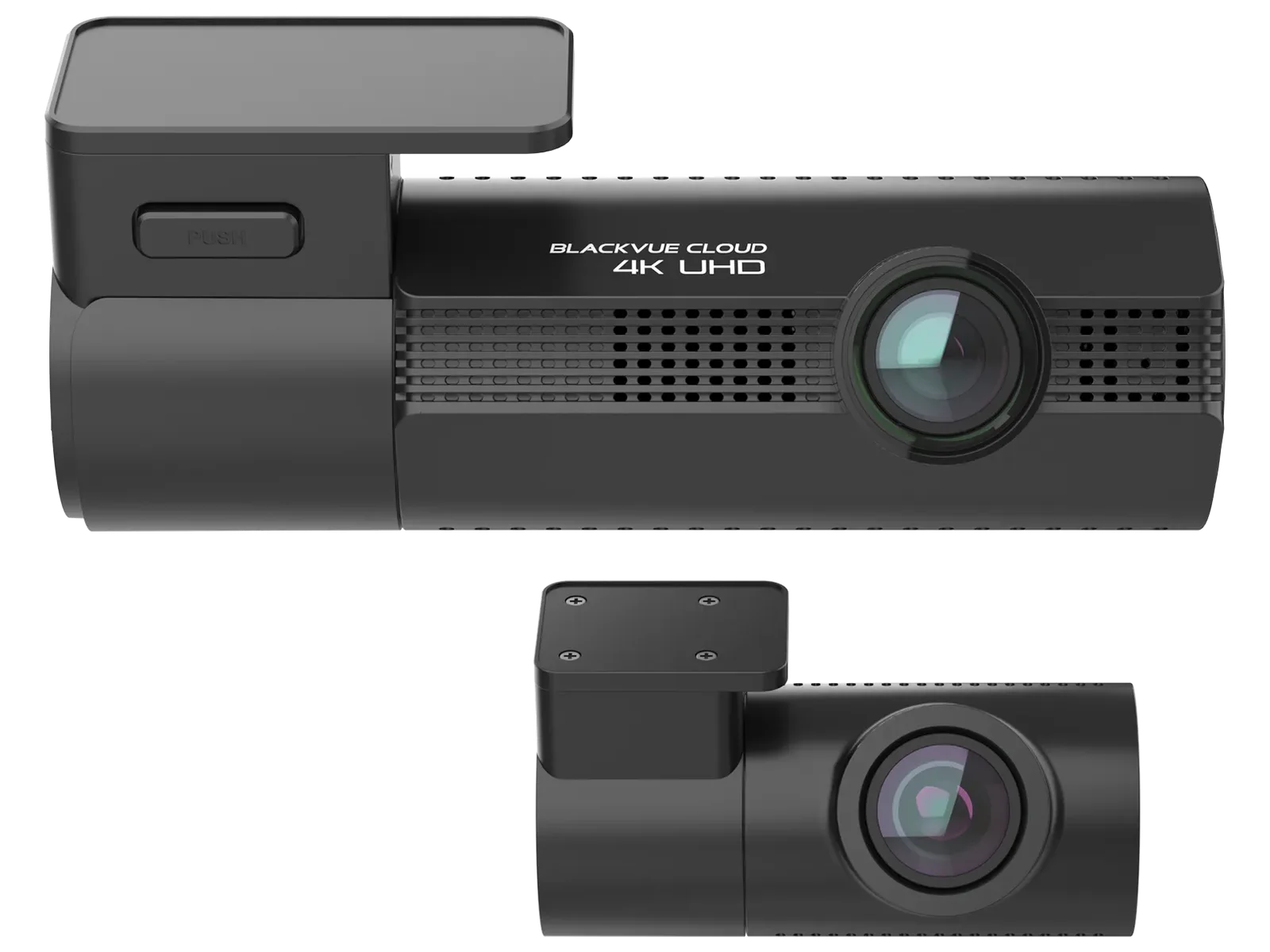
BlackVue vs VIOFO: Which Dash Cam Brand Is Better?
BlackVue vs VIOFO compared model for model on our rubric: VIOFO wins on screens, 3-channel options and parking modes; BlackVue on cloud, LTE and 1TB cards.
GuideDash Cams
How to Choose a Dash Cam: 9 Specs That Actually Matter
How to choose a dash cam from the real spread of specs across every model we track: channels, 4K vs 1440p, STARVIS 2, supercapacitors, parking and GPS.
GuideDash Cams
Dash Cam Parking Mode Explained: Buffered vs Time-Lapse
Dash cam parking mode explained: buffered, time-lapse, low-bitrate and impact-only recording compared, with buffer lengths and which cams support each.