Dash Cam Laws by State: Windshield Mounting Rules
Dash cam laws by state: every state's windshield-obstruction statute in one cited table, the nine with set mounting zones, and the audio-consent rules too.
Disclosure: Dashlore earns a commission on purchases made through some links on this page, at no added cost to you. Scores come from the spec rubric, never from commission rates. Details
On this page
Key takeaways
- Dash cams are legal to own and use in all 50 states and D.C.; what states regulate is where you put one on the windshield.
- Nine states in our data spell out zones or size limits, led by California, whose Vehicle Code § 26708(b)(13) names three legal spots for a video event recorder.
- 27 states use a general test: nothing on the windshield that obstructs the driver's view. Eight have stricter text that lists only specific allowed items.
- Georgia, Minnesota and Ohio explicitly allow electronic devices or safety-monitoring equipment on the glass.
- Recording audio is a separate question: about a dozen states generally require everyone's consent, and California requires a posted notice.
Dash cams are legal in all 50 states and D.C. What varies is where you can mount one on the windshield. Nine states define exact zones or size limits, four expressly allow electronic devices, 27 use a general “don’t obstruct the driver’s view” test, and eight have stricter text that lists only specific allowed items. California’s Vehicle Code § 26708 is the most detailed, naming three legal spots.
The table below covers all 51 jurisdictions. Every row links to the statute or official source. We built it from the same statute-cited dataset behind our radar detector laws by state tool, because the windshield-obstruction rules that govern a radar detector govern a dash cam too. For the detector side, see are radar detectors legal.
Which states restrict windshield mounting?
| State | Rule type | What the windshield statute says | Source |
|---|---|---|---|
| Alabama | Obstruction test | No signs, posters or nontransparent material that obstruct the view | Source |
| Alaska | Obstruction test | No nontransparent material that obstructs or impairs the view | Source |
| Arizona | Set zones | Only a 7-in square, lower passenger corner, or a 5-in square, lower driver corner | Source |
| Arkansas | Set zones | No obstructing material more than 4.5 in above the bottom of the windshield | Source |
| California | Set zones | Video event recorders: 5-in square top center, 7-in square lower passenger corner or 5-in square lower driver corner | Source |
| Colorado | Obstruction test | Driver vision through required glass must be normal and unobstructed | Source |
| Connecticut | Obstruction test | No device attached or hung that interferes with an unobstructed view | Source |
| Delaware | Strict text | No signs, posters or nontransparent material other than legally required papers | Source |
| District of Columbia | No dash-cam rule found | We found no D.C. statute addressing windshield-mounted devices; mounting behind the mirror avoids any obstruction question | — |
| Florida | Strict text | Only listed items, such as toll devices and GPS units; cameras aren’t listed | Source |
| Georgia | Devices allowed | Stand-alone electronic devices may be mounted so as to minimize obstruction | Source |
| Hawaii | Set zones | Only a 7-in square in the corner farthest from the driver or a 5-in square nearest the driver | Source |
| Idaho | Obstruction test | No nontransparent material that obstructs the driver’s clear view | Source |
| Illinois | Obstruction test | No objects between driver and windshield that materially obstruct the view | Source |
| Indiana | Set zones | Only items up to 4 in square in the lower corner farthest from the driver | Source |
| Iowa | Obstruction test | Windshield must permit clear vision | Source |
| Kansas | Obstruction test | No nontransparent material that substantially obstructs the view | Source |
| Kentucky | Strict text | No sign, product or covering on the windshield except required papers and a top sunscreen strip | Source |
| Louisiana | Obstruction test | No object on or affixed to the windshield that obstructs or reduces the clear view | Source |
| Maine | Obstruction test | No objects placed or hung that obstruct the view through the windshield | Source |
| Maryland | Set zones | No obstructing objects; nontransparent material limited to high-windshield or small lower-corner areas | Source |
| Massachusetts | Obstruction test | No signs, posters or stickers that obstruct, impede or distort vision | Source |
| Michigan | Strict text | No nontransparent material on the front windshield and no object that obstructs vision | Source |
| Minnesota | Devices allowed | Driver feedback and safety monitoring equipment allowed just behind, above or below the mirror | Source |
| Mississippi | Strict text | No signs or posters other than required or authorized papers | Source |
| Missouri | Obstruction test | Labels, stickers and signs allowed if they don’t interfere with the normal view | Source |
| Montana | Obstruction test | No nontransparent material that obstructs the view | Source |
| Nebraska | Obstruction test | No objects that significantly obstruct the view (secondary offense only) | Source |
| Nevada | Set zones | Nontransparent material only within a 6-in square, lower corner farthest from the driver | Source |
| New Hampshire | Obstruction test | No opaque material on or beside the windshield that obstructs the clear view | Source |
| New Jersey | Strict text | No non-transparent material on the front windshield other than required items | Source |
| New Mexico | Strict text | No signs, posters or nontransparent material on the front windshield | Source |
| New York | Obstruction test | No objects placed or hung that obstruct the view through the windshield | Source |
| North Carolina | No object rule cited | The cited statute covers wipers and tint, not mounted objects | Source |
| North Dakota | Obstruction test | No nontransparent material that obstructs the view | Source |
| Ohio | Devices allowed | Electronic devices, including cameras, allowed if they don’t block signs and signals | Source |
| Oklahoma | Obstruction test | No material or suspended objects that materially obstruct the view | Source |
| Oregon | Obstruction test | No material that prevents or impairs seeing into or out of the vehicle | Source |
| Pennsylvania | Obstruction test | No objects that materially obstruct vision through the windshield | Source |
| Rhode Island | Obstruction test | No opaque items that obstruct the view of the road | Source |
| South Carolina | Obstruction test | No nontransparent material that obstructs the view | Source |
| South Dakota | Obstruction test | No nontransparent material that obstructs the clear view | Source |
| Tennessee | No object rule cited | The cited statute limits tint (70% light transmittance), not mounted objects | Source |
| Texas | Obstruction test | Misdemeanor to drive with an object attached that obstructs or reduces the clear view | Source |
| Utah | Set zones | No device that significantly obstructs; nontransparent material only in the top 4 in or a 3-by-4-in lower-left area | Source |
| Vermont | Set zones | Items only in a 4-by-12-in lower-right or 2-by-2.5-in upper-left area, or transponders behind the mirror | Source |
| Virginia | Devices allowed | Dash cameras allowed if the camera, wires and mounts are wholly or mostly concealed behind the rear-view mirror; police can’t stop a car for this alone | Source |
| Washington | Obstruction test | No nontransparent material that obstructs the clear view | Source |
| West Virginia | Obstruction test | No nontransparent material that obstructs the view | Source |
| Wisconsin | Strict text | No nontransparent material other than government stickers, and no object obstructing the clear view | Source |
| Wyoming | Obstruction test | No material that materially obstructs the clear view | Source |
How to read the rule types:
- Set zones (9 states): the statute names areas or measurements. Mount inside them and you’re clearly compliant.
- Devices allowed (4 states): the statute expressly permits electronic devices or safety-monitoring equipment, with placement conditions.
- Obstruction test (27 states): anything is allowed unless it obstructs the driver’s view. A small cam behind the mirror generally passes.
- Strict text (8 states): the statute lists what may be on the windshield or bars nontransparent material outright, without an obstruction qualifier. Dash cams aren’t named, so placement behind the mirror, where nothing new blocks your view, is the conservative choice.
- No object rule cited (2 states): the cited statute regulates tint or wipers, not mounted objects.
- No dash-cam rule found (D.C.): no D.C. statute we found addresses windshield-mounted devices, so behind-the-mirror mounting is the safe choice.
Are dash cams legal in every state?
Yes. We found no state that bans owning or using a dash cam in a private vehicle. The legal questions are narrower:
- Where it’s mounted. Windshield-obstruction laws exist in nearly every state, and a dash cam stuck to the glass is subject to them.
- What it records. A camera that records audio inside the car can bring state eavesdropping laws into play.
- Who’s driving. Commercial trucks have a separate federal mounting rule, covered below.
Enforcement of windshield laws against dash cams is uncommon; these statutes usually get cited alongside other stops. But a ticket for an obstructed windshield is avoidable, and placement also affects your footage and your car’s driver-assist cameras. Our guide on where to mount a dash cam covers the practical side. If you’re still weighing whether a cam is worth the effort, see are dash cams worth it.
Where can you mount a dash cam in California?
California and Virginia are the only states whose statutes name dash cams directly; California calls them video event recorders. CVC § 26708(b)(13) allows one in any of three spots:
| Zone | Size | Condition |
|---|---|---|
| Top center of the windshield | 5-inch square | None stated |
| Lower corner farthest from the driver | 7-inch square | None stated |
| Lower corner nearest the driver | 5-inch square | Outside the airbag deployment zone |
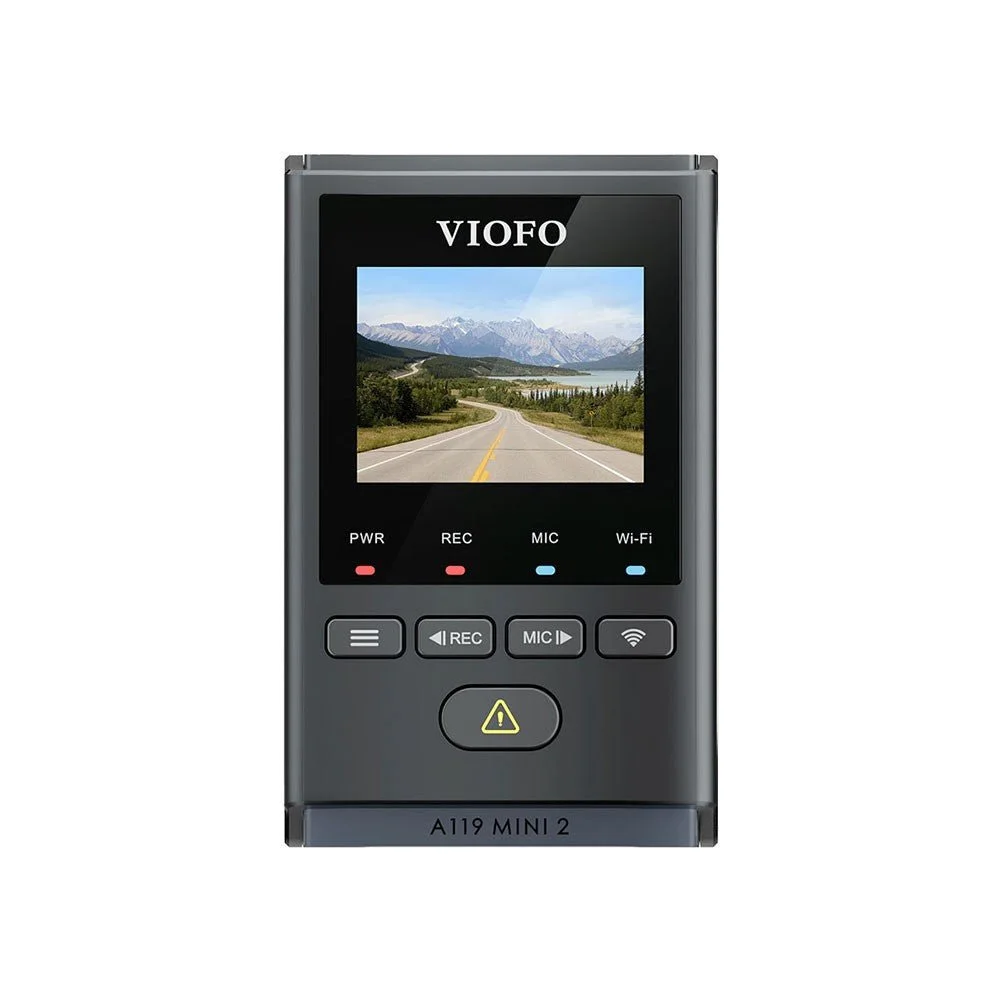
The top-center zone is the one most drivers want, because it’s where a cam hides behind the rearview mirror. Most compact cams fit easily. VIOFO lists the A119 Mini 2 at 1.81 x 1.77 x 2.94 inches, well inside a 5-inch square.
Section 26708(b)(13) carries three more conditions worth knowing:
- Passenger notice. A vehicle with a video event recorder “shall have a notice posted in a visible location which states that a passenger’s conversation may be recorded.”
- Event storage. It says recorders “shall store no more than 30 seconds before and after a triggering event.”
- Ownership. The owner or lessee may disable the device, and the recorded data is their property.
The statute’s definition covers a recorder “that continuously records in a digital loop, recording audio, video, and G-force levels,” which describes nearly every consumer dash cam. California applies the same windshield rules to radar detectors; see radar detector laws in California for how § 26708 affects those devices.
How do the zone states compare?
Outside California, the zone states fall into two groups.
Lower-corner states. Arizona and Hawaii mirror California’s 7-inch and 5-inch lower-corner squares but don’t name a top-center zone. Indiana allows items up to 4 inches square in the lower corner farthest from the driver, and Nevada allows a 6-inch square there. In these states, the conservative mount is the lower passenger corner. A camera fully hidden behind the mirror arguably obstructs nothing, but the statute text doesn’t name that spot.
Top-strip states. Utah allows nontransparent material in the top 4 inches of the windshield or a 3-by-4-inch lower-left area. Vermont allows a 2-by-2.5-inch upper-left area, a 4-by-12-inch lower-right area, or toll transponders behind the mirror. Arkansas bars obstructing material more than 4.5 inches above the bottom of the windshield, and Maryland limits nontransparent material to high-windshield or small lower-corner areas.
Utah’s top 4 inches is roomy enough for a low-profile cam mounted right at the top edge of the glass.
Which states explicitly allow devices?
Four statutes go the other way and expressly accommodate devices:
- Virginia names dashboard cameras directly: Va. Code § 46.2-1054 allows one as long as the camera, its wires and mounts are wholly or mostly concealed behind the rear-view mirror. Police also can’t pull you over for a violation of that section alone.
- Ohio allows electronic devices such as navigation units and cameras on the windshield if they don’t block the driver’s view of signs and signals.
- Georgia allows a wireless telecommunications or stand-alone electronic device to be mounted on the windshield so as to minimize obstruction.
- Minnesota allows “driver feedback and safety monitoring equipment” mounted immediately behind, slightly above or slightly below the rearview mirror, per Minn. Stat. § 169.71. The statute doesn’t define that phrase, but the behind-the-mirror position it names is exactly where a dash cam belongs.
What about Florida and the other strict-text states?
Florida’s § 316.2952 lists four kinds of items allowed on the windshield: required papers, a transparent top sunscreen strip, government toll devices, and GPS devices used for navigation or “as a component of safety monitoring equipment capable of providing driver feedback.” Cameras aren’t listed.
Kentucky’s text is similar: no sign, product or covering on the windshield beyond required papers and a sunscreen strip. Delaware, Michigan, Mississippi, New Jersey, New Mexico and Wisconsin bar signs or nontransparent material without the “that obstructs the view” qualifier most states use.
None of these statutes mention dash cams, and we’re not aware of them being used to ban dash cams outright. If you drive in one, keep the camera small and tucked behind the mirror, or use a dash mount.
What about commercial trucks?
Commercial vehicles over 10,000 lbs follow a federal rule on top of state law. 49 CFR 393.60(e) lets “vehicle safety technologies” mount inside the windshield no more than 8.5 inches below the top of the wiper sweep or 7 inches above its bottom, outside the driver’s sight lines. The § 393.5 definition of vehicle safety technology covers systems that use cameras or video. For truck-specific models that fit these rules, see best dash cam for truck drivers.
How we compiled the statute table
Each row comes from our radar-laws dataset, which records every state’s passenger-vehicle and commercial-vehicle radar detector rules alongside the windshield-obstruction statute that governs mounting, with a link to the statute text or an official source. For this page, we classified each windshield rule into one of the six types above based on the statute’s wording:
- If the text names areas or dimensions, it’s set zones.
- If it expressly permits electronic devices, cameras or safety-monitoring equipment, it’s devices allowed.
- If it qualifies the ban with “obstructs,” “materially obstructs” or similar, it’s an obstruction test.
- If it bars material or lists allowed items with no obstruction qualifier, it’s strict text.
For California, Minnesota and Florida we went back to the statute text directly, since those are the states drivers ask about most. The table summarizes statutes for general information and isn’t legal advice. Laws change; follow the source links for current text.
Do audio recording laws apply too?
Yes, and they’re a separate set of laws entirely. Windshield statutes cover where the camera goes. Eavesdropping and wiretap statutes cover recording conversations.
Most states are one-party consent: you can record a conversation you’re part of. But about a dozen states, including California, Florida, Illinois, Maryland, Massachusetts, Pennsylvania and Washington, generally require everyone’s consent, with state-specific twists for in-person conversations, per this summary of US recording laws.
For a dash cam, that matters most when passengers are in the car:
- Rideshare and taxi drivers should post a visible notice that audio and video are recorded; our guide to Uber and Lyft dash cam rules covers platform policies, and best dash cam for rideshare ranks models with cabin channels. California requires one in any vehicle with a video event recorder.
- In all-party consent states, if you don’t want to post a notice, switch the camera’s microphone off. Nearly every dash cam has an audio toggle. Our dash cam audio recording laws guide goes state by state.
- Video of public roads generally doesn’t raise consent issues, because there’s no expectation of privacy on a public street.
What should you do with this?
Find your state in the table and match it to a mounting spot:
| Your state’s rule type | Where to mount |
|---|---|
| Set zones | Inside the named zone; in California, top center behind the mirror |
| Devices allowed | Behind the mirror, per the statute’s conditions |
| Obstruction test | Behind the mirror, passenger side |
| Strict text | Small cam fully behind the mirror, or a dash mount |
| No object rule cited | Behind the mirror |
A compact cam makes every option easier. Our best mini dash cam picks rank the smallest models, and how to choose a dash cam explains the nine specs that matter most. Use the dash cam finder to filter by channel count and features, and see the full dash cam rankings for how every model scores on our published rubric.
Frequently asked questions
Are dash cams legal in every state?
Yes. No state bans owning or using a dash cam. States regulate where you mount it, through windshield-obstruction laws, and some regulate recording conversations.
Where can you legally mount a dash cam in California?
California Vehicle Code § 26708(b)(13) allows a video event recorder in a 5-inch square at the top center of the windshield, a 7-inch square in the lower passenger-side corner, or a 5-inch square in the lower driver-side corner outside the airbag zone.
Is it illegal to have a dash cam on your windshield in Florida?
Florida's statute lists the items allowed on the windshield, such as toll devices and GPS units, and doesn't name cameras. No law bans dash cams, but a small cam tucked behind the mirror is the lowest-risk placement there.
Do I need to tell passengers my dash cam records audio?
In California, yes: § 26708 requires a visible notice that passengers' conversations may be recorded. In all-party consent states, the safest course is a posted notice or turning audio recording off.
Can I mount a dash cam on the dashboard to avoid windshield laws?
Yes. A dash-mounted camera isn't on the windshield, so obstruction statutes that cover only the glass don't apply, though it still mustn't block your view of the road.
Is dash cam footage admissible as evidence?
Yes. Courts in all 50 states accept dash cam video as evidence in traffic disputes, insurance claims and criminal cases, as long as the footage hasn't been altered and was recorded legally under that state's windshield and audio-consent rules.
Related reading
GuideDash Cams
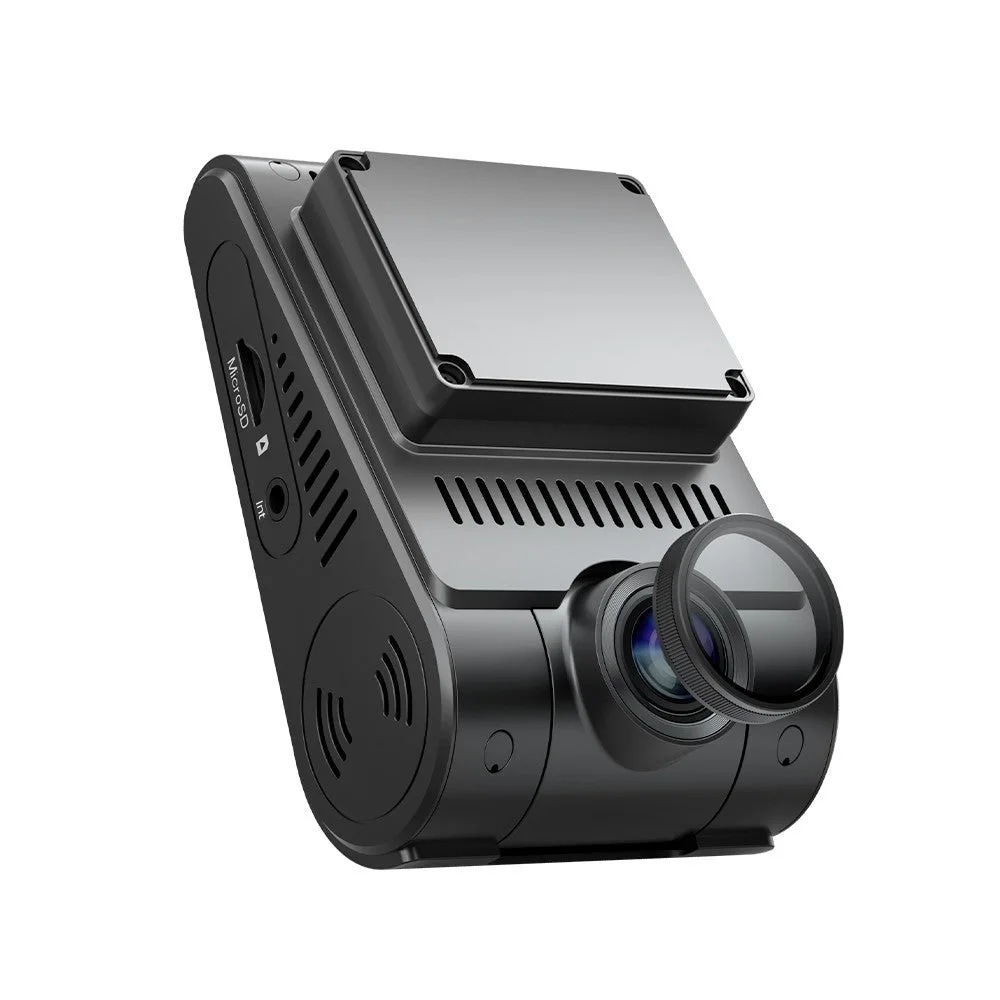
How Does Dash Cam Loop Recording Work?
Dash cam loop recording explained: how clips overwrite oldest-first, what gets protected, how card size and bitrate set your history window.
DataDash Cams
STARVIS 2 Explained: Which Dash Cams Have It
STARVIS 2 explained: what Sony's sensor tech adds over STARVIS, how the IMX678 and IMX675 differ, and which dash cams in our database use each one.
GuideDash Cams
Are Dash Cams Worth It? What the Evidence Says
Are dash cams worth it? For most drivers, yes: footage settles fault, exposes staged crashes and IDs hit-and-runs. The downsides and how much to buy.
Best ofDash Cams
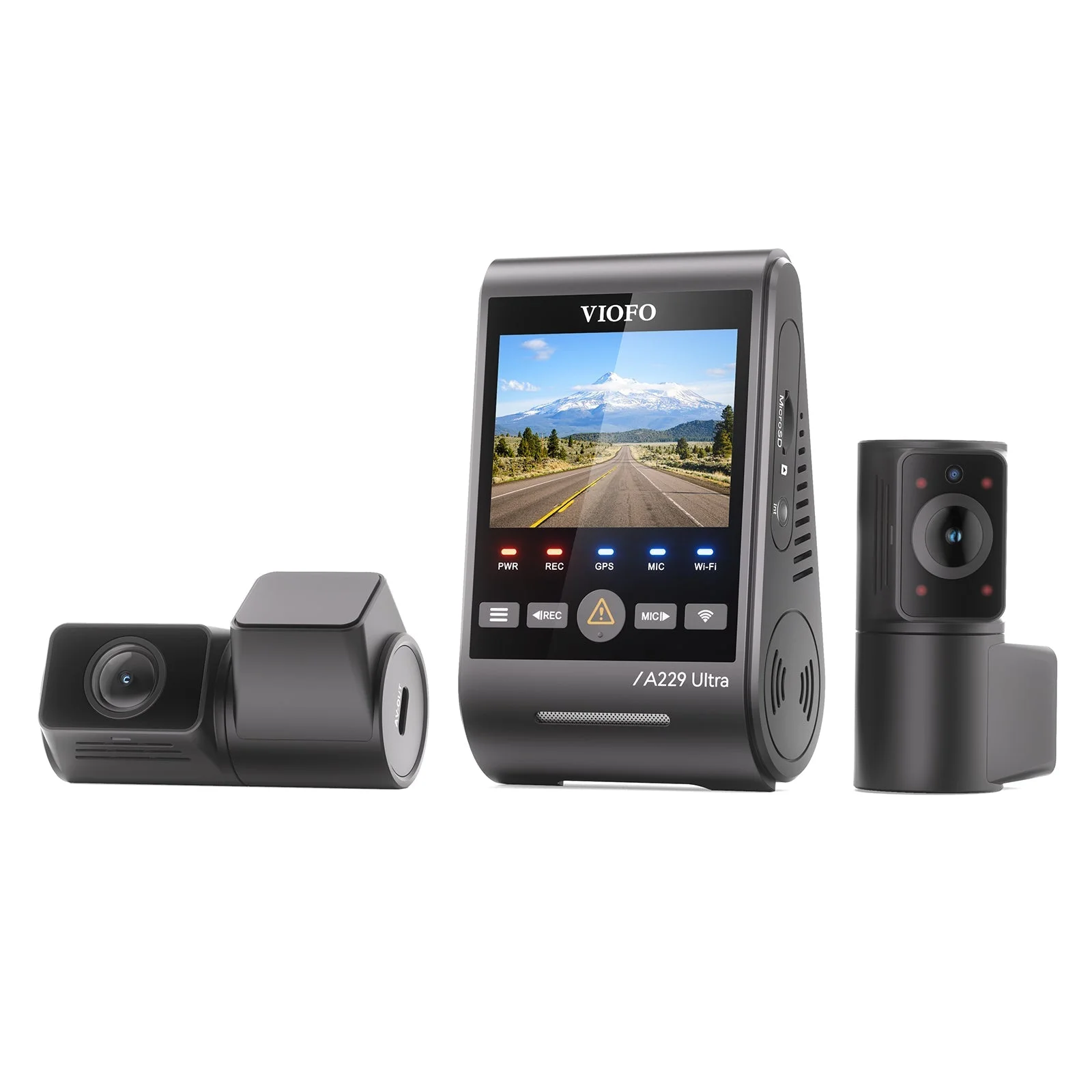
Best VIOFO Dash Cam: Every Model Ranked
The best VIOFO dash cam is the A229 Ultra 3CH. We rank every VIOFO model we track on one rubric and decode the A229, A329S, T-series and Mini lines.