Best Dash Cam for Truck Drivers: 4K Picks for Semis
The best dash cams for truck drivers: 4K cams with cabin cameras ranked for plate detail, plus the FMCSA windshield-mounting rule and crash-review video.
Disclosure: Dashlore earns a commission on purchases made through some links on this page, at no added cost to you. Scores come from the spec rubric, never from commission rates. Details
On this page
Key takeaways
- DashCamTalk's Julian23 ran the VIOFO A229 Ultra 3CH daily for two months with zero reboots or file corruption; it leads our Plate reading score at 8.8 (Dashlore Score 9.2) with dual 4K cameras.
- Every VIOFO here claims roughly 1 mA in low-power parking mode; DashCamTalk and Vortex Radar measured 24-42 mA — still manageable for a 10-hour rest break with a hardwire kit, but plan accordingly.
- FMCSA rules let a dash cam sit within 8.5 inches below the top of the wiper sweep or 7 inches above the bottom, outside the driver's sight lines.
- In a semi, the cabin channel usually matters more than the rear, because the sleeper and trailer block most of the rear view.
- FMCSA's Crash Preventability Determination Program accepts video, and a 2024 update added a crash type for any crash where video shows the sequence of events.
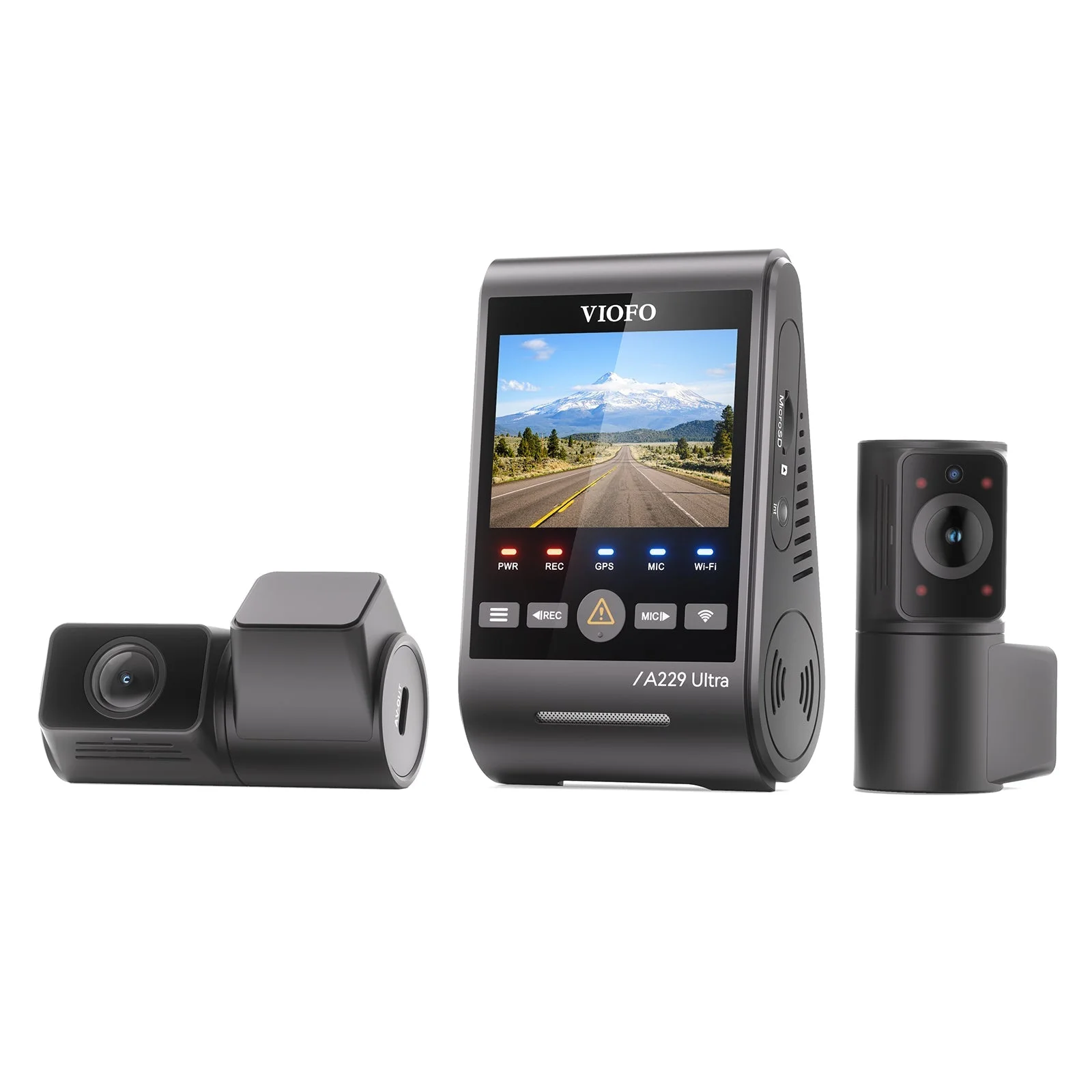
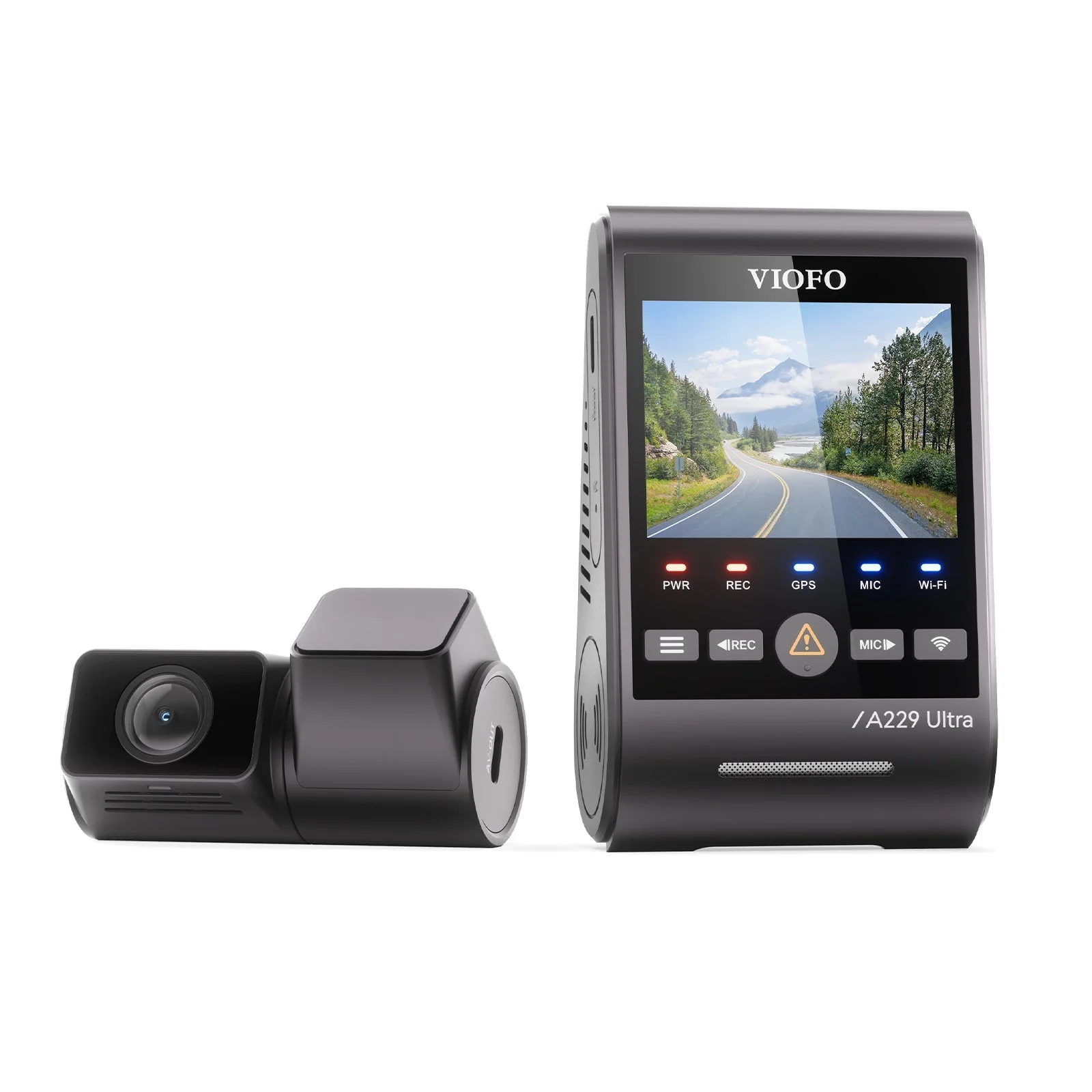
The best dash cam for truck drivers is the VIOFO A229 Ultra 3CH. DashCamTalk’s Julian23 ran it daily for two months with no reboots or file corruption, and it leads our Plate reading score at 8.8 (Dashlore Score 9.2) with dual 4K cameras and a 1080p STARVIS 2 cabin camera. The T330 3CH, A329S 3CH and T340 3CH tie for #2 at 8.4 with sharper 2K cabin views.
Our picks at a glance
Scores shown are Plate reading scores, out of 10.
- Best overall
- Best all-in-one (built-in cabin camera, 4th-camera input)
- Best for long hauls (2K cabin, SSD support)
- Best screenless with separate cabin camera
How we picked trucker dash cams
We started with every 4K dash cam with a cabin camera in our dash cam database and ranked by the Plate reading profile of our dash cam rubric, which weights front pixels per degree, resolution and frame rate most — in a sleeper tractor, the cabin camera does more useful work than the rear. The A229 Ultra 3CH leads at 8.8; four VIOFOs tie for #2 at 8.4, ordered by what matters in a truck cab. Every pick uses a supercapacitor, has buffered parking and built-in GPS.
Best overall: VIOFO A229 Ultra 3CH
Best overall
VIOFO A229 Ultra 3CH
- Front resolution
- 2,160 px
- Coverage (channels)
- 3
- STARVIS 2 sensor
- Yes
- Buffered parking mode
- Yes
A three-channel dash cam that records 4K front, 4K rear and 1080p interior video, with STARVIS 2 sensors on all three cameras. It suits rideshare drivers who want 4K behind the car as well as ahead.
Strengths
- 4K 30fps front and rear on STARVIS 2 IMX678 sensors
- 1080p interior camera on a STARVIS 2 IMX662 with a 210° field of view
- HDR on all three channels
- Buffered, time-lapse and low-bitrate parking modes
Watch out for
- Parking mode needs an optional HK4 or HK6 hardwire kit
- Interior camera is 1080p while the A329S 3CH records 2K inside
DashCamTalk’s Julian23 used the A229 Ultra 3CH daily for two months and reported zero reboots, freezes or file corruption, including overnight parking sessions on a Samsung Pro Plus 256 GB card. Dash Cam Guys found its HDR manages headlight glare well enough for plates to remain readable when competitors wash out. It’s the only pick with 4K on both front and rear cameras, each on a Sony STARVIS 2 IMX678, plus a 1080p IMX662 cabin camera with 210° coverage and infrared LEDs.
One trade-off matters for truckers: Vortex Radar measured front bitrate at 59.87 Mbps in single-channel mode, dropping to 36.11 Mbps in two- or three-channel recording. VIOFO confirmed a firmware fix for 2CH but not for 3CH. Rear plate capture depends on lighting, and in a sleeper tractor the rear mostly sees the sleeper wall — so the dual 4K earns its keep in day cabs, bobtailing and hotshot rigs. Parking needs the HK4 or HK6 kit.
Best all-in-one: VIOFO T340 3CH
Best all-in-one (built-in cabin camera, 4th-camera input)
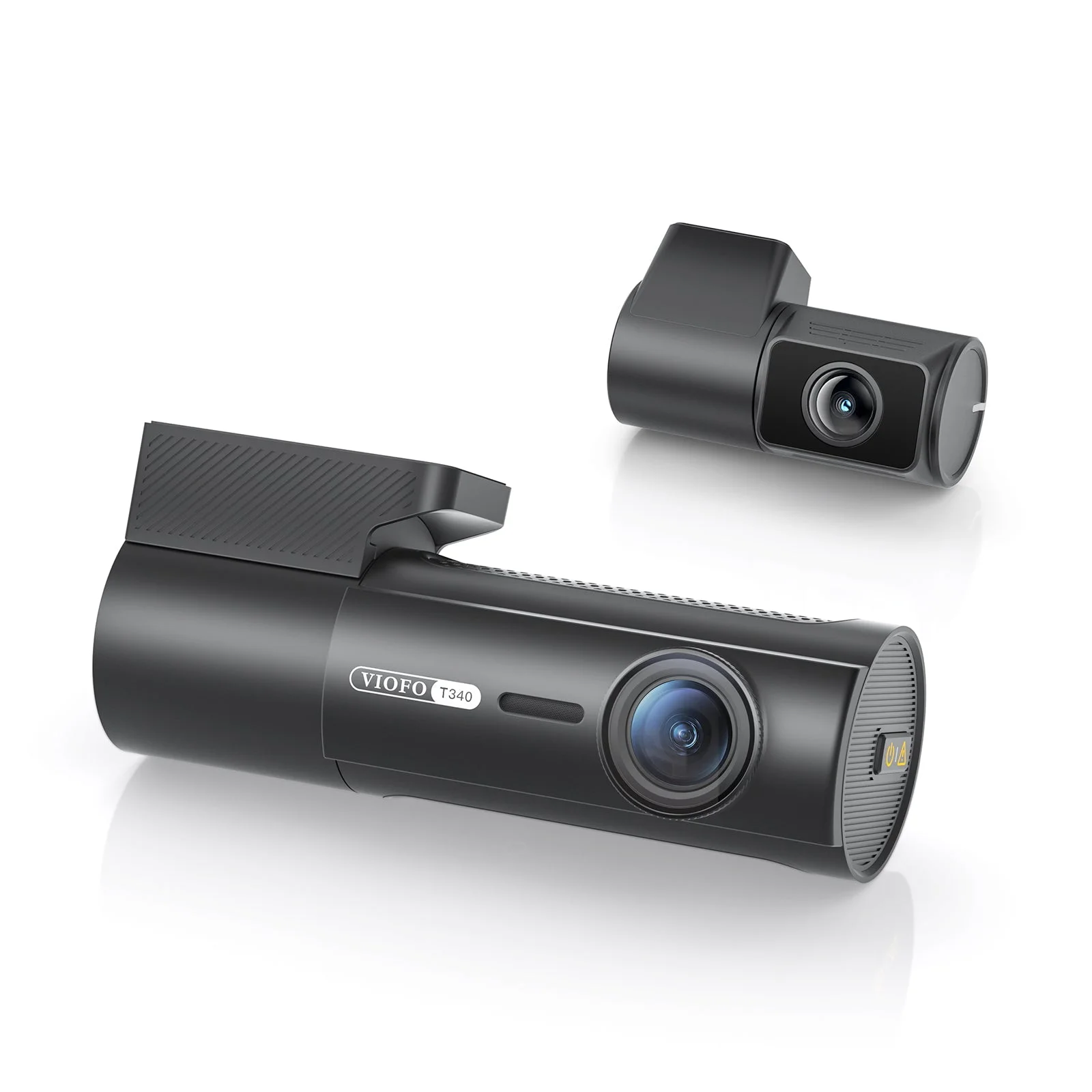
VIOFO T340 3CH
- Front resolution
- 2,160 px
- Coverage (channels)
- 3
- STARVIS 2 sensor
- Yes
- Buffered parking mode
- Yes
A screenless three-channel dash cam with a 4K front camera, a 2K rear camera and a built-in 2K infrared cabin camera with a 210° view. It suits rideshare drivers who want an all-in-one front and cabin unit.
Strengths
- 4K front on a STARVIS 2 IMX678, 2K rear on a STARVIS 2 IMX675, 2K interior, all at 30fps
- Built-in IR interior camera with a 210° field of view
- Wi-Fi 6 on 2.4GHz and 5GHz, built-in GPS and voice control
- Five parking modes including hybrid, buffered, time-lapse and low bitrate
Watch out for
- HDR on the front plus only one of the interior or rear cameras
- Interior camera uses an OmniVision OS04J10 sensor
- No display; parking needs the optional HK6-F hardwire kit
Ashley Neal’s install review found the front camera captures every oncoming plate even on dark roads. Vortex Radar confirmed the STARVIS 2 IMX678 with HDR marks a clear upgrade over older VIOFOs. The T340 puts front and cabin cameras in one screenless housing — the easiest way to stay inside the FMCSA mounting zone — and its owner’s manual lists support for a fourth camera.
The caveats are real. Vortex Radar’s full review documented frame skipping and parking-mode audio-video desync that VIOFO is working to patch. HDR runs on two channels at a time, not all three like the T330, as DashCamTalk’s rcg530 confirmed. The cabin sensor is an OmniVision OS04J10, not Sony STARVIS 2 (Dash Cam Guys). A tamper-resistant cover blocks casual access to cables and the SD card — useful at truck stops. Parking needs the HK6-F kit; Vortex Radar measured LPID at 36 mA, not the 1 mA VIOFO claimed.
Best for long hauls: VIOFO A329S 3CH
Best for long hauls (2K cabin, SSD support)
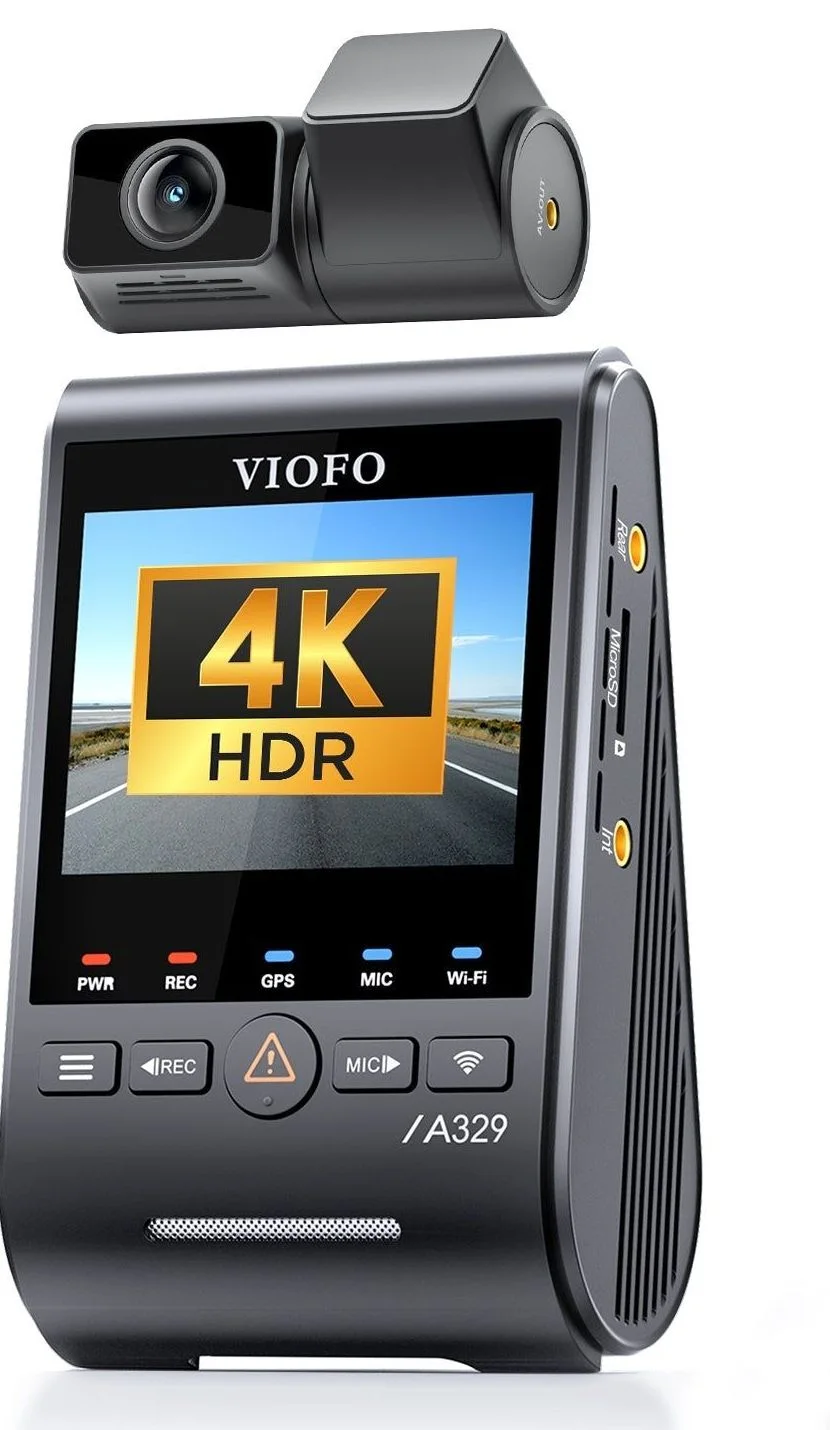
VIOFO A329S 3CH
- Front resolution
- 2,160 px
- Coverage (channels)
- 3
- STARVIS 2 sensor
- Yes
- Buffered parking mode
- Yes
A three-channel dash cam with 4K front, 2K rear and a 2K 210° fisheye cabin camera, all on STARVIS 2 sensors with HDR. It suits rideshare drivers who want wide cabin coverage and high-resolution exterior footage.
Strengths
- 4K front, 2K rear and 2K interior, all at 30fps with HDR on every channel
- 210° interior field of view on a STARVIS 2 IMX675 sensor
- Wi-Fi 6 and support for an external SSD up to 4TB
- Five parking modes including hybrid, buffered, time-lapse and low bitrate
Watch out for
- Parking mode needs an optional HK4 or HK6 hardwire kit
- Supercapacitor with no internal battery
Tom’s Guide awarded it Editor’s Choice for image quality across all three channels, and Digital Camera World found street signs legible in low light. The trucker advantage is storage: besides microSD up to 512 GB, VIOFO’s product page lists support for an external SSD up to 4 TB, so a clip from two days ago is still there when a claim comes in. The 2K cabin camera on a STARVIS 2 IMX675 behind a 210° fisheye gives a third more resolution than the 1080p cabin cameras on the A229 Pro and A229 Ultra.
Chuck McCoy on DashCamTalk measured 54 Mbps front bitrate in 3CH mode and a 19-second boot time — nearly double the older A329. He also measured the diagonal FOV at 111°; VIOFO claims 140°. Low-power impact detection draws 34 mA per rcg530 and 42 mA per Safe Drive Solutions, not the 1 mA VIOFO claims. Parking needs the HK4 or HK6 kit.
Best screenless with a separate cabin camera: VIOFO T330 3CH
Best screenless with separate cabin camera
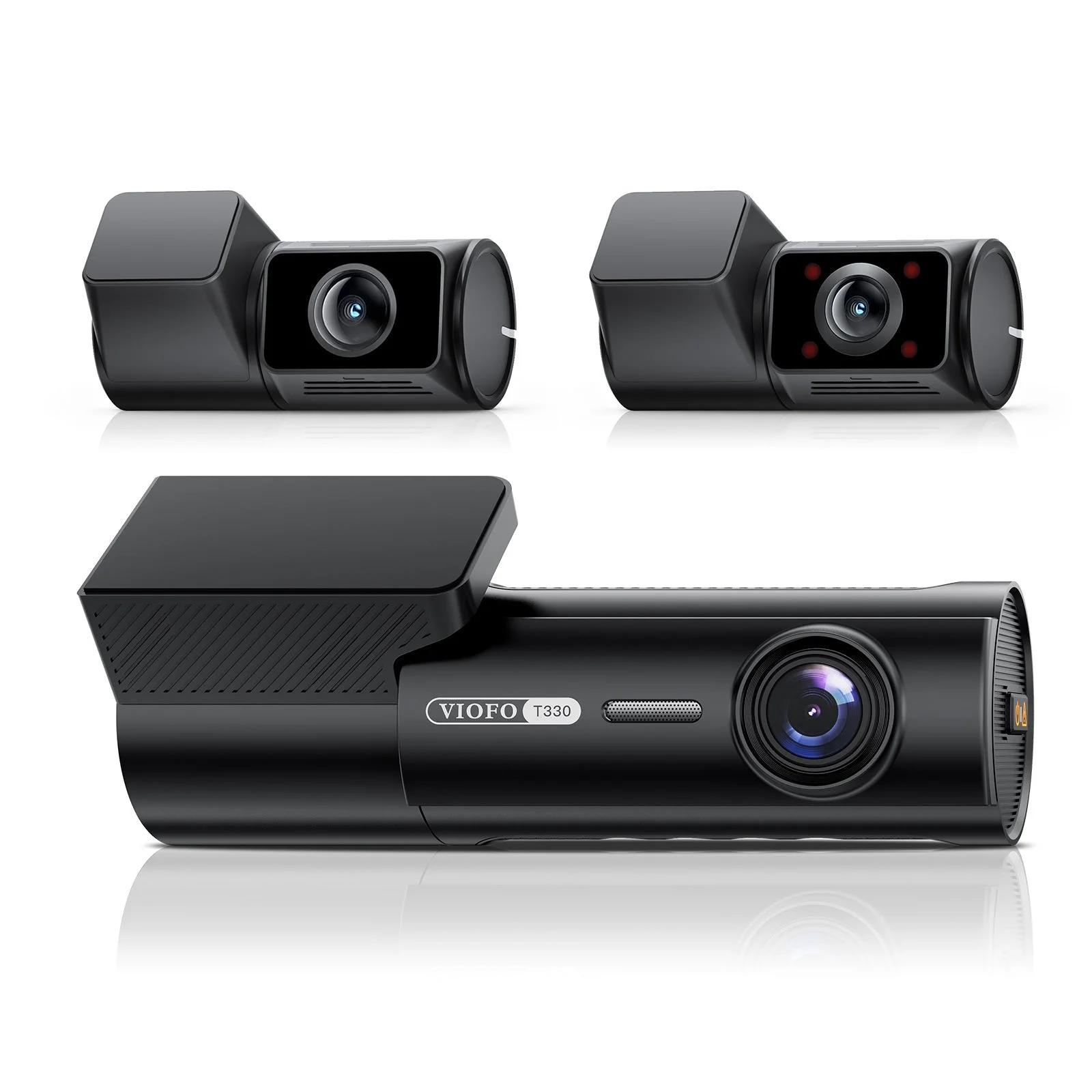
VIOFO T330 3CH
- Front resolution
- 2,160 px
- Coverage (channels)
- 3
- STARVIS 2 sensor
- Yes
- Buffered parking mode
- Yes
A screenless three-channel dash cam with 4K front, 2K rear and a 2K 210° fisheye cabin camera with IR LEDs, all with HDR. It suits rideshare drivers who want a discreet camera managed from the app.
Strengths
- 4K front, 2K rear and 2K interior at 30fps on STARVIS 2 sensors
- Separate 210° fisheye cabin module on a STARVIS 2 IMX675 with IR LEDs; HDR on all three channels
- Wi-Fi 6 on 2.4GHz and 5GHz, built-in GPS and voice control
- Five parking modes including hybrid, buffered, time-lapse and low bitrate
Watch out for
- No display; setup and playback are done through the app
- Parking mode needs the optional HK6-F hardwire kit
Aussiecams found license plates clearly visible on both front and rear cameras after nearly a month of daily testing. DashCamTalk’s rcg530 used thermal imaging and found the T330 runs significantly cooler than a Vantrue E1 Pro, which hit 149°F near the card slot after just 30 minutes — a meaningful advantage in a sun-baked cab. HDR runs on all three channels, an upgrade over the T340’s two-channel limit.
The separate 210° fisheye cabin module lets you aim the cabin view independently of the road camera, useful in a tall truck cab. Vortex Radar notes it supports five parking modes including a hybrid that starts normal and switches to low-power as the battery drains. rcg530 measured LPID at 24-26 mA — better than the T340’s 36 mA, but still above VIOFO’s 1 mA claim. Our T330 vs T340 comparison covers the differences.
Also tied for #2: VIOFO A229 Pro 3CH
Digital Camera World’s Alistair Charlton praised a “shocking lack of grainy noise after sunset,” and TechRadar found DOL-HDR handles tunnel transitions well for plate capture. But DashCamTalk’s RCG measured 75.2°C at the SD card slot in a 4.5-hour indoor test at 27°C ambient — well above VIOFO’s 65°C rating — and three owners on DashCamTalk cite summer heat as a reliability concern. Front bitrate drops from 60 to 36 Mbps when the interior camera is connected. Its cabin camera uses the older STARVIS IMX307 with a 150° view, the narrowest of the tied VIOFOs. The A229 Pro 3CH specs page has the full breakdown, and our best VIOFO dash cam roundup ranks the full lineup.
Next in line: Vantrue N4 Pro S
Leadfoot Automotive’s three-week side-by-side confirmed the N4 Pro S reads plates more clearly than the N4S at 40 feet in low light, and DashCamTalk’s EricSan measured 31.9 Mbps front bitrate in 3CH mode. It takes microSD cards up to 1 TB, twice the VIOFOs’ 512 GB.
For trucks, three issues. The original rear camera vibrated enough to blur footage — three owners on DashCamTalk reported it, prompting a mid-production redesign. Notebookcheck and Dash Cam Guys both found the G-sensor triggers too easily at default, filling storage with locked files from speed bumps. And Vantrue rates it to 60°C, 5°C below the VIOFOs. Its 3.19-inch screen is the largest here — measure the FMCSA zone first.
Need built-in LTE? BlackVue DR970X-2CH LTE Plus II
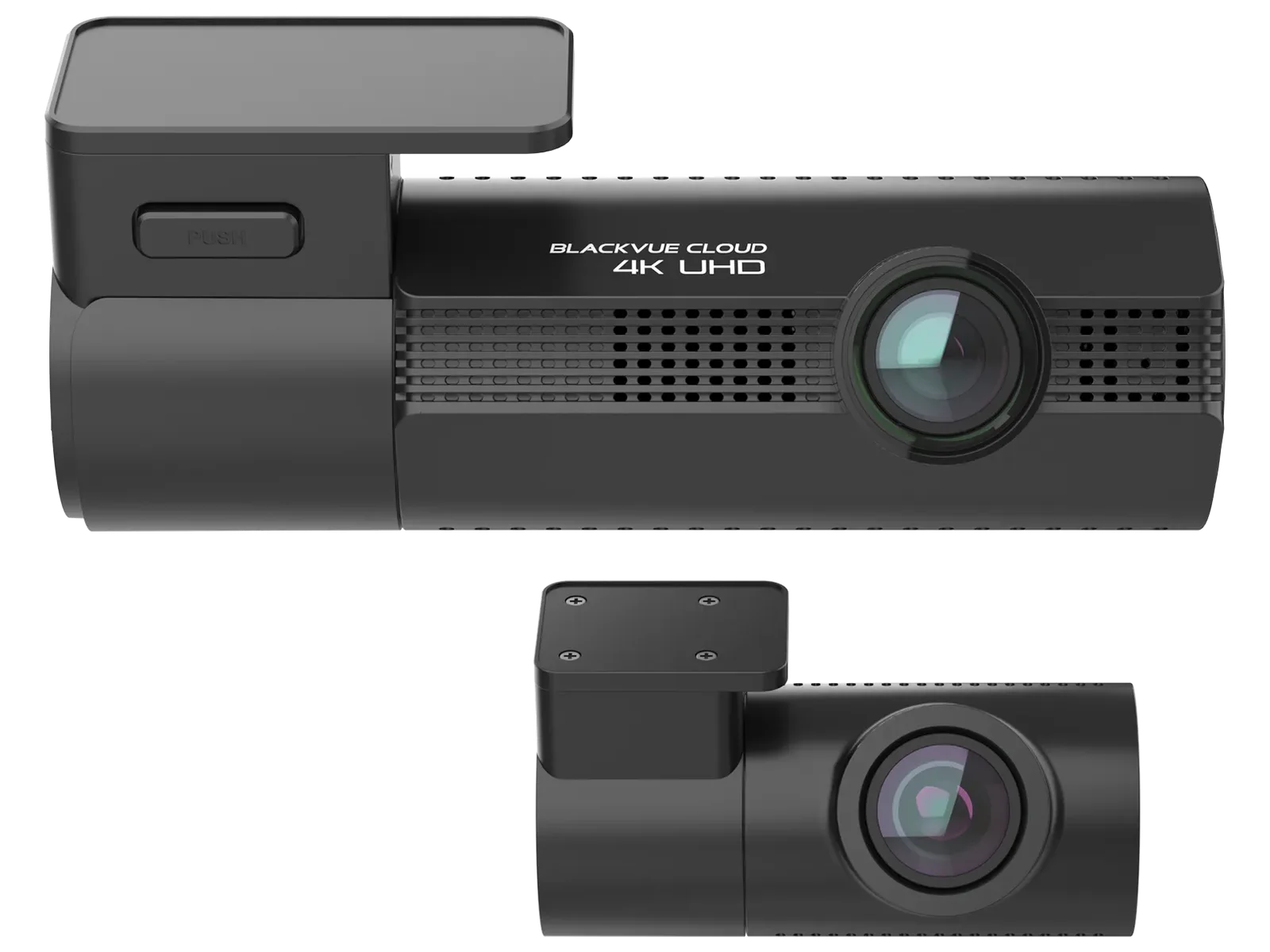
Jeff Daum’s field test found nighttime footage improved over the older DR900S, and the Series II adds HDR. But Vortex Radar concluded the camera isn’t as sharp as the VIOFO A229 Pro in side-by-side 4K front comparisons, and the 1080p rear is a noticeable step down. The DR970X-2CH LTE Plus II is the only cam here with a built-in 4G LTE modem and is rated to 70°C, 5°C above the VIOFOs.
Jeff Daum measured parking-mode draw at 430 mA; BlackVue claims 370 mA. Recording draw measured 7.08 W versus a claimed 6.36 W. Three owners on ProductReview report 5 GHz WiFi drops, and four owners across sources report SD card compatibility issues. It’s 2-channel only with no cabin camera. Our BlackVue vs VIOFO comparison covers the brands head to head.
| Spec | | | | | 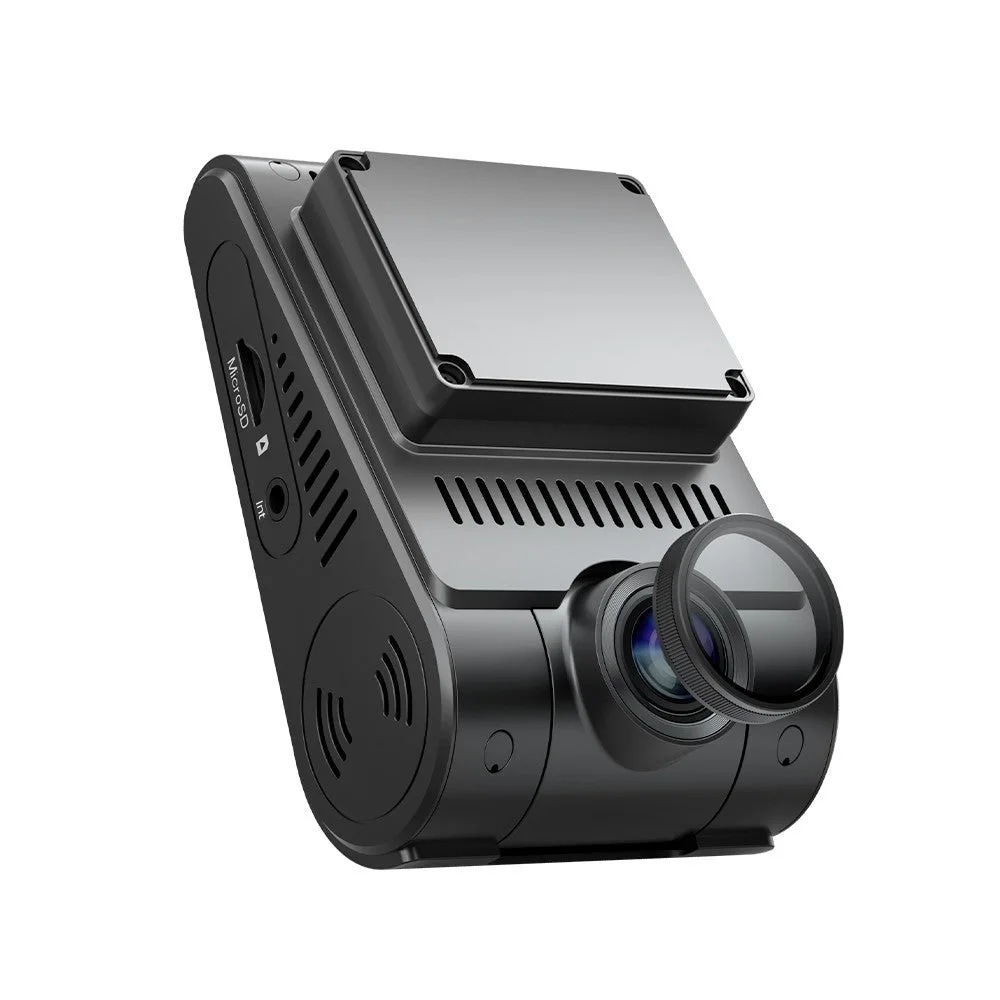 | Vantrue Nexus 4 Pro S (N4 Pro S) |
|---|---|---|---|---|---|---|
| Plate reading score | 8.8 | 8.4 | 8.4 | 8.4 | 8.4 | 8.1 |
| Overall score | 9.2 | 9.0 | 9.0 | 9.0 | 8.7 | 8.7 |
| Front resolution | 2,160 px | 2,160 px | 2,160 px | 2,160 px | 2,160 px | 2,160 px |
| Front frame rate | 30 fps | 30 fps | 30 fps | 30 fps | 30 fps | 30 fps |
| STARVIS 2 sensor | Yes | Yes | Yes | Yes | Yes | Yes |
| HDR | Yes | Yes | Yes | Yes | Yes | Yes |
| Coverage (channels) | 3 | 3 | 3 | 3 | 3 | 3 |
| Rear resolution | 2,160 px | 1,440 px | 1,440 px | 1,440 px | 1,440 px | 1,440 px |
| Cabin resolution | 1,080 px | 1,440 px | 1,440 px | 1,440 px | 1,080 px | 1,080 px |
| Cabin infrared | Yes | Yes | Yes | Yes | Yes | Yes |
| Buffered parking mode | Yes | Yes | Yes | Yes | Yes | Yes |
| Low-bitrate parking | Yes | Yes | Yes | Yes | Yes | Yes |
| Heat tolerance (power cell) | supercapacitor | supercapacitor | supercapacitor | supercapacitor | supercapacitor | supercapacitor |
| GPS | built-in | built-in | built-in | built-in | built-in | mount |
| Wi-Fi transfer | 5GHz | 5GHz | 5GHz | 5GHz | 5GHz | 5GHz |
| Max storage | 512 GB | 512 GB | 512 GB | 512 GB | 512 GB | 1,024 GB |
| LTE / cloud | No | No | No | No | No | No |
| Front pixels per degree | 27.43 px/° | 27.43 px/° | 27.43 px/° | 27.43 px/° | 27.43 px/° | 24.77 px/° |
| Rear STARVIS 2 sensor | Yes | Yes | Yes | Yes | Yes | Yes |
| Time-lapse parking | Yes | Yes | Yes | Yes | Yes | Yes |
| Max operating temperature | 65°C | 65°C | 65°C | 65°C | 65°C | 60°C |
| Price | $459.99 at VIOFO, Nov 20 | $539.99 at VIOFO, Nov 20 | $519.99 at VIOFO, Nov 20 | $499.99 at VIOFO, Nov 20 | $379.99 at VIOFO, Nov 20 | $279.99 at Vantrue, Nov 20 |
| Where to buy | Check price on Amazon | Check price on Amazon | Check price on Amazon | Check price on Amazon | Check price on Amazon | Check price on Amazon |
Front video bitrate: what testers measured
Show the numbers
| Product | Measured by | Measured |
|---|---|---|
| VIOFO A229 Ultra 3CH | Vortex Radar | 59.87 Mbps |
| VIOFO A229 Pro 3CH | DashCamTalk member PP | 59.8 Mbps |
| VIOFO A329S 3CH | Chuck McCoy | 54 Mbps |
| VIOFO A229 Ultra 3CH | Vortex Radar | 36.11 Mbps |
| VIOFO A229 Pro 3CH | DashCamTalk member PP | 36 Mbps |
| Vantrue Nexus 4 Pro S (N4 Pro S) | EricSan | 31.9 Mbps |
Where can you legally mount a dash cam in a semi?
Federal rules set the zone, and most trucker lists skip this entirely. Under 49 CFR 393.60(e), ordinary windshield devices must sit no more than 6 inches below the upper edge of the windshield. But “vehicle safety technology” gets a larger allowance, and the definition in 49 CFR 393.5 explicitly includes driver camera systems and “systems and devices that contain cameras, lidar, radar, sensors, and/or video.”
That means a dash cam may be mounted:
- No more than 8.5 inches below the upper edge of the area swept by the wipers, or
- No more than 7 inches above the lower edge of the area swept by the wipers, and
- Outside the driver’s sight lines to the road, highway signs and signals.
In practice, high and centered behind the mirror is the standard spot. A compact, screenless unit like the T340 or T330 makes the 8.5-inch limit easy to meet. A screened cam works too, but measure before you stick the mount down. Our where to mount a dash cam guide covers mirror-area placement, and state windshield laws can add their own limits for intrastate trucks; our dash cam laws by state table lists them.
Is a cabin camera worth it for owner-operators?
For most owner-operators, yes. The Gadgeteer’s Alex Birch and DashCamTalk’s Julian23 both confirmed the A229 Ultra’s 210° interior camera captures usable footage through all windows. In a truck, the cabin camera does more work than the rear:
- It documents you. Footage of your eyes on the road answers the “was the driver distracted?” question before anyone asks it.
- It covers the doors. A 210° fisheye on the A329S, T330, T340 or A229 Ultra sees both cab doors — useful for break-ins at truck stops if parking mode is running.
- It works at night. Every cam on our shortlist has infrared LEDs that switch to black-and-white automatically in darkness, as Ashley Neal confirmed on the T340.
If you run team or carry a passenger, tell them the camera is there. Dash cams record cab audio unless you turn the microphone off; our guide to dash cam audio recording laws sorts the one-party and all-party states.
How do you power a dash cam on 24V?
Confirm your truck’s accessory voltage, then check the rated input on whatever powers the camera. Most dash cams run on 5V USB internally, so the question is whether the adapter or hardwire kit is rated for your supply.
- Socket power: use a 12V/24V-rated USB adapter. DashCamTalk’s EricSan and Dash Cam Guys both found the N4 Pro S’s cigarette lighter adapter fits loosely in many sockets, causing unexpected shutdowns — a hardwire kit is the safer route.
- Hardwire kit: VIOFO’s HK4 and HK6 kits, BlackVue’s hardwiring cable and similar kits each list a rated input range. If yours doesn’t cover your system voltage, add a dedicated 24V-to-12V converter ahead of it. Our how to hardwire a dash cam guide walks through the fuse-tap install.
- Parking mode on rest breaks: a hardwire kit with a low-voltage cut-off protects the starting batteries through a 10-hour break. Every VIOFO on this list claims about 1 mA in low-power impact detection, but testers measured 24-42 mA depending on the model — still manageable, but set your cut-off voltage with the real draw in mind.
Can dash cam footage exonerate a trucker?
It can, and FMCSA has formalized how. Through the Crash Preventability Determination Program (CPDP), carriers and drivers can ask FMCSA to review whether a crash was preventable. In its December 2024 notice, FMCSA set 21 eligible crash types for crashes on or after December 1, 2024. They include being struck in the rear, being hit while legally stopped or parked, and wrong-way drivers. Crash type 21 covers any other crash where “a video demonstrates the sequence of events of the crash.”
The payoff is concrete: crashes found not preventable are excluded from the carrier’s Crash Indicator BASIC, and not-preventable determinations are noted on the driver’s Pre-Employment Screening Program (PSP) record. A timestamped 4K clip with speed and location data shows exactly what the other vehicle did; a cabin clip shows what you were doing. Some insurers also factor dash cam footage into claims decisions; our do dash cams lower insurance guide covers what insurers say.
Highest-scoring dash cams: Plate reading profile
- Our picks
- Other models
Show the numbers
| Model | Rank | Score (of 10) |
|---|---|---|
| VIOFO A329S 2CH | 1 | 9.1 |
| VIOFO A229 Ultra 3CH | 2 | 8.8 |
| VIOFO A229 Ultra 2CH | 3 | 8.6 |
| VIOFO A229 Pro 3CH | 4 (tied) | 8.4 |
| VIOFO T330 3CH | 4 (tied) | 8.4 |
| VIOFO A329S 3CH | 4 (tied) | 8.4 |
| VIOFO T340 3CH | 4 (tied) | 8.4 |
| VIOFO A229 Pro 2CH | 8 (tied) | 8.2 |
| BlackVue Elite 10-2CH | 8 (tied) | 8.2 |
| Vantrue Nexus 4 Pro S (N4 Pro S) | 10 | 8.1 |
What reviewers found on video
A YouTube video about the VIOFO T340 3CH that our research draws on. Each video is the creator's own work, and it loads from YouTube only when you press play.

Frequently asked questions
What is the best dash cam for truck drivers?
The VIOFO A229 Ultra 3CH, with a Plate reading score of 8.8 (Dashlore Score 9.2) and dual 4K cameras. DashCamTalk's Julian23 found it stable over two months of daily use. The T330 3CH, A329S 3CH and T340 3CH tie for #2 at 8.4 with 2K cabin cameras.
Where can a truck driver legally mount a dash cam?
Under 49 CFR 393.60(e)(1)(ii), vehicle safety technology may be mounted no more than 8.5 inches below the upper edge of the wiper sweep or no more than 7 inches above its lower edge, outside the driver's sight lines.
Can dash cam footage help a truck driver after a crash?
Yes. FMCSA's Crash Preventability Determination Program encourages video submissions, and crashes found not preventable are excluded from the carrier's Crash Indicator BASIC and noted on the driver's PSP record.
Do truck dash cams work on 24V?
Check the hardwire kit or adapter's rated input. Use one rated for your truck's system voltage, or a quality 24V-to-12V converter, rather than assuming a car kit will cope.
Is a cabin-facing camera worth it in a semi?
For owner-operators, usually yes. It records your attentiveness and covers both cab doors with a 210-degree fisheye, but tell co-drivers and passengers it's there, and check audio-recording rules in the states you run.
Related reading
Best ofDash Cams
Best Dash Cams: Every Major Model Ranked by Spec
Every dash cam we track, ranked on a published rubric, with picks for front and rear, 4K plate detail, night driving, parking mode and under $200.
Best ofDash Cams
Best VIOFO Dash Cam: Every Model Ranked
The best VIOFO dash cam is the A229 Ultra 3CH. We rank every VIOFO model we track on one rubric and decode the A229, A329S, T-series and Mini lines.
Best ofDash Cams
Best Dash Cam for Rideshare: Uber and Lyft Picks Ranked
The best dash cam for rideshare is the VIOFO A229 Ultra 3CH, ranked #1 among every cam we track with a 1080p-plus cabin camera. Full rankings.
VersusDash Cams
BlackVue vs VIOFO: Which Dash Cam Brand Is Better?
BlackVue vs VIOFO compared model for model on our rubric: VIOFO wins on screens, 3-channel options and parking modes; BlackVue on cloud, LTE and 1TB cards.