Dash Cam Audio Recording Laws: One- vs Two-Party States
Dash cam audio recording laws by state: the 11 all-party consent states with statutes, when cabin audio needs a passenger notice, and how to mute your cam.
Disclosure: Dashlore earns a commission on purchases made through some links on this page, at no added cost to you. Scores come from the spec rubric, never from commission rates. Details
On this page
Key takeaways
- Recording video of the road is broadly legal; audio is what triggers wiretap and eavesdropping laws.
- Federal law and most states require only one party's consent, but 11 states require all parties' consent for private conversations: CA, DE, FL, IL, MD, MA, MI, MT, NH, PA and WA.
- The risky case is passengers talking to each other: you're not a party to that conversation, so one-party consent may not cover you.
- California's Vehicle Code requires a video event recorder to post a notice that passenger conversations may be recorded.
- If you carry passengers in an all-party state and won't get consent, turn the microphone off.
Dash cam video is legal throughout the US, but audio triggers wiretap and eavesdropping laws. Federal law and 39 states need only one party’s consent. The other 11 states — California, Delaware, Florida, Illinois, Maryland, Massachusetts, Michigan, Montana, New Hampshire, Pennsylvania and Washington — require every party’s consent. If you carry passengers in one of them, get consent or mute the mic.
Most dash cams record audio by default, including cabin-facing models rideshare drivers buy. This guide lists the all-party consent states with their statutes, explains the passenger scenario that catches drivers out, and shows how to mute the cams in our dash cam rankings. For windshield-mount rules separate from audio, see our dash cam laws by state guide.
This is a summary of published law, not legal advice. Statutes and court rulings change, so check the linked sources for your state.
Is it legal to record audio with a dash cam?
Usually, with consent. The baseline is federal law. Under 18 U.S.C. § 2511(2)(d), it isn’t unlawful for a person “to intercept a wire, oral, or electronic communication where such person is a party to the communication or where one of the parties to the communication has given prior consent.” That’s one-party consent: if you’re in the conversation, you can record it.
States can add stricter rules, and some do. In an all-party (often called two-party) state, recording a private conversation requires the consent of everyone in it.
For dash cams, there are three distinct situations:
| Situation | One-party state | All-party state |
|---|---|---|
| You’re driving alone, talking on speakerphone or to yourself | Generally fine | Phone calls: the other party must consent |
| You’re talking with a passenger | Fine; you’re a party | Passenger must consent |
| Passengers talking to each other while you drive | Risky; you may not be a party | Requires their consent |
That third row is the one most drivers miss. One-party consent protects you when you are a participant. Two passengers chatting in the back seat aren’t talking to you, so a cam silently recording them may not be covered even in a one-party state.
A key distinction: ambient road noise isn’t a protected “conversation.” These laws target private speech between identifiable parties, not traffic sounds or engine noise picked up by the mic.
Which states require two-party consent?
The Reporters Committee for Freedom of the Press, whose Reporter’s Recording Guide tracks recording law in every state, lists 11 all-party consent states:
| State | Main statute | Note |
|---|---|---|
| California | Cal. Penal Code § 632 | Covers “confidential communication” |
| Delaware | 11 Del. C. § 1335(a)(4) | Conflicts with the one-party wiretap law, § 2402(c)(4); RCFP advises following the stricter rule |
| Florida | Fla. Stat. § 934.03 | |
| Illinois | 720 ILCS 5/14-2 | Applies to private conversations |
| Maryland | Md. Code, Cts. & Jud. Proc. § 10-402 | |
| Massachusetts | Mass. Gen. Laws ch. 272, § 99 | |
| Michigan | Mich. Comp. Laws § 750.539c | Clearly applies to third-party recorders; courts split on participants |
| Montana | Mont. Code Ann. § 45-8-213 | |
| New Hampshire | N.H. Rev. Stat. § 570-A:2 | |
| Pennsylvania | 18 Pa.C.S. § 5703 | |
| Washington | RCW 9.73.030 |
RCFP also flags several partial rules worth knowing if you drive through them:
- Connecticut and Nevada require all-party consent for phone calls but only one party for in-person conversations. Your speakerphone calls count as phone calls.
- Oregon’s in-person rule (ORS 165.540) has been the subject of federal litigation; RCFP’s Oregon page tracks its current status.
- Hawaii and Maine require all-party consent only in particularly private places.
- Vermont has no recording statute, so only federal one-party law applies.
Crossing state lines? The safe assumption is that the stricter state’s rule applies.
Why does California matter so much?
Because it pairs an all-party recording law with a notice rule written specifically for dash cams.
California Penal Code § 632 makes it an offense to record a “confidential communication” without the consent of all parties. A first violation can bring a fine and up to a year in county jail. The statute defines a confidential communication as one where a party reasonably wants it kept private, and excludes situations where the parties “may reasonably expect that the communication may be overheard or recorded.”
Separately, Vehicle Code § 26708(b)(13), which allows video event recorders on the windshield, requires a posted notice that passenger conversations may be recorded. It also limits mounting to a 7-inch square in the lower passenger-side corner, a 5-inch square in the lower driver-side corner, or a 5-inch square at the top center of the windshield. Our where to mount a dash cam guide covers California’s placement rules alongside other states.
Put those together and the notice does double duty in California: it’s required for the camera, and it helps establish that passengers can reasonably expect to be recorded.
Can illegally recorded audio be used in court?
No, in most cases. Audio captured without the consent a state’s wiretap law requires is generally inadmissible. Courts suppress recordings obtained in violation of eavesdropping statutes, and the person who recorded can face criminal misdemeanor charges and civil liability.
The video portion of a dash cam file is a separate matter. Road footage from a forward-facing camera records public activity and doesn’t trigger these consent laws, so the video track, GPS coordinates, speed and timestamp from the same file typically remain admissible even if the audio is thrown out. That’s one more reason muting the mic costs you very little: the evidence that matters in a collision — the video, the speed and the time — stays intact.
Do rideshare drivers need passenger consent?
In all-party states, assume yes for audio. Your passengers are holding conversations, with each other or on their phones, that they’d reasonably expect to be private, and you’re often not a party to them.
The practical approach most professional drivers take:
- Post a clear notice on a rear window or headrest that audio and video recording is in progress. In California, it’s required.
- Mention it when passengers get in, if you want verbal consent on the recording.
- Mute the microphone in states where you’re unsure, and rely on video, which isn’t covered by these audio laws in the same way.
- Check your platform’s rules. Uber and Lyft each publish their own policies for driver-installed cameras; our Uber and Lyft dash cam rules guide summarizes them.
Cabin cameras make this matter more, not less. The VIOFO A229 Pro 3CH records 4K front, 2K rear and 1080p infrared cabin, all with HDR, and its microphone LED confirms at a glance whether audio is live. The four-channel Vantrue N5S adds two 1080p cabin cameras with IR LEDs — reviewers including AutoVlog and Andy Slye consistently recommend it for rideshare drivers who need full interior documentation, and multiple reviewers confirm the IR cameras capture clear facial detail even at night. Both cams have built-in microphones that record by default.
Our rideshare dash cam picks rank the hardware, and our rideshare install guide covers running cabin-camera cables.
How do you turn off dash cam audio?
Dash cams almost universally let you disable the microphone in the camera menu or companion app. Some add faster shortcuts:
- VIOFO A229 Pro 3CH: VIOFO lists a built-in microphone with its own microphone LED, so you can see at a glance whether audio is on. Its optional BTR200 Bluetooth remote toggles the mic with a button press. On the A229 Pro, time-lapse parking mode records without audio, while low-bitrate parking records with it.
- VIOFO T330 3CH: The barrel-style body has a dedicated mic button on the underside — no app or menu needed. Aussiecams’ first look demonstrated the button layout; the T330 also adds voice control for hands-free toggling.
- Garmin Dash Cam X310: Garmin lists voice commands to save clips and toggle audio, so you can mute it hands-free when a passenger gets in.
- BlackVue Elite 10-2CH: BlackVue’s app has an audio recording switch to “include or exclude sound” from recordings, per its Elite 10 settings manual.
- Vantrue N5S: AutoVlog demonstrated voice commands (take photo, turn on/off screen, switch cameras) and found the system responsive, but the voice-control examples cover photos and Wi-Fi rather than mic toggling. Look for the audio-recording setting in the menu or the Vantrue app.
| Spec | 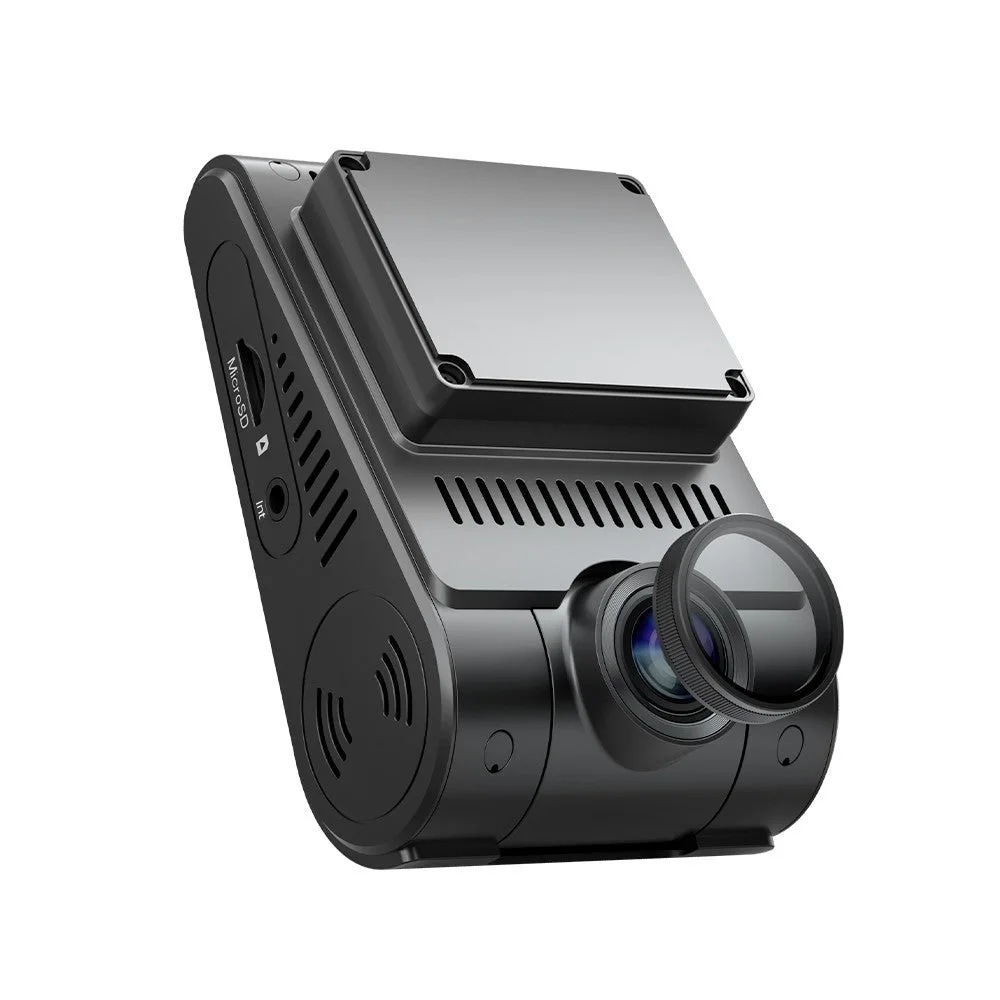 | Vantrue Nexus 5S (N5S) | 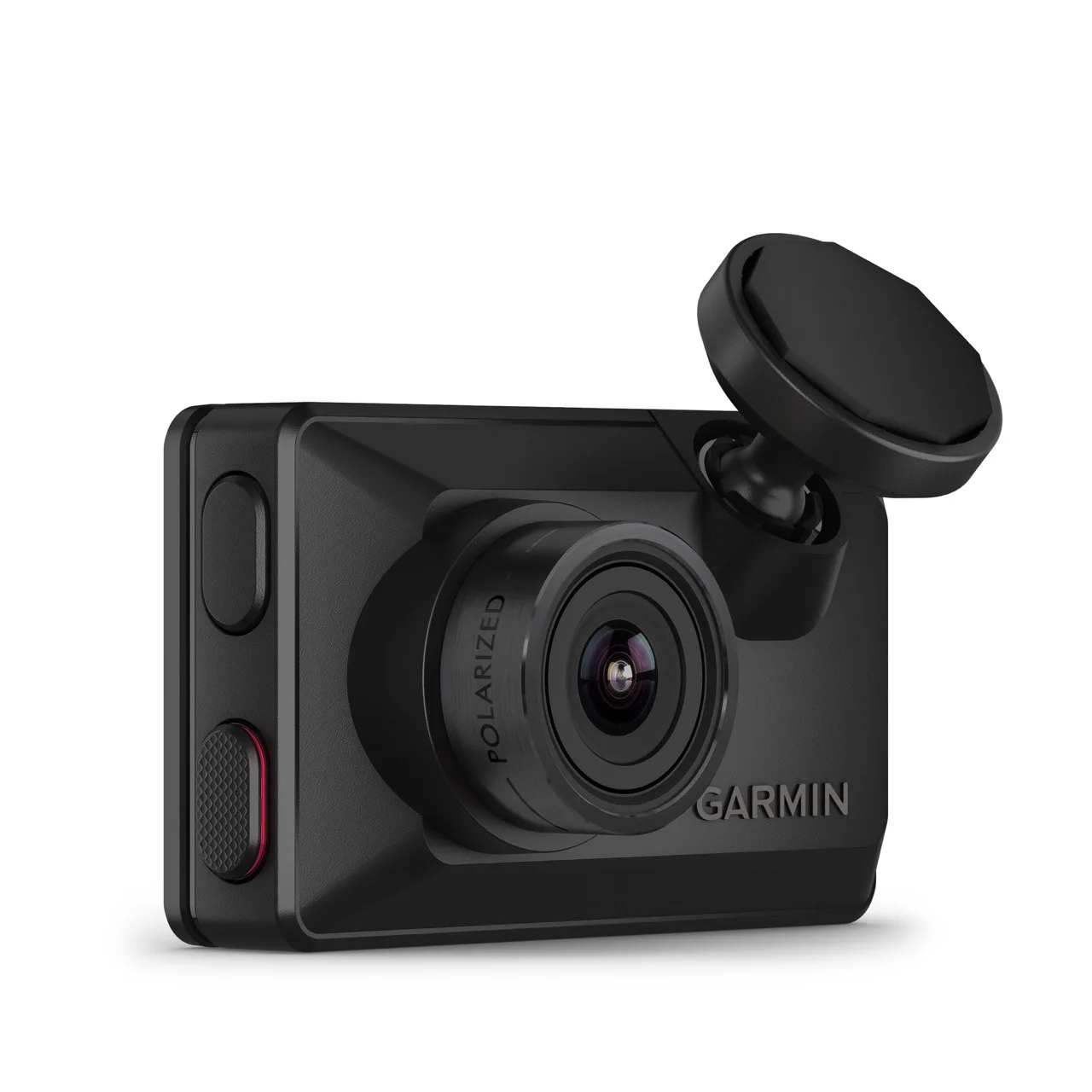 | 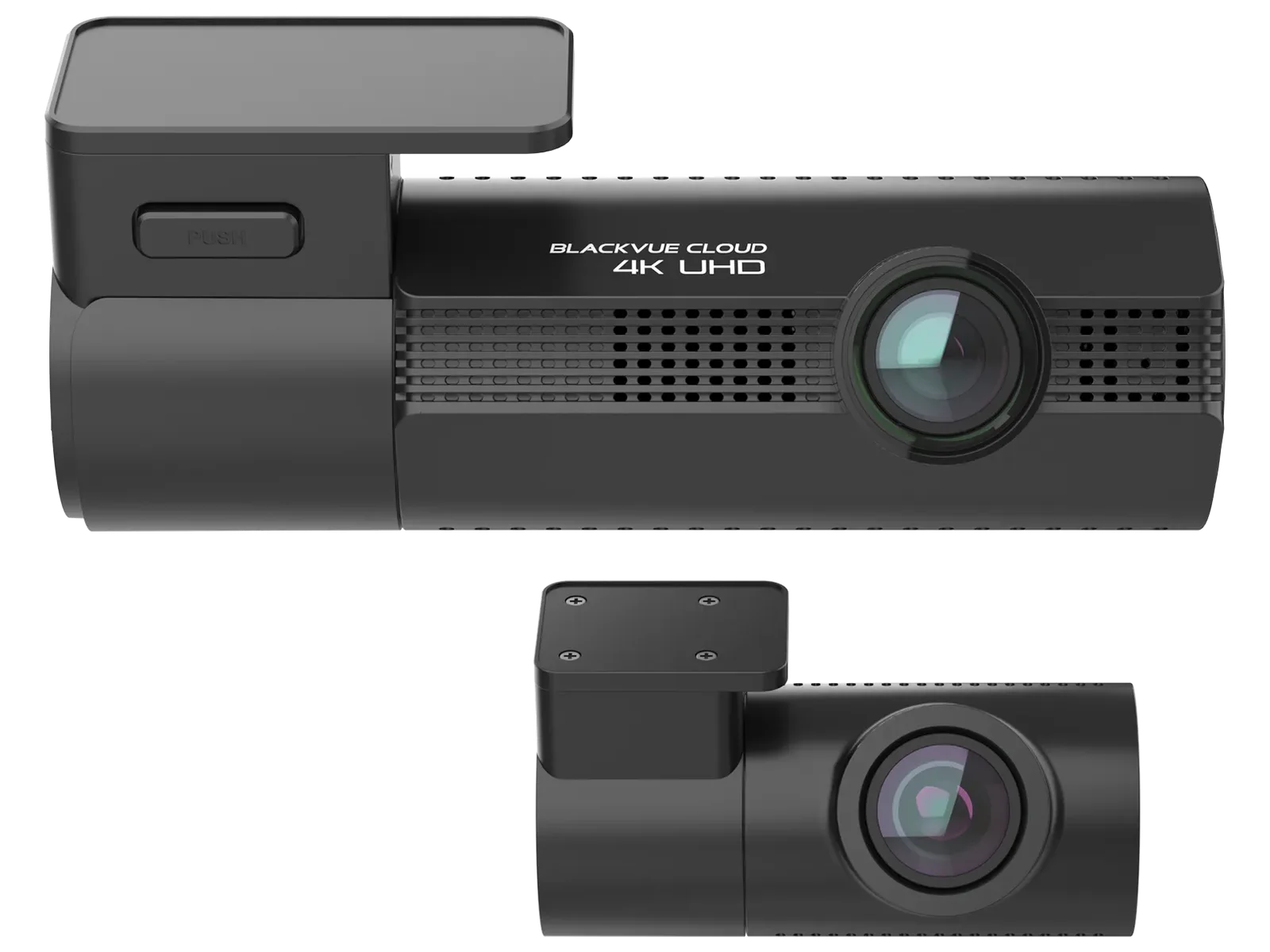 |
|---|---|---|---|---|
| Score | 8.7 | 7.8 | 5.4 | 7.7 |
| Front resolution | 2,160 px | 1,944 px | 2,160 px | 2,160 px |
| Front frame rate | 30 fps | 30 fps | 30 fps | 30 fps |
| STARVIS 2 sensor | Yes | Yes | — | Yes |
| HDR | Yes | No | Yes | Yes |
| Coverage (channels) | 3 | 4 | 1 | 2 |
| Rear resolution | 1,440 px | 1,440 px | — | 2,160 px |
| Cabin resolution | 1,080 px | 1,080 px | — | — |
| Cabin infrared | Yes | Yes | — | — |
| Buffered parking mode | Yes | Yes | Yes | Yes |
| Low-bitrate parking | Yes | Yes | No | No |
| Heat tolerance (power cell) | supercapacitor | supercapacitor | battery | supercapacitor |
| GPS | built-in | built-in | built-in | built-in |
| Wi-Fi transfer | 5GHz | 5GHz | 5GHz | 5GHz |
| Max storage | 512 GB | 1,024 GB | 512 GB | 1,024 GB |
| LTE / cloud | No | No | No | No |
| Front pixels per degree | 27.43 px/° | 16.41 px/° | — | 26.3 px/° |
| Rear STARVIS 2 sensor | Yes | Yes | — | Yes |
| Time-lapse parking | Yes | Yes | No | Yes |
| Max operating temperature | 65°C | 60°C | 60°C | 65°C |
| Price | $379.99 at VIOFO, Nov 20 | $293.99 at Vantrue, Nov 20 | $399.99 at Garmin, Nov 20 | $603.99 at BlackVue, Nov 20 |
| Where to buy | Check price on Amazon | Check price on Amazon | Check price on Amazon | Check price on Amazon |
A tip for anyone switching often: pick a cam with a visible microphone indicator or a physical shortcut. A setting buried three menus deep is one you’ll forget to change back.
Is a sticker notice enough?
It depends on where you are and who’s talking.
- In California, a notice is legally required for a dash cam and directly addresses § 632’s “reasonable expectation” language. It’s the minimum, not an option.
- In other all-party states, a clear notice helps show passengers knew they could be recorded, but how far that goes isn’t settled the same way in every state. Verbal consent captured on the recording is stronger.
- In one-party states, a notice still helps with the passengers-talking-to-each-other scenario, and it’s good practice with customers.
If you can’t post a notice and get consent, the safe option is simple: turn audio off. You lose little evidence that matters in most collisions, since the video, GPS speed and timestamp tell the story. For more on what dash cam evidence covers, see are dash cams worth it.
Which dash cams suit drivers who need audio control?
3-channel pick with a mic indicator
VIOFO A229 Pro 3CH
- Front resolution
- 2,160 px
- Coverage (channels)
- 3
- STARVIS 2 sensor
- Yes
- Buffered parking mode
- Yes
The VIOFO A229 Pro 3CH scores 8.7 with 4K front, 2K rear and 1080p infrared cabin cameras, HDR on all three channels, a microphone LED that confirms audio status at a glance, and a BTR200 Bluetooth remote that toggles the mic without touching the camera.
Best 4-channel cabin coverage
Vantrue Nexus 5S (N5S)
- Front resolution
- 1,944 px
- Coverage (channels)
- 4
- STARVIS 2 sensor
- Yes
- Buffered parking mode
- Yes
The Vantrue N5S scores 7.8 and records four channels: 1944p front, two 1080p IR cabin cameras and a 1440p rear, with a 3.19-inch screen and voice control. Tom’s Guide reported fast 12-second clip downloads over 5 GHz Wi-Fi, and three of four reviewers who tried the IR cameras confirmed clear facial detail in full darkness — critical for rideshare dispute evidence. The main trade-off is a bulky front unit and involved four-camera wiring; Tom’s Guide found the thick cables difficult to tuck under trim.
For a front-only cam with hands-free audio muting, the Garmin X310 toggles audio by voice. For a discreet screenless option, the VIOFO T330 3CH puts a mic button on its barrel body and covers the cabin with a 210° fisheye IR camera. Compare every model in the dash cam finder, or see how we score them on our methodology page.
Frequently asked questions
Is it legal to record audio with a dash cam?
Usually, if you're part of the conversation or have consent. Federal law and most states need one party's consent, but 11 states require everyone's consent to record a private conversation.
Which states are two-party consent for recording?
The Reporters Committee for Freedom of the Press lists 11 all-party consent states: California, Delaware, Florida, Illinois, Maryland, Massachusetts, Michigan, Montana, New Hampshire, Pennsylvania and Washington. Several others have partial rules.
Do Uber and Lyft drivers need passenger consent to record audio?
In all-party states, plan on it for private conversations. A clear notice in the car is the practical minimum, and California requires one for video event recorders; muting the microphone avoids the issue entirely.
How do I turn off audio on my dash cam?
Use the microphone setting in the camera menu or app. Some cams add shortcuts: VIOFO's BTR200 remote toggles the mic, the T330's body has a dedicated mic button, Garmin's X310 toggles audio by voice command, and BlackVue's app has an audio on/off switch.
Is a sticker notice enough to record passengers?
It helps and is required for dash cams in California, but it isn't a guarantee everywhere. In all-party states, verbal consent or a muted microphone is the safer choice for private conversations.
Can illegally recorded dash cam audio be used in court?
Audio captured without required consent is generally inadmissible. Courts suppress recordings that violate state wiretap laws, though the video portion of the same file may still be accepted.
Related reading
Best ofDash Cams
Best Dash Cams: Every Major Model Ranked by Spec
Every dash cam we track, ranked on a published rubric, with picks for front and rear, 4K plate detail, night driving, parking mode and under $200.
GuideDash Cams
How to Choose a Dash Cam: 9 Specs That Actually Matter
How to choose a dash cam from the real spread of specs across every model we track: channels, 4K vs 1440p, STARVIS 2, supercapacitors, parking and GPS.
GuideDash Cams
What SD Card Does a Dash Cam Need? Size and Endurance
What SD card does a dash cam need? A high-endurance U3/V30 microSD, sized to your channels and within your cam's limit, from 128GB to 1TB in our data.
How-toDash Cams
How to Install a Rideshare Dash Cam: Cabin and Rear Setup
How to install a rideshare dash cam: aim the cabin camera, route the rear cable, hardwire for all-shift power and post a recording notice, step by step.