Thinkware U3000 vs U3000 Pro: What Changed?
Thinkware U3000 vs U3000 Pro: the Pro adds HDR, a STARVIS 2 rear sensor and 512 GB card support, lifting its score from 6.5 to 7.3. See who should upgrade.
Disclosure: Dashlore earns a commission on purchases made through some links on this page, at no added cost to you. Scores come from the spec rubric, never from commission rates. Details
On this page
Key takeaways
- Both use the same 4K Sony STARVIS 2 IMX678 front sensor and both build radar into the front and rear cameras for parking mode.
- The U3000 Pro adds HDR, swaps the rear camera's first-generation STARVIS IMX335 for a STARVIS 2 IMX675, and doubles maximum card size from 256 GB to 512 GB.
- Those changes lift the score from 6.5 to 7.3 on our rubric, with HDR and the rear sensor driving most of the gap.
- The Pro adds a USB-C accessory port for an optional interior camera or LTE module, plus upgraded radar with a wider detection range.
- Both are screenless supercapacitor cams rated to 60 degrees C, and both need permanent power for parking mode.
Buy the Thinkware U3000 Pro. Digital Camera World found the Pro’s low-light footage delivers minimal grain; G Style Magazine found the rear noticeably brighter at night. HDR, a STARVIS 2 rear sensor and twice the storage lift it from 6.5 to 7.3.
| Spec | 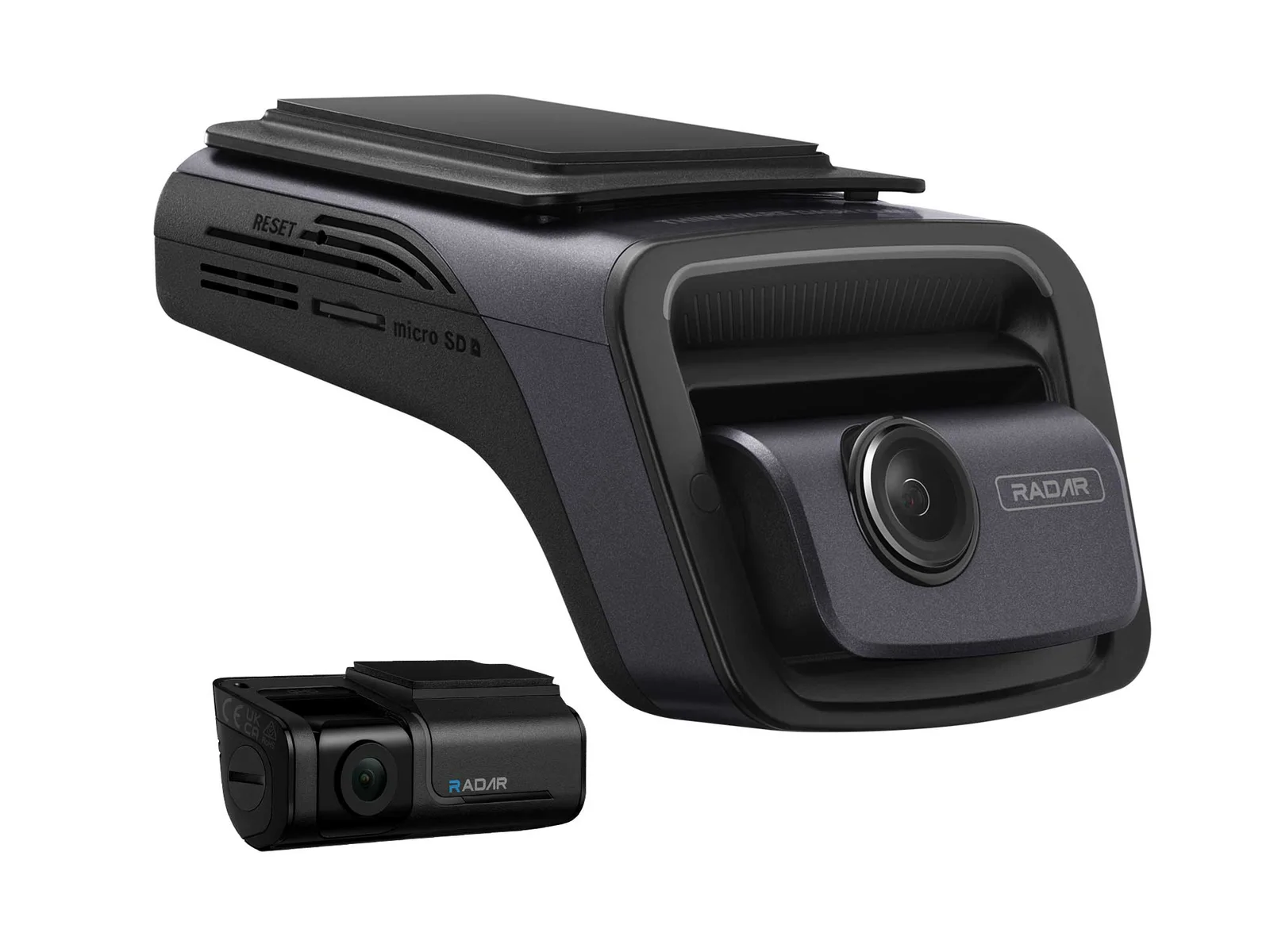 | 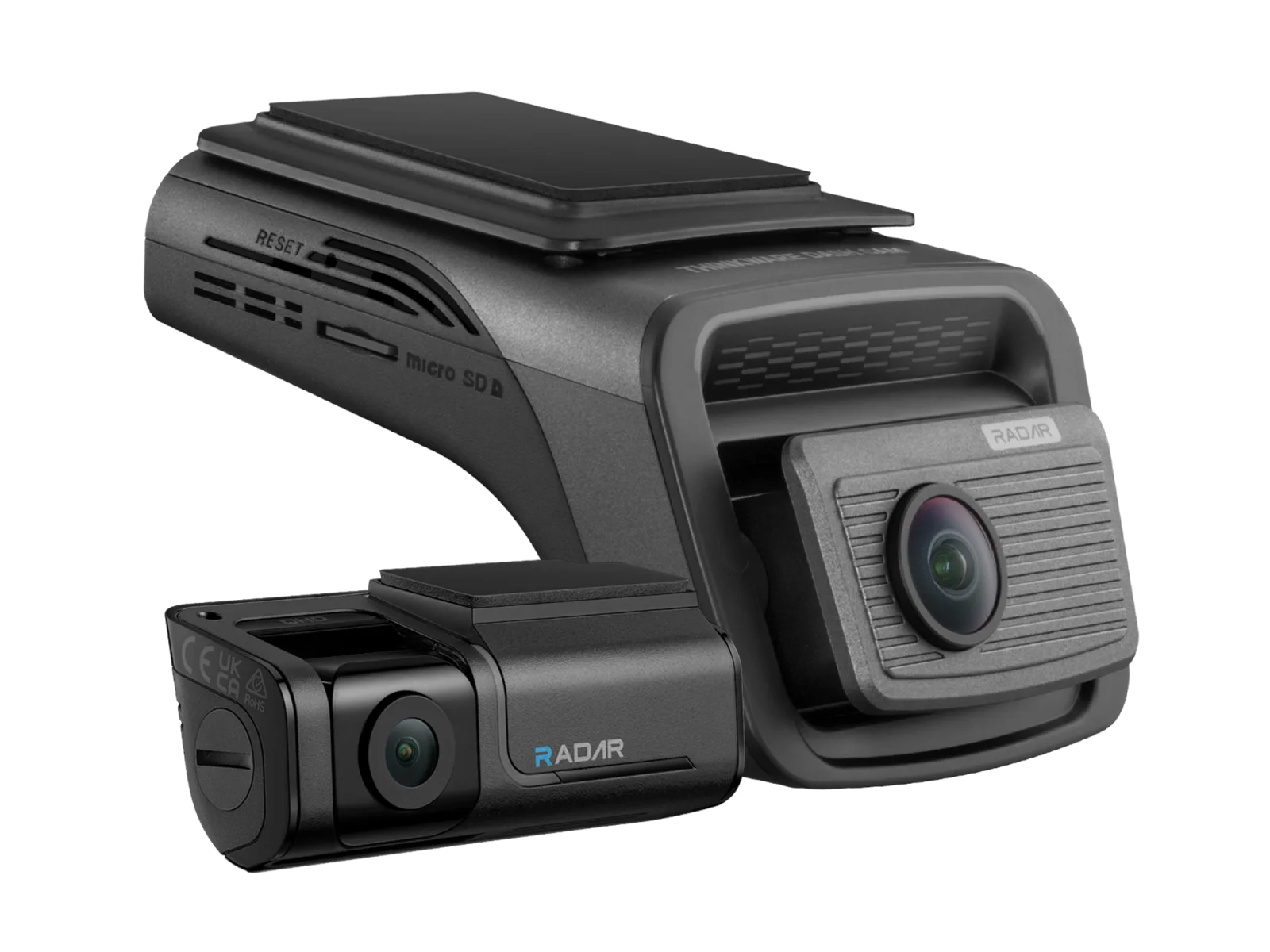 |
|---|---|---|
| Score | 6.5 | 7.3 |
| Front resolution | 2,160 px | 2,160 px |
| Front frame rate | 30 fps | 30 fps |
| STARVIS 2 sensor | Yes | Yes |
| HDR | No | Yes |
| Coverage (channels) | 2 | 2 |
| Rear resolution | 1,440 px | 1,440 px |
| Buffered parking mode | Yes | Yes |
| Low-bitrate parking | No | No |
| Heat tolerance (power cell) | supercapacitor | supercapacitor |
| GPS | built-in | built-in |
| Wi-Fi transfer | 5GHz | 5GHz |
| Max storage | 256 GB | 512 GB |
| LTE / cloud | No | No |
| Front pixels per degree | 25.26 px/° | 26.12 px/° |
| Rear STARVIS 2 sensor | No | Yes |
| Time-lapse parking | Yes | Yes |
| Max operating temperature | 60°C | 60°C |
| Price | $479.99 at Thinkware, Nov 20 | $549.99 at Thinkware, Nov 20 |
| Where to buy | Check price on Amazon | Check price on Amazon |
Most rows match: same front resolution, same STARVIS 2 front sensor, same two channels, same supercapacitor, same GPS and Wi-Fi. The differences that matter — HDR, rear sensor, maximum storage and expandability — account for the whole gap in our dash cam scoring.
What is the difference between the U3000 and U3000 Pro?
The comparison table above covers shared specs. Here’s what actually differs:
| Spec | U3000 2CH | U3000 Pro 2CH |
|---|---|---|
| Front field of view | 152° | 147° |
| USB-C accessory port | No | Yes (interior camera or LTE module) |
| Radar detection range | 0.8–5 m | 0.1–10 m |
| Radar frequency | 25 Hz | 61 Hz |
| Radar parking power | 7 mA | 4.8 mA (Thinkware’s claim) |
| Front lens / CPL | Flat lens, stick-on CPL | Curved lens, ring-style CPL |
| Launch MSRP | $549.99 | $579.99 |
The Pro’s front lens is 5° narrower on paper, 147° against 152° — slightly less of the adjacent lanes for slightly more detail in the center. The Pro uses a curved front lens that takes a ring-style CPL filter, while the U3000’s flat lens works with stick-on filters, per BlackboxMyCar’s comparison. Front and rear CPL filters from the U3000 don’t fit the Pro because of this lens change, per SafeDriveSolutions.
Does HDR make a real difference at night?
Yes, and it’s the biggest single reason for the score gap. Digital Camera World’s Alistair Charlton found the Pro’s low-light footage delivers minimal grain, and TechSpy Magazine’s John Suergiu called it genuinely impressive with plates readable across traffic lanes. On the original U3000, PCWorld found front night captures lacked detail, while The Drive found night footage close to black-and-white but informative. That split lines up with the spec: the U3000 has no HDR at all.
What makes this notable is that the U3000 already had the right sensor. Sony’s IMX678 supports HDR at the chip level, but Thinkware didn’t enable it on the original model. Our STARVIS 2 explainer flags the U3000 as a rare case: an IMX678 camera that ships without HDR.
The rear camera got better too. The U3000 uses a first-generation STARVIS IMX335 at the rear. The Pro moves to a STARVIS 2 IMX675, per Thinkware’s product page. G Style Magazine’s Samuel Huang found nighttime rear footage noticeably brighter and cleaner than the original, and forum owners confirm the upgrade is visible.
Night isn’t settled on the Pro, though. TechRadar’s Rob Clymo called winter night footage average and noted plates become harder to read. DashCamTalk scored night video 7 out of 10 against 9 out of 10 for daytime.
How does parking mode compare?
SafeDriveSolutions measured the U3000 2CH drawing just 16 milliamps at 13.8 volts in radar parking mode — far below the 260 to 270 milliamps in motion-detection parking. That’s low enough to leave a car parked for days on the vehicle battery with a hardwire kit. The Pro’s radar hardware is upgraded: per BlackboxMyCar’s comparison, it operates at 61 Hz instead of 25 Hz, detects motion from 0.1 m to 10 m instead of 0.8 m to 5 m, and draws 4.8 mA (Thinkware’s claim) instead of 7 mA in radar standby.
Both support the same modes — our parking mode explainer covers how each works:
- Radar-triggered motion detection. The cameras use radar to sense nearby movement, then wake to record. Thinkware’s retailer notes metallic window tint can reduce detection.
- Buffered clips. Thinkware markets a 10-second pre-roll, but DashCamTalk tester rcg530 found radar parking actually behaves like energy-saving mode: the radar wakes the camera in one to two seconds and then begins recording, capturing minimal footage before the triggering event rather than a true 10-second buffer.
- Time-lapse and energy-saving modes for longer parks.
Both cameras also scale back to impact-only recording if the cabin overheats above 65 °C, then resume radar detection when the temperature drops — The Drive tested the U3000 through a Las Vegas summer exceeding 118 °F with no failures.
Both need permanent power for parking: a hardwire cable, an OBD II cable or a Thinkware battery pack. That’s the trade-off with the supercapacitor both use — heat tolerance in exchange for no built-in reserve.
Parking-mode current draw (LPID dormant): what testers measured
Show the numbers
| Product | Measured by | Measured |
|---|---|---|
| Thinkware U3000 2CH | SafeDriveSolutions | 265 mA |
| Thinkware U3000 2CH | SafeDriveSolutions | 16 mA |
| Thinkware U3000 2CH | SafeDriveSolutions | 9 mA |
How do storage limits compare?
The U3000 tops out at 256 GB cards; the U3000 Pro accepts 512 GB. More capacity means a longer loop recording cycle before old footage is overwritten. That matters more on a radar-parking cam that sits for days logging events.
Does the Pro have a USB-C port?
Yes. The U3000 Pro adds a USB-C accessory port that the original U3000 lacks. It accepts two optional add-ons, per SafeDriveSolutions:
- Interior IR camera — a 1080p cabin camera, turning the Pro into a de facto three-channel setup for rideshare or fleet use.
- LTE module — enables cloud notifications, remote live view and GPS tracking while parked, through a Thinkware data plan.
The two add-ons share that single USB-C port, so it’s one or the other — DashCamTalk forum members and Digital Reviews Network both confirm this. If built-in LTE matters, the BlackVue DR970X-2CH LTE Plus II is the only dual-channel cam in our data with a modem inside.
What problems do owners report?
- Radar sensitivity triggers false recordings in rain. Both Digital Camera World and TechSpy Magazine found the Pro’s default radar sensitivity fires unnecessarily in rainfall. Turning sensitivity down in the app fixed it.
- Wi-Fi and app pairing. TechRadar needed multiple pairing attempts, and Digital Reviews Network’s Kevin Cheng found app connection slow enough to “test your patience.” Others, including Digital Camera World and TechSpy Magazine, praise the 5 GHz Wi-Fi for fast file transfers once connected.
- U3000 rear camera cable. Three owners on DashCamTalk traced non-working rear radar to a partially seated USB cable; a half-inserted plug records video but silently disables radar.
Is there a better alternative?
Within Thinkware: The Thinkware ARC900 2CH ties the U3000 Pro at 7.3 on our rubric. Same IMX678 front and IMX675 rear sensors with HDR, plus a 3.5-inch touchscreen — and it’s $419.99 at Thinkware, checked Nov 20 against the U3000 Pro’s $549.99 at Thinkware, checked Nov 20. The trade-off is parking: the ARC900’s radar detection needs an optional external module, while the U3000 Pro builds it into both cameras.
Outside Thinkware: The VIOFO A229 Pro 2CH scores 7.6 on our rubric. DashCamTalk member PP measured 59.8 Mbps front bitrate in two-channel mode, and Digital Camera World’s Alistair Charlton noted a “shocking lack of grainy noise after sunset” in a review of the 3CH, which shares the same sensors. The A229 Pro 2CH uses the same IMX678 front and IMX675 rear with HDR, plus a 2.4-inch screen, voice control and a low-bitrate continuous parking mode that Thinkware doesn’t offer. Our VIOFO A229 Pro breakdown covers it in full.
| Spec | | 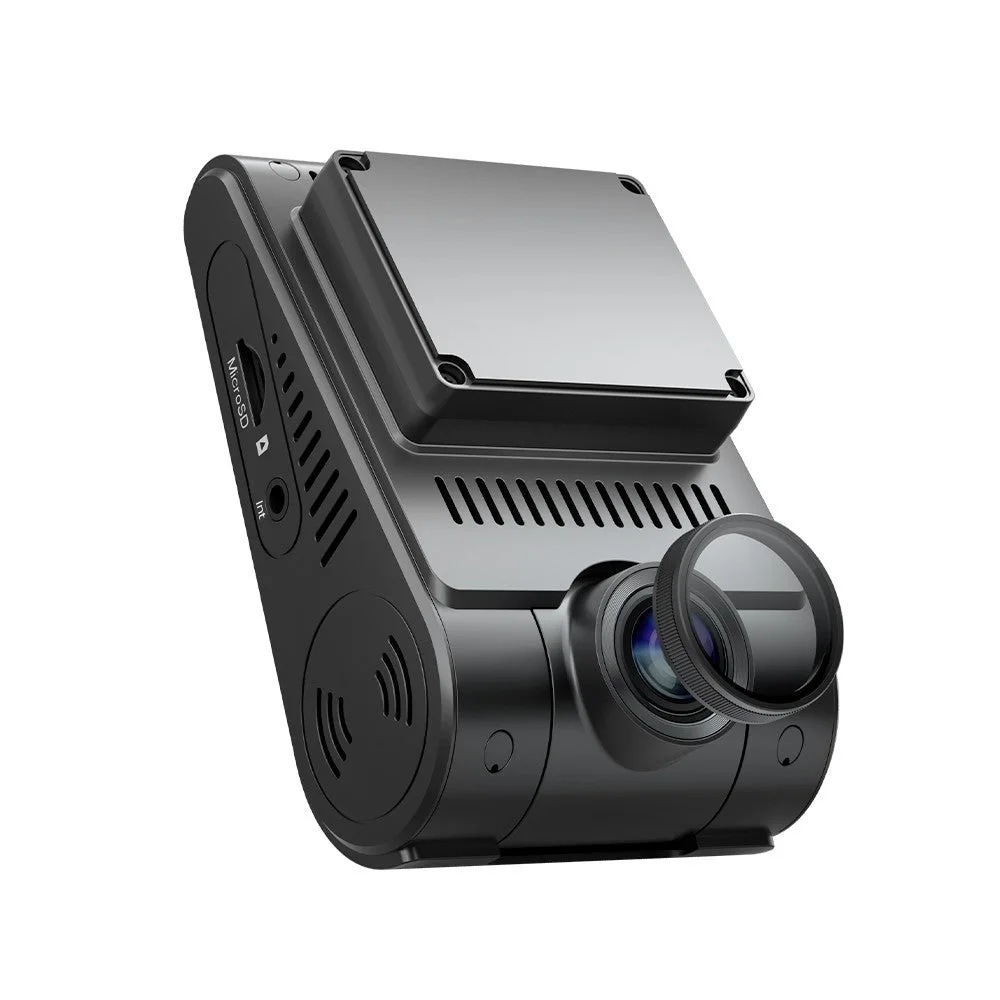 |
|---|---|---|
| Score | 7.3 | 7.6 |
| Front resolution | 2,160 px | 2,160 px |
| Front frame rate | 30 fps | 30 fps |
| STARVIS 2 sensor | Yes | Yes |
| HDR | Yes | Yes |
| Coverage (channels) | 2 | 2 |
| Rear resolution | 1,440 px | 1,440 px |
| Buffered parking mode | Yes | Yes |
| Low-bitrate parking | No | Yes |
| Heat tolerance (power cell) | supercapacitor | supercapacitor |
| GPS | built-in | built-in |
| Wi-Fi transfer | 5GHz | 5GHz |
| Max storage | 512 GB | 512 GB |
| LTE / cloud | No | No |
| Front pixels per degree | 26.12 px/° | 27.43 px/° |
| Rear STARVIS 2 sensor | Yes | Yes |
| Time-lapse parking | Yes | Yes |
| Max operating temperature | 60°C | 65°C |
| Price | $549.99 at Thinkware, Nov 20 | $349.99 at VIOFO, Nov 20 |
| Where to buy | Check price on Amazon | Check price on Amazon |
The difference is philosophy. The Thinkware is screenless, app-managed and built around radar-triggered parking. The VIOFO uses image-based motion detection and puts controls on the camera. If parking surveillance is your main concern, the U3000 Pro’s built-in radar is the distinctive feature.
Which should you buy?
TechRadar cautioned that cheaper rivals outperform the Pro on pure video value, and DashCamTalk scored value just 4 out of 10. The U3000 Pro’s case rests on one thing: it’s the only camera in its class with dual radar built in for parking surveillance.
Buy the Thinkware U3000 Pro if you’re buying new and parking protection is the priority. Six of the seven reviewers who tested it praised the parking system as one of the best available.
Buy the Thinkware U3000 only at a meaningful discount — SafeDriveSolutions’ measured 16 mA radar parking draw proves multi-day standby works on the original too. Without HDR, its night footage trails the Pro’s.
Already own a U3000? Keep it. The upgrade matters for a new purchase, but not enough to replace a working camera.
Better buy
Thinkware U3000 Pro 2CH
- Front resolution
- 2,160 px
- Coverage (channels)
- 2
- STARVIS 2 sensor
- Yes
- Buffered parking mode
- Yes
A screenless front-and-rear dash cam recording 4K front and 2K rear video on STARVIS 2 sensors, with radar built into both cameras for parking surveillance. It suits owners who want a hardwired, app-managed camera with optional LTE.
Strengths
- Front Sony STARVIS 2 IMX678 at 4K 30fps or 2K 60fps; rear STARVIS 2 IMX675 at 2K 30fps
- Radar built into the front and rear cameras for parking mode
- Buffered motion and impact detection saves 10 seconds before and after an event
- Dual-band 2.4GHz/5GHz Wi-Fi and built-in GPS
Watch out for
- No built-in screen; setup and playback are done through the app
- Cloud features need the optional LTE module and plan
- Thinkware lists a maximum operating temperature of 60°C
Only if discounted
Thinkware U3000 2CH
- Front resolution
- 2,160 px
- Coverage (channels)
- 2
- STARVIS 2 sensor
- Yes
- Buffered parking mode
- Yes
A screenless front-and-rear dash cam with a 4K STARVIS 2 front camera, a 2K rear camera and radar built into both cameras for parking mode. It suits owners who want a hardwired, radar-assisted parking setup.
Strengths
- Front 4K 30fps (or 2K 60fps) on a Sony STARVIS 2 IMX678 with a 152° view
- Rear 2K 30fps on a Sony STARVIS IMX335
- Radar, buffered motion detection (10 seconds before and after), time-lapse and energy-saving parking
- Dual-band 2.4GHz/5GHz Wi-Fi and built-in GPS
Watch out for
- HDR is not supported on the original U3000
- Maximum microSD capacity is 256GB
- No built-in screen; parking needs a permanent-power installation
See where both land in our full dash cam rankings or use the dash cam finder to filter by buffered parking.
Frequently asked questions
What is the difference between the Thinkware U3000 and U3000 Pro?
The U3000 Pro adds HDR, uses a STARVIS 2 IMX675 rear sensor instead of the U3000's STARVIS IMX335, supports 512 GB microSD cards instead of 256 GB, and adds a USB-C accessory port for an optional interior camera or LTE module.
Does the Thinkware U3000 have HDR?
No. HDR isn't supported on the original U3000, even though its IMX678 front sensor supports it at the chip level. The U3000 Pro enables HDR on both front and rear cameras.
Is the Thinkware U3000 Pro worth the upgrade?
If you're buying new, yes: HDR and a STARVIS 2 rear camera are meaningful at night. If you already own a U3000, the differences are real but not large enough to justify replacing a working camera.
Do both Thinkware U3000 models need hardwiring?
For parking mode, yes. Both are supercapacitor cams, so they need a hardwiring cable, an OBD II power cable or a Thinkware battery pack to record while parked.
Is the Thinkware U3000 radar parking mode truly buffered?
Not exactly. DashCamTalk tester rcg530 found it behaves like energy-saving mode: the radar wakes the camera in one to two seconds, capturing minimal footage before the event rather than a true 10-second pre-roll.
Does the Thinkware U3000 Pro have a USB-C port?
Yes. The Pro has a USB-C accessory port that accepts an optional interior IR camera or an LTE module for cloud features. The original U3000 has no USB-C port.
Related reading
Best ofDash Cams
Best Dash Cams: Every Major Model Ranked by Spec
Every dash cam we track, ranked on a published rubric, with picks for front and rear, 4K plate detail, night driving, parking mode and under $200.
DataDash Cams
STARVIS 2 Explained: Which Dash Cams Have It
STARVIS 2 explained: what Sony's sensor tech adds over STARVIS, how the IMX678 and IMX675 differ, and which dash cams in our database use each one.
How-toDash Cams
How to Set Up Dash Cam Parking Mode the Right Way
How to set up dash cam parking mode on VIOFO, Thinkware and BlackVue: pick buffered or time-lapse, set sensitivity, choose a voltage cutoff, then test it.
Best ofDash Cams
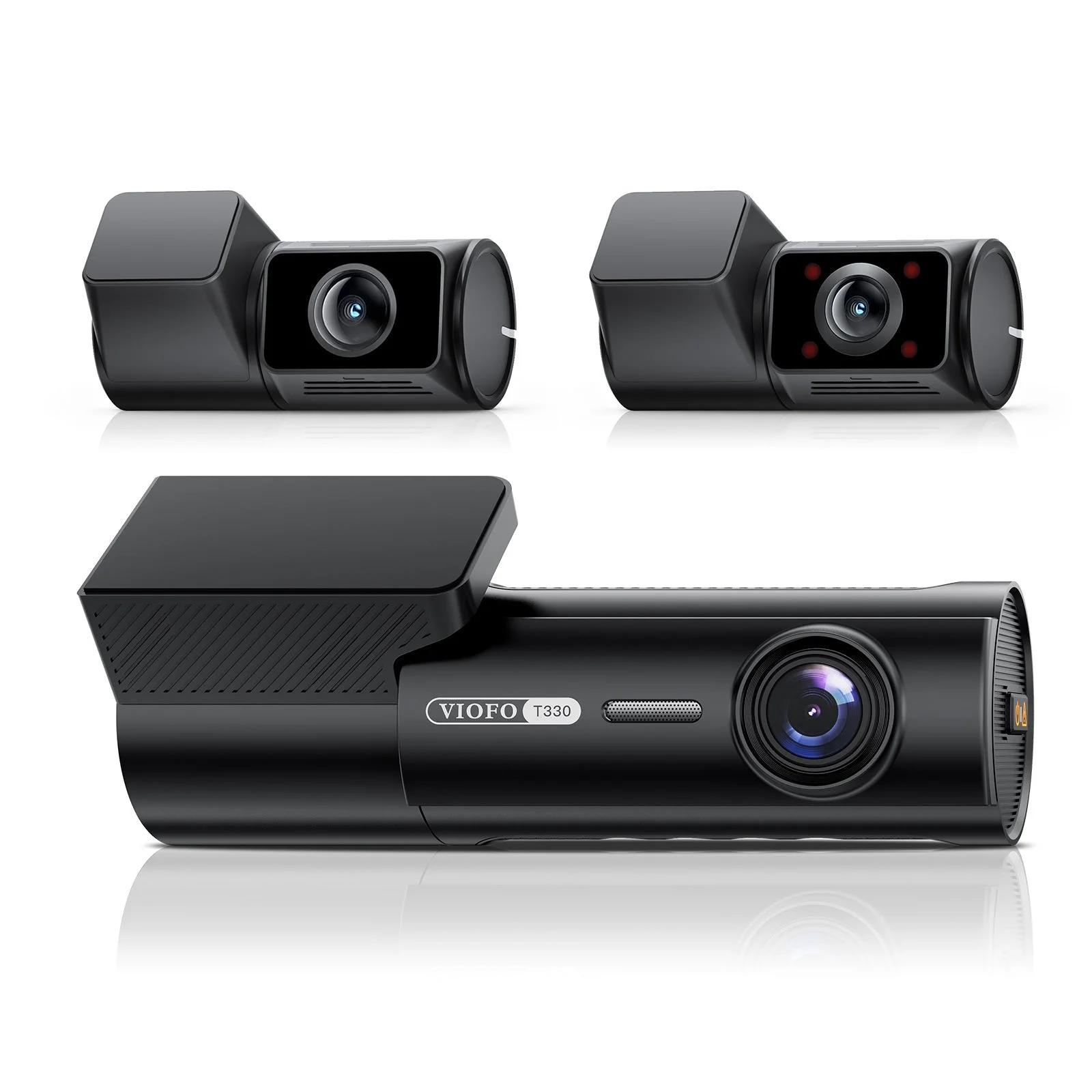
Best Dash Cam for Tesla: Model 3 and Model Y Picks
The VIOFO T330 3CH is the best dash cam for a Tesla Model 3 or Model Y. We rank screenless cams with 1440p-plus rear cameras vs Sentry Mode.